From Fall Detection to Aging in Place: How Kami Vision is Redefining Senior Care with Privacy-First AI
The Unexpected Journey to Eldercare Tech
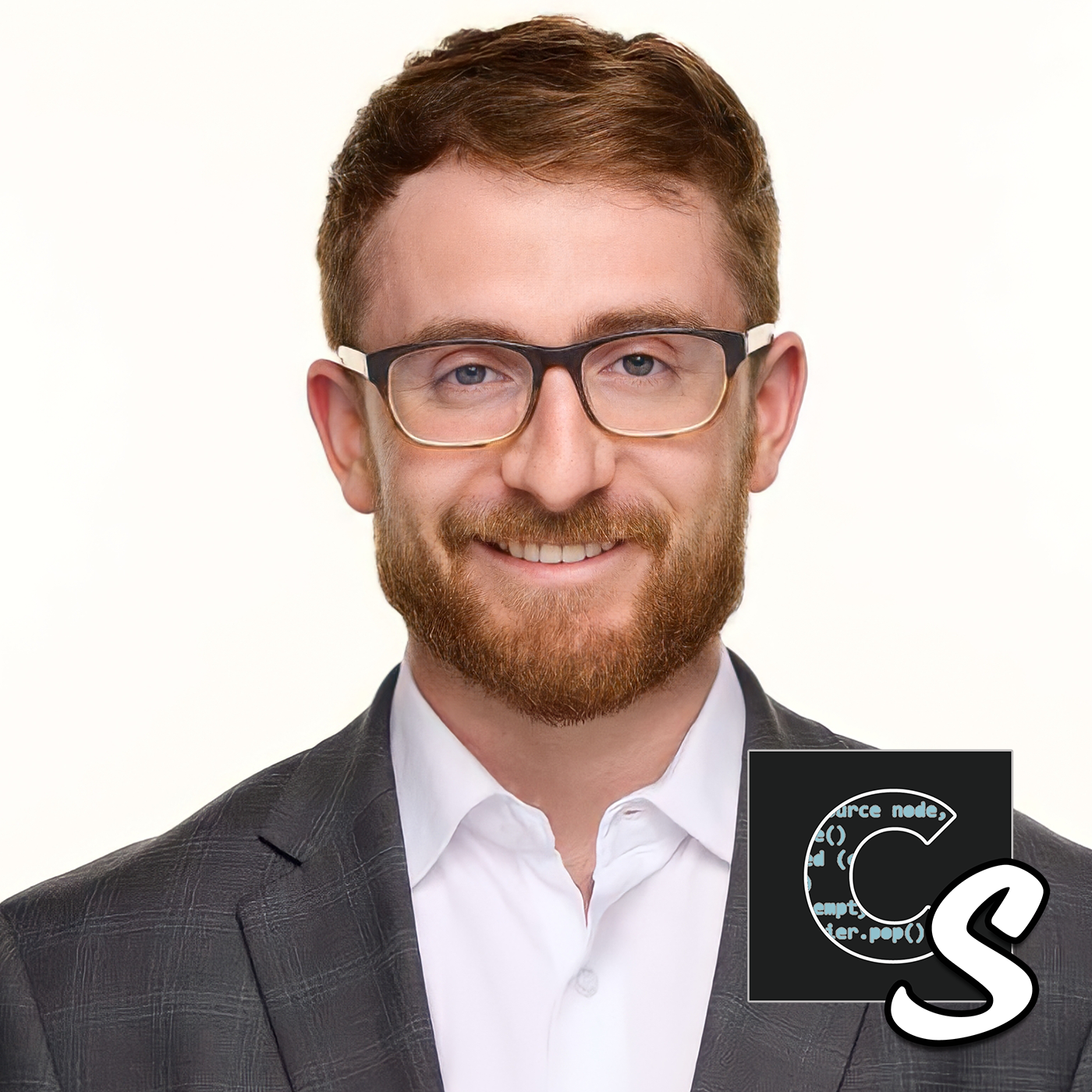
Mike Link’s path to becoming COO at Kami Vision wasn’t exactly a straight line. Growing up in Rochester, New York with a background in neuroscience, he had no plans to work in technology. But life has a way of redirecting us, and after exploring western medicine and realizing it wasn’t for him, Mike pivoted toward building his own ventures—including a memorable trip to India and a return to sales.
Today, living in San Diego and splitting time between travel and his passion for cooking, Mike found himself recruited by Kami Vision specifically because of his experience in elder care. The company needed someone who could handle go-to-market strategy, sales, and the hundred other things that early-stage startups demand. In startup parlance, they needed a Swiss Army knife. What they got was a visionary who would help redefine how the company approached an entire market.
The Home Security Foundation
To understand Kami Vision’s current mission, you need to know where they started. Founded in 2014, the company began during the home security boom with a PhD founder who specialized in AI chips. The key insight? They figured out how to run AI models directly on edge devices—the cameras themselves—rather than relying on cloud processing. This architectural decision would prove crucial to everything that followed.
The home security product became successful enough to fund other initiatives. But it was a particular request from customers that sparked something new: families with home security cameras started reaching out after experiencing their worst nightmare—discovering that a parent had fallen at home, only to find out through cloud footage after the fact. The notification never came. The response was never triggered. The fall was detected, but only in hindsight.
This gap between detection and real-time response became the genesis of Kami Vision’s elder care product.
Building an MVP in a Delicate Balance
When Mike joined Kami Vision, the fall detection MVP was technically ready. But “ready” and “working” are two different things in AI applications, especially when dealing with real human safety.
The team had trained their model extensively using test data. They had massive datasets from offshore testing teams. They’d built proprietary datasets. But as Mike points out with the clarity of hard-won experience: “There really is nothing quite like field data, where data that’s like in real environments.”
This became the core challenge. You can only do so much in a test environment. Real life is messier, more variable, and infinitely more complex than any test dataset. The path to a production-ready product required something counterintuitive: they needed to put an imperfect product in customers’ hands and use real-world failures as training data.
This created a brutal tradeoff. Find customers, onboard them, let them use a product that wasn’t perfect yet, deal with the inevitable mistakes, and use those mistakes to train the model better. Rinse and repeat. Meanwhile, you’re burning cash, customers are churning, and the sales cycle in senior care is notoriously long.
“It was definitely a grind,” Mike admits. “You’d find a customer, onboard them, make sure they had confidence in the product, and then maybe there’s some mistakes, and then you’ve got to prepare for these mistakes and train the models to help fix them.”
But the payoff was worth it. After about 8-12 months of this intensive feedback loop, something clicked. The bugs stopped repeating. The false negatives decreased. By the time they had deployed across 40+ facilities and logged thousands of actual fall detections, they had real data proving the product worked.
The Shift from Detection to Prevention
Here’s where Mike’s market insights really shine. Early conversations with customers revealed something crucial: fall detection was solving only half the problem. In fact, it might be solving the wrong half.
Think about the trajectory of decline in seniors. A fall isn’t random—it’s a symptom. When someone falls for the first time, they probably don’t get seriously hurt. The second or third time? Still manageable. But by the sixth, seventh, or eighth fall? That’s when you see broken hips, fractures, concussions. That’s when hospital visits become inevitable.
The realization hit Mike and the team during customer conversations: if you can catch early falls, you have a chance to intervene before serious injury occurs. But even better would be to prevent falls altogether.
This shifted the entire product roadmap. The buzzword in the market was “fall prevention,” but customers were actually asking for something deeper: the ability to age in place. They didn’t want to move to facilities. They didn’t want to lose independence. They wanted to stay home and live their lives with dignity and autonomy.
Beyond Falls: A Holistic Health Picture
This realization opened up a much larger opportunity. Modern technology can capture dozens of data points about a person’s health and behavior: medication changes, vital signs, activity patterns, mobility metrics, and more. Medical literature is full of peer-reviewed research on how these factors correlate with fall risk and other negative health outcomes.
What if you could aggregate all this data and use AI to predict decline before it manifests as a fall? What if you could intervene with lifestyle modifications, activity recommendations, or clinical interventions based on early warning signs?
This is the evolution of Kami Vision’s vision. It’s not just about detecting falls anymore. It’s about giving families and care facilities the tools to understand health trajectories and intervene proactively. It’s about enabling seniors to live longer, more independently, in the places they love.
The Privacy-First Advantage
Throughout this evolution, Kami Vision maintained a critical architectural advantage: edge-based AI processing. Because the heavy lifting happens on the camera itself, not in the cloud, there’s minimal privacy exposure. Your movement data, your health patterns, your intimate home moments—they stay local. Only actionable insights and alerts go to the cloud.
In an era of increasing privacy concerns, especially in healthcare and eldercare, this isn’t just a technical feature. It’s a competitive moat and a moral imperative.
The Grind Pays Off
Mike’s story isn’t a startup fairy tale where everything goes smoothly. It’s a story about identifying a real problem, building an imperfect solution, putting it in the field, learning from failures, and iterating relentlessly until you’ve created something genuinely valuable.
It’s about understanding that your MVP isn’t really an MVP until it’s tested in the real world with real customers dealing with real stakes. It’s about the long sales cycles, the customer churn, the cash burn—and pushing through anyway because the problem matters.
Most importantly, it’s about listening to customers so carefully that you discover they’re not really asking for what you thought they were asking for. They’re asking for independence, dignity, and the chance to age in place. Everything else—fall detection, health monitoring, AI inference—is just the technology that makes that possible.
Ready to Hear the Full Story?
Mike Link’s journey from neuroscience to building privacy-first AI for senior care is packed with insights about MVP development, customer-led product strategy, and the unique challenges of selling into healthcare.
Listen to the full episode of Code Story to hear Mike dive deeper into:
- The specific challenges of training AI models on real-world fall detection data
- How to build a product roadmap based on customer needs in a complex market
- The infrastructure and architectural decisions that enable privacy-first AI
- Scaling across multiple products: home security, eldercare, and enterprise security
Listen to Episode 13 Bonus on Code Story and discover how the right technical foundation can unlock an entirely new market opportunity.