S12 Bonus: The AI Tribunal: Turning the Gawker Playbook into an Automated, Crowd-Sourced Jury for Media Accountability with Aron D’Souza, Founder & CEO of Objection AI
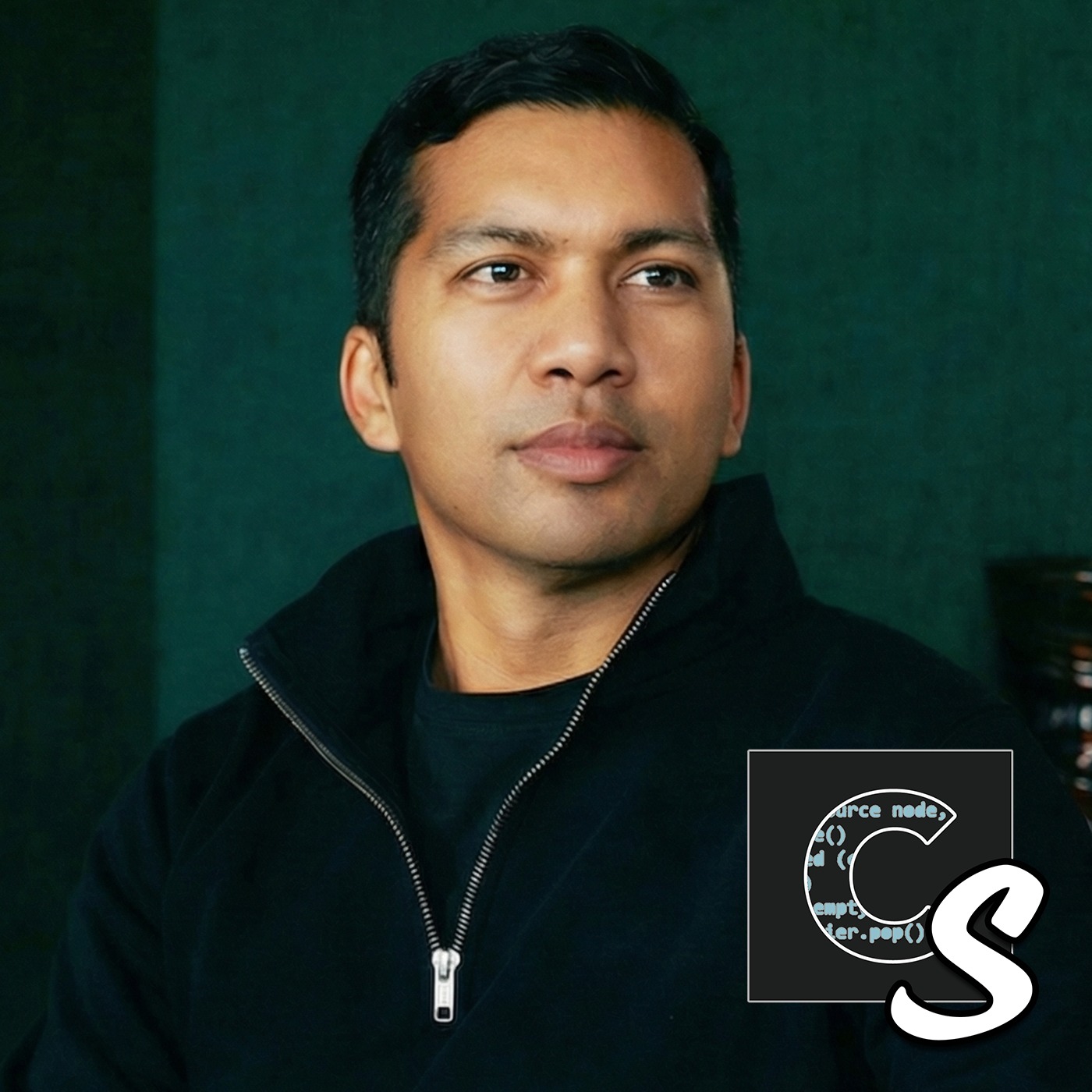
Aron D'Souza is originally from Australia, the son of a Chinese mother and an Indian-Portuguese father. He is a graduate of Oxford, and got his PhD from the University of Melbourne. A lawyer by training, he has built 12 companies and has had 5 exits - working with folks like Peter Thiel, the New York Stock Exchange and the Enhanced Games. In general, he's a problem solver, and turns all of his fun into work.
Aron made the stark realization that we are a divided society, and do not have a trusted, unbiased media source. He attempted to build a rudimentary version of a solution for a tribunal of truth 20 years ago, but the tech wasn't ready for it. That is, until the most recent advances in AI.
This is the creation story of Objection AI.
Sponsors
Links
Our Sponsors:
* Check out Cash App and use my code CASHAPP10 for a great deal: https://cash.app
* Check out Plaud AI and use my code CODESTORY for a great deal: https://plaud.ai
Advertising Inquiries: https://redcircle.com/brands
Privacy & Opt-Out: https://redcircle.com/privacy
[SPEAKER_00]: So actually, objection has been a 20 year project.
[SPEAKER_00]: A long before I met Peter Teele and Leather Galker litigation, I actually had this idea.
[SPEAKER_00]: I tried to program it myself and like raw HTML, like in an IDE, and that was like probably 2004.
[SPEAKER_00]: The technology just wasn't there.
[SPEAKER_00]: Then when I won the Galker Law suit,
[SPEAKER_00]: And I realized that courts are so broken and that a simple debate can take 20 years and tens of millions of dollars to resolve.
[SPEAKER_00]: I tried to build it in 2016, and again, the technology wasn't there.
[SPEAKER_00]: I'm Erin Desusza.
[SPEAKER_00]: I'm the founder and CEO of Objection AI.
[SPEAKER_01]: a podcast bringing you interviews with tech visionaries.
[SPEAKER_01]: Six, six months moonlighting goes.
[SPEAKER_01]: It's the last and all of the backgrounds who share what it takes to change an industry.
[SPEAKER_00]: I don't exactly know what to do.
[SPEAKER_01]: It doesn't go as to get right.
[SPEAKER_01]: who built the teams that have their bad company is its team's help each other, which is proud of our team.
[SPEAKER_01]: Keeping scalability top of mind, all that infrastructure was up there.
[SPEAKER_01]: Yes, we've been fighting it as we grew up.
[SPEAKER_01]: Total waste of time.
[SPEAKER_01]: The stories you don't read in the headlines.
[SPEAKER_01]: It's not an easy thing to achieve.
[SPEAKER_01]: To get yourself a deficit of off, try to begin to ride the ups and downs of the start-up line.
[SPEAKER_01]: To really want it.
[SPEAKER_01]: Not just about technology.
[SPEAKER_01]: All this and more on code story.
[SPEAKER_01]: I'm your host, Noel Appart, and today, how Aaron Disusa is building the AI Tribunal of Truth, so you can dispute statements made by the media.
[SPEAKER_01]: Aaron Disusa is originally from Australia, the son of a Chinese mother and an Indian Portuguese father.
[SPEAKER_01]: He is a graduate of Oxford and got his PhD from the University of Melbourne.
[SPEAKER_01]: A lawyer by training, he's built 12 companies and has had 5 exits, working with folks like Peter Teele, the New York Stock Exchange, and building the enhanced games.
[SPEAKER_01]: In general, he's a problem solver and turns all of his fun into work.
[SPEAKER_01]: and made the stark realization that we are a divided society and do not have a trusted, unbiased media source.
[SPEAKER_01]: He attempted to build a rudimentary version of a solution for a tribunal of truth 20 years ago, but the tech wasn't ready for it.
[SPEAKER_01]: That is, until the most recent advances in AI.
[SPEAKER_01]: This is the creation story of Objection AI.
[SPEAKER_00]: Objection AI is the very first system to hold the media accountable for what they write.
[SPEAKER_00]: The legacy news media think like the New York Times claims that they hold power to account, but then at the end of the day, who holds them to account?
[SPEAKER_00]: And so we filter system that allows us to challenge any claim made by the legacy media.
[SPEAKER_00]: So anyone in the world can file an objection?
[SPEAKER_00]: That objection then gets investigated, line by line sentence by sentence by a team of human investigators, so former CIA and FBI agents.
[SPEAKER_00]: After that, that data is put into a public data room.
[SPEAKER_00]: The original journalist has an opportunity to report the argument, and then AI looks at all that evidence and makes an education.
[SPEAKER_00]: And the reason I started this is because 50 years ago, the vast majority of Americans trusted the news media.
[SPEAKER_00]: Today, that's down to just 30%.
[SPEAKER_00]: And if we don't have a trusted institution or finding truth in our society, our civilization will totally break down.
[SPEAKER_00]: And we're seeing this right now.
[SPEAKER_00]: Our ever more divided society is because
[SPEAKER_00]: The New York Times is a left-wing political signal, Fox News is a right-wing political signal.
[SPEAKER_00]: 20 years ago, news outlets did not function like that.
[SPEAKER_00]: They were objective, neutral, arbiters of truth, and now they've become deeply politicized, selling clickbait narratives.
[SPEAKER_01]: I'm curious about the MVP, so the first version of that you built.
[SPEAKER_01]: What sort of tools you're using to bring it to life?
[SPEAKER_01]: And how long do I take?
[SPEAKER_00]: So actually, objection has been a 20 year project.
[SPEAKER_00]: A long before I met Peter Teele and Leather Galker litigation, I actually had this idea.
[SPEAKER_00]: I tried to program it myself and like, raw HTML, like in an IDE.
[SPEAKER_00]: And that was like, as probably a 2004, the technology just wasn't there.
[SPEAKER_00]: Then when I won the Galker Law suit,
[SPEAKER_00]: And I realized that courts are so broken and that a simple debate can take 20 years and tens of millions of dollars to resolve.
[SPEAKER_00]: I tried to build it in 2016 and again the technology wasn't there.
[SPEAKER_00]: And now with the rise of artificial intelligence, it has meant that the ability for a computer to analyze large amounts of semi-structured textual data is actually now possible.
[SPEAKER_00]: Your listeners have ever read a court judgment.
[SPEAKER_00]: It looks like source code.
[SPEAKER_00]: There are references, numbers, interconnections between the data.
[SPEAKER_00]: It's highly structured and highly formulaic.
[SPEAKER_00]: And yeah, for the last 20 years, I've wanted to build AI judiciary because ultimately fundamentally, the average American does not have access to justice.
[SPEAKER_00]: because courts are too slow and too expensive.
[SPEAKER_00]: They have a rich lawyer in a New York City law firm.
[SPEAKER_00]: Now it bills like $2,000 an hour.
[SPEAKER_00]: And to prosecute a case through the federal courts, my cost is $10 million and take 10 years as it did for Hulk Hogan.
[SPEAKER_00]: And that's not accessible to anyone.
[SPEAKER_00]: It will literally bankrupt all about the wealthiest people in the world.
[SPEAKER_00]: And we need to create a better system.
[SPEAKER_00]: And courts are very good at finding truth, but they're too slow and too expensive.
[SPEAKER_00]: So at objection, we build something better.
[SPEAKER_01]: I'm curious about maybe a key decision or trade off you had to make in building the first version, right?
[SPEAKER_01]: In building this first version and curious about one that really shaped the product and how you cope with the decision.
[SPEAKER_00]: I think making, being very good at making decisions is the core skill of a founder and a CEO.
[SPEAKER_00]: Most people try to make perfect decisions, and they end up in some sort of decision paralysis.
[SPEAKER_00]: Versus, my goal is always just to make lots of very good decisions, not perfect decisions.
[SPEAKER_00]: and velocity matters, and ultimately the decision making becomes easier and easier because if you have a strong goal orientation, like we know what we want to achieve, we want to build the ultimate adjudicator of truth, and we want to make it accessible to everyone, and that the product focus allows us to ideate very quickly.
[SPEAKER_01]: Moving forward, right, how are you going to and how are you doing this, uh, progressing and maturing objection A.I.
[SPEAKER_01]: And I'm curious about to kind of wrap in a box.
[SPEAKER_01]: I'm looking at how you build your roadmap and how you go about deciding that, okay, this is the next most important thing to build or to address.
[SPEAKER_00]: It's a deep orientation on the customer, right?
[SPEAKER_00]: So effectively, what we are creating is a three-sided market between objectives, who are typically the subject of media reporting, authors from major publications, and investigators, i.e.
[SPEAKER_00]: former CIA and FBI agents.
[SPEAKER_00]: And so each of those three audiences have a particular need, and we only launched the soft launch the product last week, and we've got an amazing feedback from each of those three groups of what they want,
[SPEAKER_00]: and how they use the system and obviously our paying customers are at the very top of that list but also maintaining the integrity of the system so that it can stand up to the highest level of criticism because ultimately what we are doing is providing everyday people a mechanism to critique journalists and journalists are going to attack us a lot.
[SPEAKER_00]: We have to be absolutely morally
[SPEAKER_01]: Let's flip to team then.
[SPEAKER_01]: I hear you saying, we, how did you build that team?
[SPEAKER_01]: What do you look for in those people to indicate that they're the winning horses to join you?
[SPEAKER_00]: So I believe that building a company is only three ingredients.
[SPEAKER_00]: It's remarkably simple.
[SPEAKER_00]: Strategy, capital, and talent.
[SPEAKER_00]: You mix those three amazing ingredients together.
[SPEAKER_00]: And you can create trillions of dollars in value and you can change to the trajectory of humanity.
[SPEAKER_00]: A strategy is a dime a dozen, right?
[SPEAKER_00]: Particularly with AI now, you can come up with ideas.
[SPEAKER_00]: You can add it so quickly.
[SPEAKER_00]: capital, capital is a commodity, you know, VCs are everywhere, there's too much VC money in my opinion.
[SPEAKER_00]: And so, what is the ultimate challenge this talent?
[SPEAKER_00]: It is convincing the most talented people in the world, absolute outlier talent, not good people, not great people but the very best people in the world.
[SPEAKER_00]: to come and work for your organization, and if you ask Elon Musk why SpaceX and Tesla are worth over $3,000, he will actually give one answer, which is that Tesla is a number one choice of employer of any company in the entire world, and SpaceX is number two, and the only reason SpaceX is number two is because they have security clearance, which means that mostly
[SPEAKER_00]: And so, that's a key measure I use in the success of any of my organizations, is how many people are applying for every role that we advertise and what is our acceptance rate.
[SPEAKER_00]: And at enhanced games, for example, we had people who turned down job offers at OpenAI, who dropped out of Ivy League institutions, who left Oxford to come and work for us.
[SPEAKER_00]: Because they said, this isn't going to work at a boring bank or an insurance company.
[SPEAKER_00]: This is literally building super humans and could change the trajectory of mankind.
[SPEAKER_00]: and same thing I believe at Objects and AI.
[SPEAKER_00]: Like we are building the infrastructure of truth that is essential to who human civilization.
[SPEAKER_00]: And it is that mission that convinces extraordinary people to come and work for us.
[SPEAKER_00]: And the key thing that I've learned over the years is that I used to build boring companies.
[SPEAKER_00]: that were modest in ambition, in low-competition fields that were somewhat uninteresting and you get uninteresting people who want to work there.
[SPEAKER_00]: When you do something that is bold, that is thought-provoking, that aspires to the extraordinary, you get extraordinary people, and only extraordinary people, a J.V.
[SPEAKER_00]: extraordinary outcomes.
[SPEAKER_01]: Let's move into scale, then how are you planning to scale this?
[SPEAKER_01]: How are you going about scale and I'm curious of even, you know, does far have you run into any sort of scenarios where you've had to fight scale as you've grown?
[SPEAKER_00]: No, I've built 12 companies now and two unicorns.
[SPEAKER_00]: So it's pretty, it's pretty formulaic.
[SPEAKER_00]: And objection AI is very soft word-driven.
[SPEAKER_00]: So you don't suffer from the same scale-based problems that more physically instantiated companies do.
[SPEAKER_00]: And when I stepped down as being CEO of the enhanced games and I took some time to reflect and think about what my next company would be.
[SPEAKER_00]: I made a list of about 25 companies.
[SPEAKER_00]: hundreds of pitch decks over my life.
[SPEAKER_00]: I was going through all these old decks I had written, trying to think about what my next chapter would be.
[SPEAKER_00]: I concluded that I did not want to do anything physical.
[SPEAKER_00]: Anything that exists in the physical world you have a lot of regulatory challenges, you have labor challenges, and then just solve for it's just so much more scalable.
[SPEAKER_00]: Objection AI so thus far has not hit any scale issues.
[SPEAKER_00]: I'm sure we will in time, but because of the nature
[SPEAKER_01]: As you step out on the balcony, and you look across all that you've built with objection AI in particular, what do you most proud of?
[SPEAKER_00]: I have always been someone who plans for the future.
[SPEAKER_00]: When I graduated from high school and I was just starting university, I wrote a plan for my life.
[SPEAKER_00]: And in that plan, I broke out what I wanted to do with every week, every month, of the next decade, and then every year beyond that, and seeking out what I could accomplish.
[SPEAKER_00]: And one of the metrics,
[SPEAKER_00]: That uses, I thought, one of the great milestones in my life would be having a long form profile piece in the New York Times or the Economist.
[SPEAKER_00]: And with the enhanced games, that happened.
[SPEAKER_00]: Every newspaper in the world covered us, I was in the front cover of the Economist, I was in the front cover of the FT, this city morning, Harold, all over the world.
[SPEAKER_00]: And, you know what, it doesn't really change your life that much.
[SPEAKER_00]: I feel like I'm still the same person I was when I was.
[SPEAKER_00]: 18 years old, although maybe I've got a bigger house now and I've got more luxuries.
[SPEAKER_00]: And these things don't really change you that much.
[SPEAKER_00]: And I meet a lot of young entrepreneurs and they're like, yeah, I want to build a billion dollar company.
[SPEAKER_00]: I want to become a billionaire.
[SPEAKER_00]: And I ask them, like, why do you want to become a billionaire?
[SPEAKER_00]: And they say, oh, it's a lot of money.
[SPEAKER_00]: actually doesn't really change your life that much.
[SPEAKER_00]: Going from shore, going from earning 50 grand a year up to a million changes your life a lot, but from a million to 10 million, doesn't change it very much.
[SPEAKER_00]: And most of my time now, I'm focused on not accruing material things I'm actually trying to get rid of them as much as possible, but rather focusing on the future and the problems that I see in the world and having a real opportunity to solve them.
[SPEAKER_00]: And so, I tend not to look back very much, I tend to look forward.
[SPEAKER_01]: Okay, let's flip the script a little bit, Aaron, tell me about a mistake you made and how you and your team responded to it, specifically of Objection AI.
[SPEAKER_00]: But we're still a very young company.
[SPEAKER_00]: The company was only formed in December.
[SPEAKER_00]: It took us three months to launch.
[SPEAKER_00]: My CTO, Dr. Cal Grant Talbert is one of my oldest friends.
[SPEAKER_00]: I backed his last company.
[SPEAKER_00]: He had a very significant exit, and I was the first investor in it.
[SPEAKER_00]: Most of the challenges of startups is hiring the wrong people.
[SPEAKER_00]: The beauty about being a repeat entrepreneur is that I know the people I want to hire and of a proven track record, and I tend to work with the same group of people over and over again.
[SPEAKER_00]: And no serious hiring mistakes thus far.
[SPEAKER_00]: The advice I would give to your listeners is that it's okay to fail, right?
[SPEAKER_00]: I always say I found it 12 companies I had I've had five exits.
[SPEAKER_00]: Well that means like seven of my companies just were like other failures.
[SPEAKER_00]: and that's perfectly fine and actually in this modern world adventure capital, I think it's better to have started a company and fail than never tried to build one.
[SPEAKER_00]: Because the most valuable talent is like a repeat founder talent and there are very few founders who have built a company had a successful exit that either want to go back in the game because it's so tiring or need to raise any external money.
[SPEAKER_00]: And so, yes, you make a lot of mistakes along the way.
[SPEAKER_00]: I tend not to dwell on them, there's a obsession about failure in Silicon Valley, but actually, you know what, as long as you're adding averages pretty good, life-trends out to be quite positive.
[SPEAKER_01]: Okay, Erin, let's move forward then.
[SPEAKER_01]: What does the future look like for Objection AI4, the product for your team for the company on all the things in for for the industry in general?
[SPEAKER_00]: In the total course of human history, at every point in time, there is an arbiter of truth and from the follow-through of an empire of 1517, that was the pope.
[SPEAKER_00]: And then new technology changed, who was arbitrating truth.
[SPEAKER_00]: So the printing press led to the rise of the universities as the arbiter of truth.
[SPEAKER_00]: The rotary printing press led to the newspapers, the rise of television in the 20th century,
[SPEAKER_00]: and then with the rise of the iPhone and social media in the new millennium, there has not been an institution whose sole focus has been finding truth that has a good business model.
[SPEAKER_00]: And I think that is the opportunity for objection AI.
[SPEAKER_00]: We can become the arbiter of truth in the world, because as I always say, truth is not a vibe, truth is a process.
[SPEAKER_00]: And courts are a very good process for finding truth, but legacy courts are too slow and too expensive, and so we've just re-engineered them for the modern world and using software and AI.
[SPEAKER_00]: And so if I look forward to the future, I think objection will be the principle dispute resolution for them.
[SPEAKER_00]: So instead of fighting in court and old, slow, expensive way, you can have all of your disputes whether they're the disputes of facts like in the media or disputes of law like in a contract, down on objection very quickly and very efficiently.
[SPEAKER_01]: Let's wish to you, and who influences the way that you work?
[SPEAKER_01]: Name a person or many persons are something.
[SPEAKER_01]: You look up to, and why?
[SPEAKER_00]: So probably the most instructive person is Johnny Rockefeller.
[SPEAKER_00]: The Walter Isaacson biography of Rockefeller, Titan, was given to me when I was like 15 years old.
[SPEAKER_00]: And it's a huge book.
[SPEAKER_00]: I won't say it's 500 pages long, and I read it in one sitting.
[SPEAKER_00]: It was fascinating.
[SPEAKER_00]: I read it again when I was 25, and I read it again when I was 35.
[SPEAKER_00]: And there's something deep in the psychology of Rockefeller that tells us about a humble man of strong faith in conviction, who built one of the greatest industries.
[SPEAKER_00]: I eat the modern energy industry, and there's a lot of learning from that.
[SPEAKER_00]: So Rockefeller is always a great example.
[SPEAKER_00]: I've spent a lot of time, obviously, with Peter Tiel.
[SPEAKER_00]: or admire very deeply, we've had a very deep friendship and professional relationship for nearly 20 years now.
[SPEAKER_00]: And yeah, it's quite a number of figures.
[SPEAKER_01]: Aaron, last question, so you're getting on a plane.
[SPEAKER_01]: You're sitting next to a young entrepreneur who's built the next big thing.
[SPEAKER_01]: They're jazzed about it, they can be showed off to the world and can't wait to show it off to you right there on the plane.
[SPEAKER_01]: What advice do you give that person?
[SPEAKER_01]: Having gone down this road a bit several times, 12 times.
[SPEAKER_00]: I think beyond entrepreneurs seek out advice from lots of people, and I would say that most advice is not very valuable.
[SPEAKER_00]: You should really only listen to people who have built unicorn companies, there's a couple of thousands of them now, self-made billionaires.
[SPEAKER_00]: People have really achieved something, because most people will happily give out their advice, but they don't know what it takes to build a company, a very serious company.
[SPEAKER_00]: And I would say that business is a multiplicative sequence.
[SPEAKER_00]: You can do 9 out of 10 things right, but if you do one thing wrong, it all goes to zero.
[SPEAKER_00]: Sam Bakedman freed us an ultimate example of this, like he would have been the greatest venture capitalist in history, mismanaged his risk on one investment in bang, the whole thing was up and in and now he's sitting in prison.
[SPEAKER_00]: So you have to pay attention to all of the details that you have to have systems of knowing and remembering.
[SPEAKER_00]: and I would say our weak human minds are very valuable to you have to build processes and systems very quickly that are highly scalable.
[SPEAKER_00]: I'm a big fan of project management tools like a sauna and I swear by them.
[SPEAKER_00]: And ultimately, to act with high integrity and to have fun while doing it.
[SPEAKER_01]: All of that is fantastic advice.
[SPEAKER_01]: Well Aaron, thank you for being on the show today, and thank you for telling the creation story of Objection AI.
[SPEAKER_01]: Thank you for having me.
[SPEAKER_01]: Code Story is hosted and produced by Noah Labhart.
[SPEAKER_01]: Be sure to subscribe on Apple podcast, Spotify, or the podcasting app at your choice.
[SPEAKER_01]: And when you get a chance, leave us a review.
[SPEAKER_01]: Both things help us out tremendously.
[SPEAKER_01]: And thanks again for listening.
Latest Season of the Podcast is Sponsored By




 Apple Podcasts
 Castbox
 Castro
 Goodpods
 Moon FM
 Overcast
 Pocket Casts
 Podbean
 Podcast Addict
 Podcast Republic
 Spotify