S12 E10: The Childhood Smartphone Epidemic: Re-Engineering Android OS to Stop Social Media Addiction and Teach Kids Digital Wellness with Dane Witbeck, Founder & CEO of Pinwheel
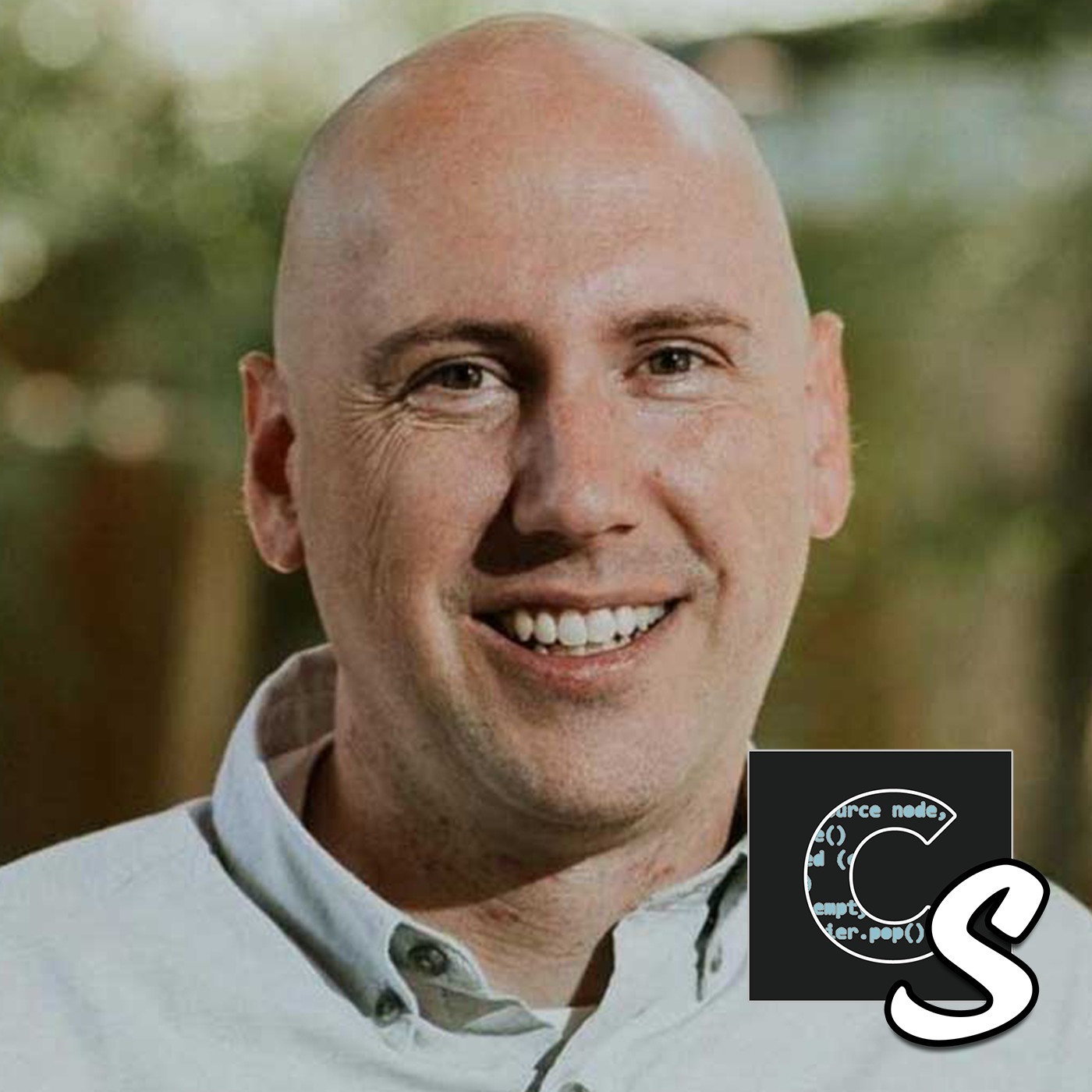
Dane Witbeck grew up in Georgia, and has always had an entrepreneurial spirit. He was the kid selling ripped CD's in school, along with other odds and ends. He went to Georgia Tech to study engineering, and eventually went on to join a startup called Meshify, in the iOT place - which eventually was bought by a large insurance company. Outside of tech, he is married with 4 kids. He is involved in many entrepreneurial groups around Austin, and is the proud owner of a 1969 Ford Bronco - which he enjoys getting out of town in and camping.
Post his prior startup, Dane was on the lookout for problems to solve. He observed his son's friend getting a hand-me-down iPhone, and it hit him that he was going to have to monitor this as his children got phones. As he started to dig into what was available, he realized there wasn't a good solution... and decided to build his own.
This is the creation story of Pinwheel.
Sponsors
- Unblocked (https://getunblocked.com/codestory)
- TECH Domains (https://get.tech/codestory)
- Mezmo (https://mezmo.com/codestory)
- Braingrid.ai (https://braingrid.link/code-story)
Links
Our Sponsors:
* Check out Cash App and use my code CASHAPP10 for a great deal: https://cash.app
* Check out Plaud AI and use my code CODESTORY for a great deal: https://plaud.ai
Advertising Inquiries: https://redcircle.com/brands
Privacy & Opt-Out: https://redcircle.com/privacy
[SPEAKER_00]: what we ended up doing was first trying to build our own fork of Android.
[SPEAKER_00]: It didn't go that well.
[SPEAKER_00]: I spent about, I'd say, four to six months, something like that on trying to fork Android and to a completely open, just the open source Android project, none of the Google layers included with it.
[SPEAKER_00]: Trying to make that work.
[SPEAKER_00]: And the real problem that we ran into is app compatibility.
[SPEAKER_00]: We lost compatibility with 25% to 30% of apps that are using Google's non-open source proprietary software layer.
[SPEAKER_00]: That really led me next to what our next solution was, which was mobile device management.
[SPEAKER_00]: I'm Dean Woodback, the founder and CEO at Pino.
[SPEAKER_01]: This is code story.
[SPEAKER_01]: A podcast bringing you interviews with tech visionaries.
[SPEAKER_01]: Six months moonlighting goes.
[SPEAKER_01]: Lassin on the backhand.
[SPEAKER_01]: Who share what it takes to change an industry?
[SPEAKER_01]: I don't exactly know what to do.
[SPEAKER_01]: Many girls to get right.
[SPEAKER_01]: Who built the teams that have their bad company is its people.
[SPEAKER_01]: The teams help each other and she goes proud of her team.
[SPEAKER_01]: Keeping scalability top of mind.
[SPEAKER_01]: All that infrastructure was happening and fighting it as we grow.
[SPEAKER_01]: Total waste of time.
[SPEAKER_01]: The stories you don't read in the headlines.
[SPEAKER_01]: It's not an easy thing to achieve.
[SPEAKER_01]: To get yourself invested it off and try to begin.
[SPEAKER_01]: To ride the ups and downs of the startup line.
[SPEAKER_01]: Need to really want it.
[SPEAKER_01]: Not just about technology.
[SPEAKER_01]: All this and more.
[SPEAKER_01]: On code story.
[SPEAKER_01]: I'm your host Noah Labhart.
[SPEAKER_01]: And today, how Dane with Beth is building tech.
[SPEAKER_01]: You can trust for your kids.
[SPEAKER_01]: So they can have the device they want and the protection they need.
[SPEAKER_01]: Dane whip-bed grew up in Georgia and has always had an entrepreneurial spirit.
[SPEAKER_01]: He was the kid selling ripped CDs in school along with other odds and ends.
[SPEAKER_01]: He went to Georgia Tech to study engineering and eventually went on to join a startup called Meshify in the IoT space, which eventually was bought by a large insurance company.
[SPEAKER_01]: But outside of Tech he's married with four kids.
[SPEAKER_01]: He has involved in many entrepreneurial groups around Austin and is the proud owner of a 1969 Ford Bronco, which he enjoys getting
[SPEAKER_01]: Post his prior startup, Dane was on the lookout for problems to solve.
[SPEAKER_01]: He observed his son's friend getting a hand me down iPhone, and it hit him, but he was going to have to monitor this as his children got pumped.
[SPEAKER_01]: As he started to dig into what was available, he realized there wasn't a good solution and decided to build his own.
[SPEAKER_01]: This is the creation story of Pinwheel.
[SPEAKER_00]: So I was in that in between stage after finishing my urnout and was wondering what to build next, right?
[SPEAKER_00]: So I was actually in an active period of looking for a new startup and I think a lot of founders blow me away with how fast they jump in, seems like they already had the idea of four years ago and they're ready to go.
[SPEAKER_00]: I wasn't in that place, I took about 10 months and tried on 7 or 8 different ideas, I built a lot of prototypes, I did a lot of surveys, I did a lot of different things in that 10 months, but it was always looking for the one startup, the one idea that I would really want to build next.
[SPEAKER_00]: I think there's this mantra and entrepreneurship that ideas don't matter, execution is everything, and I think that's not true.
[SPEAKER_00]: I think the idea is actually really important.
[SPEAKER_00]: I think what idea you work on, it needs to matter to you, and it needs to matter to your market, and so I was much more intentional.
[SPEAKER_00]: That second time around, this was back in 2019, when I was in that 10-month period, and I think it really quickly coalesced around family topics, right?
[SPEAKER_00]: I'm a family man, I have four kids.
[SPEAKER_00]: And it was just on my mind all the time.
[SPEAKER_00]: So I was looking for problems within the family space to solve.
[SPEAKER_00]: And it was at that time that my oldest son, the best friend, got to hand me down iPhone.
[SPEAKER_00]: And that's when it really hit me that, wow.
[SPEAKER_00]: I have to worry about this way sooner.
[SPEAKER_00]: I thought I did, and that really kicked off me heading down the rabbit hole of looking at the research, really looking at the problems that smartphones have caused for kids specifically.
[SPEAKER_00]: and wondering about what a better phone for a kid would look like, and so I downloaded it like a dozen different over the top parental control apps, so you can get straight from the app stores and try to control your kid's phones or iPads, and they did not work well for me.
[SPEAKER_00]: They were long time to set up, in fact several of them, even as a technical guy, I couldn't even get through.
[SPEAKER_00]: They were very difficult set up, some of just wild stuff, 90 minutes on average, 45 steps, on average was what I tracked in those testings.
[SPEAKER_00]: They generally are like 3 star products, their loophole ridden, because these companies are trying to basically put a parental control patchwork on top of every different sort of Android flavor of which there's over a thousand or every different iPhone model going back to the beginning and it doesn't work.
[SPEAKER_00]: So it's very loophole
[SPEAKER_00]: And so parents were what I was learning and the research was the parents wanted this solution.
[SPEAKER_00]: They were trying everything they could and that there was no product that was really serving them.
[SPEAKER_00]: So that's what got me really excited about it.
[SPEAKER_00]: It was just seeing that gap there and then realizing that I could take a different technical approach.
[SPEAKER_00]: So what we ended up doing was first trying to build our own fork of Android.
[SPEAKER_00]: So, I don't know, you or your audience have experience with that, but it didn't go that well.
[SPEAKER_00]: I spent about, I'd say, four to six months, something like that, I'm trying to fork Android into a completely open, just the open source Android project, none of the Google layers included with it.
[SPEAKER_00]: Try to make that work.
[SPEAKER_00]: And the real problem that we ran into is app compatibility.
[SPEAKER_00]: We lost compatibility with 25 to 30% of apps that are using Google's non-open source proprietary software layer.
[SPEAKER_00]: in their app.
[SPEAKER_00]: And so those just won't work if you're not on the main.
[SPEAKER_00]: If you're trying to like fork and enjoy it and go a different direction.
[SPEAKER_00]: So that really led me next to what our next solution was, which was mobile device management.
[SPEAKER_00]: So mobile device management for those that don't know, MDM for sure is a layer of software that is very low in the stack, but sits on top of the existing operating system.
[SPEAKER_00]: And it's really designed for mostly corporations, right?
[SPEAKER_00]: It's an enterprise tool.
[SPEAKER_00]: If you have a bunch of truck drivers and you have some liability that, you know, they're gonna look at their phone while they're driving their truck, you wanna be able to control that device that you gave them, and make sure they can't do that.
[SPEAKER_00]: And so this is a deeper layer of control and access.
[SPEAKER_00]: But the train office, you can't install that over the app stores.
[SPEAKER_00]: You can't just go and take a running phone and stall in the end and have it work.
[SPEAKER_00]: It has to be installed from the beginning of the device's life at the welcome screen.
[SPEAKER_00]: Right, so what we did was that ended up putting the cut we put the customer first and said hey, we want to solve their problem first We'll we will select to whatever we have to do to solve the customer's problem and that's SLEF meant giving up a software only business model.
[SPEAKER_00]: So we ended up building the business model such that we A choir phones wholesale from companies like Samsung or LG or those type of companies We install MDM software on them
[SPEAKER_00]: and then we configure them with a bunch of apps that are specific for kids and really tailor all of the experience for kids on top of that and then give parents their own parental control app on iPhone.
[SPEAKER_00]: I enjoyed the web so that they get a pain of glass that they can get access and see what's going on with the phone and then sell that phone plus the software subscription.
[SPEAKER_00]: So it's a phone plus software subscription that was the original product of pinwheel and still the product that's our main product today.
[SPEAKER_01]: I want to dive into it a little more, tell me about what you would consider the MVP and maybe it's that trying to fork Android version, or maybe even past that and you touched at both of those on a high level, but tell me about that MVP, that first version, how long did it take you to kind of build before you were getting some traction that you wanted and what sort of tools were you using?
[SPEAKER_00]: We took four to six months in that first try and that didn't work and then we took another four to six months on the second try and that did work Yeah, we were building directly on top of man droid.
[SPEAKER_00]: I obviously iOS would be great But they don't allow you to do this level of control in the iOS sphere 100% Android system
[SPEAKER_00]: We're using traditional coding tools to write our applications.
[SPEAKER_00]: We write several applications.
[SPEAKER_00]: We're also doing a bunch of work on the checkout and website marketing.
[SPEAKER_00]: This is a consumer company with consumer-facing brands with a lot of brand work that we did in those early days as well.
[SPEAKER_00]: We still do this day.
[SPEAKER_00]: And yeah, so it was building both the marketing and the product and then we put it out into alpha testers hands and then beta testers hands and we learned along the way and when we finally shipped the first product it was for Christmas of 2020 so about a little more than a year after I find it went full time on on this project.
[SPEAKER_00]: And we thought we might sell 200 or 300 phones, and we ended up selling 1200 phones at first Christmas.
[SPEAKER_00]: And everything broke.
[SPEAKER_00]: That's really odd.
[SPEAKER_00]: It's not like everything broke.
[SPEAKER_00]: It's Christmas morning was a bit of a disaster.
[SPEAKER_00]: People were opening their boxes like there was some scalability issues.
[SPEAKER_00]: We did not have our VP of engineering at that time that we have now.
[SPEAKER_00]: And in January of 2021, we had 1200 customers, which is not very many customers, and our AWS bill was over $10,000.
[SPEAKER_00]: So it was not Bill super well on the first go around.
[SPEAKER_00]: It did work.
[SPEAKER_00]: We were able to get to things to work.
[SPEAKER_00]: And I'd say we've always prideed ourselves on customer service from the beginning.
[SPEAKER_00]: So we had dedicated customer service agents even at that first launch.
[SPEAKER_00]: And we've continued to build customer service as like a core pillar of we look at it as a part of the product offering.
[SPEAKER_00]: So we were able to buy a whole lot of hands and a lot of products working.
[SPEAKER_00]: But then we got our VP of Engineering that January who still was a today Bryan Bowman and he cleaned everything up in 90 days.
[SPEAKER_00]: And I think my April or AWS bill was down to a country box or something or something reasonable for our size.
[SPEAKER_01]: So then from that point, how did you progress and mature, you know, that initial kind of, you know, set up with the phone and I kind of liking that to roadmap like how do you go about building your roadmap and how do you go about deciding that okay, this is the next most important thing to build or to address.
[SPEAKER_00]: Yeah, feedback customer feedback is really important to us.
[SPEAKER_00]: We have several channels of feedback we get from customers.
[SPEAKER_00]: One is surveys.
[SPEAKER_00]: Another one is just one on one interviews.
[SPEAKER_00]: Just interviewing customers.
[SPEAKER_00]: We still do that to this day.
[SPEAKER_00]: And then the third one is our customer service arm rate, which is grown and now.
[SPEAKER_00]: We have thousands of customer service interactions and it's combing through those and looking for the biggest pain points and the biggest problems customers are experiencing is a big part of building that roadmap and then the other piece is the strategy, right?
[SPEAKER_00]: So that comes from really me, where it's, let's put together the business strategy of what where we want to go next and let's,
[SPEAKER_00]: keep building towards that.
[SPEAKER_00]: So you're always balancing when the road map, the voice of the customer and giving them what they need most next and fitting in your strategy and your vision of where the company needs to go next.
[SPEAKER_00]: And it is a balancing act.
[SPEAKER_00]: It's very difficult.
[SPEAKER_00]: Everyone's got limited resources allocating those resources amongst those priorities is really what the product management function is about.
[SPEAKER_01]: How about team, right?
[SPEAKER_01]: You mentioned starting out with a certain set of folks and then eventually you've got some other folks to help you with scale and things like that, how do you go about building your team?
[SPEAKER_01]: Would you look for in those people to indicate that they were the winning horses to join
[SPEAKER_00]: It's about culture, when you're building a team, I think in my first company, I under-invested in culture building.
[SPEAKER_00]: It's same to me to be some sort of fluffy, sort of idea that people in the English department might talk about and not us engineers, right?
[SPEAKER_00]: But I've learned through my entrepreneurial career that culture is really important and worth investing and has a real ROI for your company and really for your personal life, because
[SPEAKER_00]: Ultimately, one of the great joys of being a founder is building the kind of company and the kind of culture that you yourself want to work at.
[SPEAKER_00]: So we very intentionally built certain ideas into our culture, certain values.
[SPEAKER_00]: And we hire, we promote, we fire off of those values.
[SPEAKER_00]: And so we talk about them constantly.
[SPEAKER_00]: We try to build rituals and habits to reinforce those values.
[SPEAKER_00]: reward people on this values we taught.
[SPEAKER_00]: We tell stories about who was the value champion, right, and these values, there's six of them, and they're just super core to who we are, and so when we're interviewing people to join the team, we are asking interview questions that are really centered around the values of the company.
[SPEAKER_00]: and looking for people that fit those values.
[SPEAKER_00]: And so once you find, of course, a job description is important, and a discussion with your team is important about what is the profile that we're looking for.
[SPEAKER_00]: So you're getting the job description, you're getting profile getting skills, and then you're getting the culture fit.
[SPEAKER_00]: And so we have a process to sort for, interview for, and hire around those things.
[SPEAKER_00]: We bring people in fairly quickly.
[SPEAKER_00]: We try not to have a take forever to bring people in.
[SPEAKER_00]: We try to go quickly when we need somebody.
[SPEAKER_00]: And the same thing if it's not working out.
[SPEAKER_00]: I think everyone's had that experience where you've maybe hung on to somebody longer than was it was serving you and really serving them.
[SPEAKER_00]: And I think as a more mature founder now, I've learned that, you know, when it's not working out, you certainly want to give people a chance to correct course, but if it's not working out, then it's just likely, and you've given that chance to course correct, and it's still not working out, then it's best for both parties to part ways, rather quickly.
[SPEAKER_00]: So that's how we handle talent and how we think about it.
[SPEAKER_00]: We very much follow sort of the Netflix model of thinking about it as a high-performing team and not so much of family.
[SPEAKER_00]: We're here in service of the mission.
[SPEAKER_00]: We think our mission is very important to humans to our families, to our customers, to the kids.
[SPEAKER_00]: And so that's what we're here in service of.
[SPEAKER_00]: And...
[SPEAKER_00]: we want to build just like any sports team that's trying to win the championship, the best players, we want the best players on the team, and we find that the other players really are happiest when they're working with other great players, and so that's how you, that's the our view of talent and how we look at it, and so far so good.
[SPEAKER_01]: Okay, let's flip the scalability, you mentioned, you know, working through some early problems with scale.
[SPEAKER_01]: And I'm curious, you know, in your mind and in your approaches, how you approach that scale in the beginning.
[SPEAKER_01]: And, you know, in that specific scenario, maybe there's other stories too, where you've had stories where you've had to fight scale as you've grown.
[SPEAKER_00]: Yeah, we've had several of those.
[SPEAKER_00]: Okay, one example, this one is more of our app curation process.
[SPEAKER_00]: So when we launched the product, the very first product, we had a wall garden of apps that were available on pinwall and there was like 80 of them, right?
[SPEAKER_00]: So it was very limited set of apps.
[SPEAKER_00]: And we heard from customers very quickly, this is not enough content.
[SPEAKER_00]: We have apps that are legitimate needs for these kids and some of them are additional learning apps, some of them are school apps.
[SPEAKER_00]: They're just all kinds of different apps.
[SPEAKER_00]: And so the first thing we had to do was build a process to scale up our library.
[SPEAKER_00]: So we said, hey, let's just build a process to scale the library.
[SPEAKER_00]: So we had to set up an entire framework of what a app grading system would look like in pinwheel parlance.
[SPEAKER_00]: and we hired a team to basically vet apps and do this job for parents because you know this is something that every parent I think has felt when you look at your kids asking for an app you feel like you just got yourself a research project I need to know what's in this app doesn't have
[SPEAKER_00]: just have messaging with other people with strangers with adults, does it have a parental control layer that I can do something to prevent those things with what is the Internet say about it, what other parents say about it, what is the I say about it.
[SPEAKER_00]: So this is this whole job of curating apps.
[SPEAKER_00]: And so we took that job on for parents and we built a process around it and we just tried to communicate to parents what our values were.
[SPEAKER_00]: and we have a grading system for apps, and so it's this one, the green, this one's yellow, and has some warnings, this one's red, and has some real concerns, right?
[SPEAKER_00]: And every app description in our World Garden App Library is built by Pinwell curated by Pinwell, and this is not
[SPEAKER_00]: really.
[SPEAKER_00]: This is not really a great scale story because it was just pretty much a brute force approach like we had to build the process, build the team, and then start putting apps through the pipeline.
[SPEAKER_00]: It worked.
[SPEAKER_00]: We got to 1500 apps or so in the app while guard my diary.
[SPEAKER_00]: Over the course of a couple of years mostly off of parental requests.
[SPEAKER_00]: Before we realized that our kids were aging up, right?
[SPEAKER_00]: So not only, some of these kids are growing up with pinwell, so then we might have acquired them when they were 11, 12, 13, and now they're 14, 15, or 16, and parents are telling us, we still want to stay with pinwell, but you again, don't have enough content.
[SPEAKER_00]: And then we have to make the decision, okay, let's open up this wild garden and allow people to go into the app store.
[SPEAKER_00]: on their own.
[SPEAKER_00]: And pick apps.
[SPEAKER_00]: And in this case, we switched from a list of approved apps to a list of disapproved apps.
[SPEAKER_00]: So now you can, as a parent, pick anything for your kid from the Play Store once you leave our world garden except for these apps that we know are not appropriate for kids or teens that are using pinwell.
[SPEAKER_00]: And let's just continue to learn over time and listening to your customers and then just keep building that process for this part of the company and this part of the product and experience and let it keep scaling with what your customers are asking for.
[SPEAKER_00]: And so that's yeah, it's really worked for us.
[SPEAKER_01]: Okay, so as you step out on the balcony, you look across all that you've built with pinwheel.
[SPEAKER_01]: What are you most proud of?
[SPEAKER_00]: Definitely those stories that are most rewarding and where we feel the most pride are when we hear parents tell us You've been a big part of helping me to raise my child.
[SPEAKER_00]: Our product is important to people.
[SPEAKER_00]: It's There's a lot of stuff for products.
[SPEAKER_00]: We buy that we might use occasionally and it's like that's nice or handy.
[SPEAKER_00]: You're kind of helpful This product is their kids digital life and
[SPEAKER_00]: we know that tech is the number one fight between kids and their parents.
[SPEAKER_00]: It's the number one thing that's argument.
[SPEAKER_00]: And so this is a very important topic to our customers and to and to the parents and the kids.
[SPEAKER_00]: And so when you have a parent come back to you and say hey you helped me raise the child and help them raise them to who they are, right?
[SPEAKER_00]: Because our product does have a limited life or not.
[SPEAKER_00]: We don't really serve plus 18 adults at all.
[SPEAKER_00]: probably not built for that and so eventually parents move on to giving their kids full of adult ready smartphone and when they come back and tell us thank you like you were you were there and helped in a really hard transition and a really hard digital world that we live in
[SPEAKER_00]: that means a lot.
[SPEAKER_00]: There's a certain number of our customers also that are in what we call remediation cases, right?
[SPEAKER_00]: It's not the bulk of our customers, but there are times when a pinwheel will be bought for a 1617 year old because they gave them an iPhone when they were 11 and it's going really poorly, right?
[SPEAKER_00]: Their life is off track in a number of ways, sometimes there's a diction issues or other things that are going on and a parent is in a really tough spot where they've got this
[SPEAKER_00]: teens still under their roof, but is emerging adult and they've got to try to correct course while they still have a chance and we've been a part of several of those stories and we're not the main part, there's a bunch of things that play a part in those kind of stories but when they come back and say, my kid made it, their post-graduation from high school, they're doing great things as a young adult, we got through that tough spot and you were a major piece of that puzzle to help us get there.
[SPEAKER_00]: There's really no more rewarding message you can get.
[SPEAKER_00]: That really reminds you from the beginning days like why we started this company, why we're doing this, why this mission's important.
[SPEAKER_00]: Then when you get those calls or those cases, and so yeah, let's probably their almost proud moments.
[SPEAKER_01]: Okay, let's flip the script a little bit.
[SPEAKER_01]: Dan, tell me about a mistake you made and how you and your team responded to it.
[SPEAKER_00]: We made a lot, in early days, I had an early marketing advisor, and we blew like 20 grand on.
[SPEAKER_00]: We were going to do a kickstarter, right?
[SPEAKER_00]: And this was right when COVID was starting.
[SPEAKER_00]: So we had put money towards this kickstarter, and I think we had spent 20k on or something.
[SPEAKER_00]: I was so down about it, we didn't have a lot of cash to be burning like that and wasting it.
[SPEAKER_00]: When the COVID hit, Kickstarter went off a cliff for a little while.
[SPEAKER_00]: And so we were watching the market very carefully, it didn't make sense to launch the Kickstarter.
[SPEAKER_00]: We were going to postpone it.
[SPEAKER_00]: Ultimately, we ended up while we postponed it getting the product so far along that the Kickstarter didn't even make sense.
[SPEAKER_00]: We had the product ready, let's just launch it, normally not go through Kickstarter.
[SPEAKER_00]: So we ended up burning $20,000 on that mistake, and I think that marketing advisor told me at the time, if $20,000 is the only mistake you ever made you'd be the most brilliant executive ever as you scale the company in.
[SPEAKER_00]: She ended up being prophetic because we've wasted way more money than that.
[SPEAKER_00]: on different initiatives and different mistakes over time, and 2022, 2022, 2023, we tried to build our own LLM, which was really sounds dumb now.
[SPEAKER_00]: And we convinced ourselves we had all this text message data, like billions of text messages from teens.
[SPEAKER_00]: And we said, hey, we could know like teen language, the best out of anybody, right?
[SPEAKER_00]: We could understand the slang, we could understand the emotion, like what's behind the words better than anyone when it comes to teens talking to teens.
[SPEAKER_00]: And also the cost, right?
[SPEAKER_00]: We wanted to do more AI analysis on the content we had for parents, but the cost was very high at the time.
[SPEAKER_00]: To do that, we looked at the API calls we built spreadsheets and we said, yeah, it's a consumer product that's not charging, like enterprise for our enterprise value, for our software.
[SPEAKER_00]: We can't afford to do this, and so it was both the cost and sort of our belief that we had some special data that let us down that pathway.
[SPEAKER_00]: And big mistake, obviously the big models, the big frontier models, completely over-ran anything we were doing within 6-12 months, they were way better and way cheaper, both of the same time.
[SPEAKER_00]: And so that entire initiative ended up being a waste and a huge mistake.
[SPEAKER_00]: I think as far as how we bounce back from it, it's fairly straightforward.
[SPEAKER_00]: I think you just can't fall victim to the some cost policy.
[SPEAKER_00]: You just need to realize we spent the money.
[SPEAKER_00]: It wasn't a stake.
[SPEAKER_00]: And once you have new data, reassess, make a new decision and fork the road and go the new way.
[SPEAKER_01]: this will be super fun and now you've got some new products here you're pushing some things you're you're wanting to share with the world I'm curious about what is the future look like for Pinwheel for you know the products here you're you're offering how you're going about it your team all the things come on with the future looks like
[SPEAKER_00]: I think we want to serve more diverse customer sets with new products and new geographies.
[SPEAKER_00]: So all of those things, right?
[SPEAKER_00]: So first new audiences, right?
[SPEAKER_00]: We love expanding our mission to be about more than just pre-teen and teen kids, right?
[SPEAKER_00]: We want to serve larger age groups and help solve more problems.
[SPEAKER_00]: A good example is as of that is the watch.
[SPEAKER_00]: We launched a smart watch product.
[SPEAKER_00]: And that serves kids down to six, seven years old, right?
[SPEAKER_00]: Before they need a phone at all, but they need the safety, the geolocation, quick contact with their parents, all those things.
[SPEAKER_00]: And be able to take that contact list that you start building from a kid and transported directly to the phone later.
[SPEAKER_00]: So all that made sense and we were able to serve a greater audience.
[SPEAKER_00]: With the watch, on new geographies, we've launched in Canada, Australia, UK, and we're going into Western Europe this year.
[SPEAKER_00]: So that's just again about getting our mission in front of more people and serving more kids and more families through going into new geographies and then new sort of new products as well to serve new problems.
[SPEAKER_00]: And so we're really excited right now to be in a close to launching pinwheel home, which is a landline product for kids.
[SPEAKER_00]: So just like you had in the 80s or 90s, an old school phone
[SPEAKER_00]: But you could call your friends and was more ergonomic to speak on.
[SPEAKER_00]: We're launching a product in that to serve that need and very excited about it.
[SPEAKER_00]: I think these days parents, they really want their kids to learn to talk to others, right?
[SPEAKER_00]: In this text-based digital economy where we, everything we're doing is through text and everything we're sending and communicating is through text.
[SPEAKER_00]: There's so much lost, and especially for a kid who doesn't yet have the interpersonal skills really put all that story together, a voice call is so much more effective for so many reasons, and such a happy ears.
[SPEAKER_00]: Darius, if you have a kid who you have text for 30 minutes with their friend and then you have a kid who's on a 30 minute phone call with their friend and you ask them how they're feeling at the end of that.
[SPEAKER_00]: The kid who's had the 30 minute phone call is going to fill much more connected, much like they got to know the person much more.
[SPEAKER_00]: And they learn something, right?
[SPEAKER_00]: They learn something about the kid, they learn something about interactivity and personal interaction.
[SPEAKER_00]: It's also a no-screen product which is great with no-screen whatsoever.
[SPEAKER_00]: So it puts just a hard limit, a hard boundary which we're all about boundaries of pinwell around a kid's tech use for this product.
[SPEAKER_00]: And yeah, we're super excited about it.
[SPEAKER_00]: We're launching it also with a bunch of fun phones, right?
[SPEAKER_00]: So you can get different style phones and pick different style phones, actual hardware to go with it.
[SPEAKER_00]: You don't need any of the old telephone system, right?
[SPEAKER_00]: You won't need those old ports in your wall that you had in the 80s or 90s.
[SPEAKER_00]: It still works on modern, sort of Wi-Fi and internet.
[SPEAKER_00]: So you just need to plug it out of it.
[SPEAKER_00]: to plug a little box into and then you connect this phone to it and you're good to go and use a couple steps to set up and you're good to make calls on it.
[SPEAKER_00]: It's going to be free amongst pinwheel home circles.
[SPEAKER_00]: So if you have two friends or three friends with a pinwheel home, no cost whatsoever to.
[SPEAKER_00]: basically call the other friends.
[SPEAKER_00]: So in that way, it's kind of like a new walkie talkie, right?
[SPEAKER_00]: Like, just the way we try to use walkie talkie sometimes in neighborhoods.
[SPEAKER_00]: So call the friends and get them out to play.
[SPEAKER_00]: This is just a much more effective one.
[SPEAKER_00]: We don't have to charge the batteries or it doesn't get lost.
[SPEAKER_00]: Right?
[SPEAKER_00]: It's always in the same place.
[SPEAKER_00]: And it rings loudly when someone calls so it's easier to always answer.
[SPEAKER_00]: And no subscription costs whatsoever for just friends for the kids coordinate with each other to go play in the neighborhood.
[SPEAKER_00]: And then if you want to call grandma or get a hold of mom and dad or
[SPEAKER_00]: that kind of thing have emergency services like 9-1 and things like that, then there's a $10 month subscription for that.
[SPEAKER_01]: Dang, let's wish to you who influences the way that you work.
[SPEAKER_01]: Name a person or many persons or something you look up to and why.
[SPEAKER_00]: I'm somebody who looks back quite a bit.
[SPEAKER_00]: I think as a founder and as a tech guy, we love to look forward and we're always looking for the new in the shiny and I think that's how we're built.
[SPEAKER_00]: I'm built that way too.
[SPEAKER_00]: But when it comes to what I try to do with my brain influenced the way I think about my...
[SPEAKER_00]: work life and my personal life.
[SPEAKER_00]: I like to look back really far back so I love reading like Marcus Aurelius right from 2000 years ago in ancient Roman ruler who wrote about called Meditations really just his journal entries and talks about stoic philosophy.
[SPEAKER_00]: I read different old texts from different philosophers.
[SPEAKER_00]: I have this theory that you know the longer something has been in use by humans and
[SPEAKER_00]: The more places the same idea shows up into verse cultures, the more we should probably get pay it some attention.
[SPEAKER_00]: And the canonical example that is like the golden rule, right?
[SPEAKER_00]: Which shows up in almost every religion and philosophy.
[SPEAKER_00]: It says, treat others how you want to be treated.
[SPEAKER_00]: But there's a bunch of others, right?
[SPEAKER_00]: There's a bunch of other ideas that when you study ancient texts and you really look to the past, you'll find these patterns.
[SPEAKER_00]: You find things to stand out of you.
[SPEAKER_00]: Hey, if humans have found value in us over hundreds of years or thousands of years,
[SPEAKER_00]: maybe it deserves a little bit more of my attention than TikTok or something else that's trying to distract me today.
[SPEAKER_00]: So yeah, this is another way that I like to spend some time as an as a meditative study.
[SPEAKER_01]: Okay, day and last question.
[SPEAKER_01]: So you're getting on a plane and you're sitting next to a young entrepreneur who's built the next big thing.
[SPEAKER_01]: They're jazzed about it that can't wait to show it off to the world and can we show it off to you right there on a plane?
[SPEAKER_01]: What advice do you give that person having gone down this road a bit several times?
[SPEAKER_00]: One is to remember that your company is not you.
[SPEAKER_00]: I think a lot of founders fall into, I think it's a trap of identifying a little too much with their startup, meaning that they become intertwined with it, and the value of the startup going up means their value goes up, and if the value of the startup goes down, it means their value.
[SPEAKER_00]: goes down and there's a number of ways that's a trap.
[SPEAKER_00]: It's actually a trap in both directions.
[SPEAKER_00]: It's a trap if you're extremely successful because you'll fall victim to your own conceit, your own pride and that will lead you to make decisions that will make you less happy and fulfilled as a person.
[SPEAKER_00]: It will also be a trap on the way down.
[SPEAKER_00]: When you, if you happen to hit a stumble in block or that company happens to fail or not make it, and you have to start all over and you thought, this was your everything.
[SPEAKER_00]: Now you're destroyed and you're left with an existential crisis of who am I.
[SPEAKER_00]: And so it's...
[SPEAKER_00]: Important for founders, especially to remember that yes, their company is their life's work and that is extremely important, but that they are more than that.
[SPEAKER_00]: They are a person and a human that has intrinsic value and has so many opportunities to make a difference in the world that will extend beyond even this one company and this one project.
[SPEAKER_00]: And make sure that those don't get too it tightly intertwined.
[SPEAKER_00]: In some ways, our modern
[SPEAKER_00]: Capitalistic entrepreneurial society is built on some amount of mental health defects in some of us, I think.
[SPEAKER_00]: I think when we're part of the founder community and we're talking with each other, it's important to spread that perspective of making sure every founder knows that that they have value and that don't become too tightly coupled with this company.
[SPEAKER_00]: Right.
[SPEAKER_00]: Prioritize you and your mental health as well and ultimately it will make your company more successful and it will make you more successful.
[SPEAKER_01]: I think that's fantastic advice.
[SPEAKER_01]: Couldn't agree more.
[SPEAKER_01]: Well, Dan, thanks for being on the show today.
[SPEAKER_01]: Thank you for telling the creation story of Pinwheel.
[SPEAKER_00]: Yeah, thank you, Noah.
[SPEAKER_01]: And this concludes another chapter of Code Story.
[SPEAKER_01]: Code Story is hosted and produced by Noah Labhart.
[SPEAKER_01]: Be sure to subscribe on Apple Podcasts, Spotify or the podcasting app at your choice.
[SPEAKER_01]: And when you get a chance, leave us a review.
[SPEAKER_01]: Both things help us out tremendously.
[SPEAKER_01]: And thanks again for listening.
Latest Season of the Podcast is Sponsored By
 Apple Podcasts
 Castbox
 Castro
 Goodpods
 Moon FM
 Overcast
 Pocket Casts
 Podbean
 Podcast Addict
 Podcast Republic
 Spotify