S12 E11: The Security Operations Center "Hellscape": Moving Beyond Broken Threat Feeds to Empower Overworked Cyber Analysts with Human-AI Collaboration with Brian Carbaugh, Co-Founder & CEO of Andesite
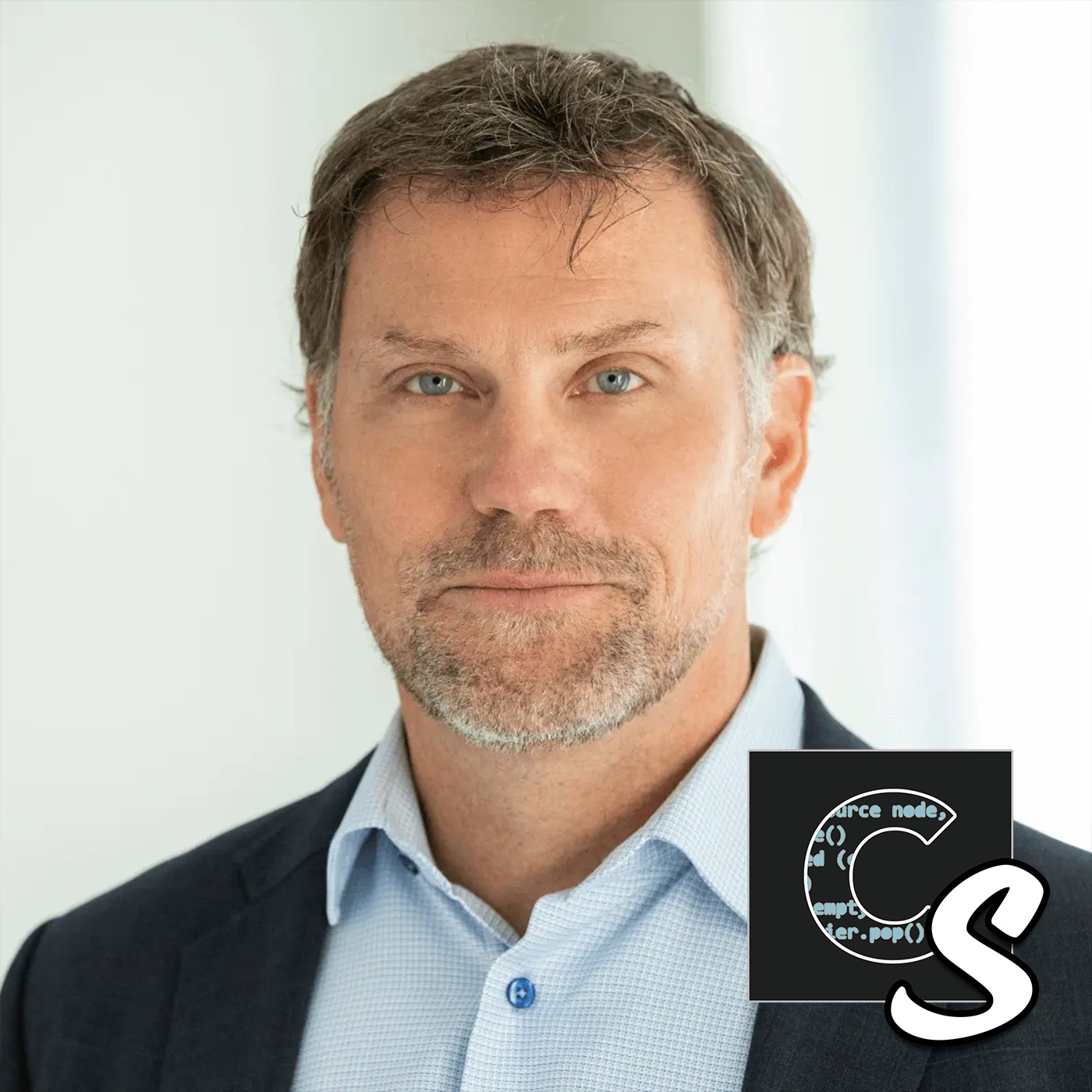
Brian Carbaugh has a non-standard path to being a CEO in the startup world. He was in the marine core for 5-6 years in active duty, before attending Georgetown for school. Eventually, he joined the CIA and spent 23 years, serving the country in multiple different roles and facets, primarily in para military and covert operations. While he was there, he also started to see areas where the agency could innovate, and got curious about how they could partner with private companies. Outside of tech, he is a father of 3 girls and a boy. He enjoys working out, skiing and riding on road bikes. He used to do triathlons in the past, but startup life has taken up any time he could dedicate to that.
Shortly after he retired from the CIA, Brian got a call from some prior folks he knew still in the industry. He started digging into the cybersecurity world, specifically into why there was so much attrition amongst the employees themselves. He was asked the question about how he could 10x this workers, and optimize these individuals using the latest tech?
This is the creation story of Andesite.
Sponsors
- Unblocked (https://getunblocked.com/codestory)
- TECH Domains (https://get.tech/codestory)
- Mezmo (https://mezmo.com/codestory)
- Braingrid.ai (https://braingrid.link/code-story)
Links
Our Sponsors:
* Check out Cash App and use my code CASHAPP10 for a great deal: https://cash.app
* Check out Plaud AI and use my code CODESTORY for a great deal: https://plaud.ai
Advertising Inquiries: https://redcircle.com/brands
Privacy & Opt-Out: https://redcircle.com/privacy
[SPEAKER_00]: Shortly after I retired from CIA, I got a phone call from some colleagues back inside the U.S. intelligence community.
[SPEAKER_00]: I was asked to come in and sit down and talk with some digital and cyber leaders who were trying to solve her problems.
[SPEAKER_00]: And one of those problems was workforce retention, just losing people out of the socks and out of the cyber workforce that has they got experienced and off they go and they ended up being coached by private sector companies.
[SPEAKER_00]: The questions that started coming at me from some teammates back inside the intelligence community were really centering around, how can we maximize the efficiency and the speed of our workforce?
[SPEAKER_00]: And the real number that was thrown down was, hey Brian, what do you think we could do to sort of ten X the impact of our workforce?
[SPEAKER_00]: My name is Brian Carball and I'm the CEO and co-founder of Andesite.
[SPEAKER_01]: This is Co-Story.
[SPEAKER_01]: a podcast bringing you interviews with tech visionaries.
[SPEAKER_01]: Six, six months moonlighting goes.
[SPEAKER_01]: It's the last and all of the backgrounds who share what it takes to change an industry.
[SPEAKER_01]: I don't exactly know what to do.
[SPEAKER_01]: It doesn't go as to get right.
[SPEAKER_01]: who built the teams that have their bad company is its team's help each other, which is proud of our team.
[SPEAKER_01]: Keeping scalability top of mind, all that infrastructure was up there.
[SPEAKER_01]: Yes, we've been fighting it as we grew up.
[SPEAKER_01]: Total waste of time.
[SPEAKER_01]: The stories you don't read in the headlines.
[SPEAKER_01]: It's not an easy thing to achieve.
[SPEAKER_01]: To get yourself a deficit of off, try to begin to ride the ups and downs of the start-up line.
[SPEAKER_01]: Need to really want it.
[SPEAKER_01]: Not just about technology.
[SPEAKER_01]: All this and more on code story.
[SPEAKER_01]: I'm your host Newellab part and today how Brian Carball is building the sock driven by AI in powering cybersecurity teams to remain at the helm.
[SPEAKER_01]: Brian Carball has a non-standard path to being a CEO in the startup world.
[SPEAKER_01]: He was in the Marine Corps for five to six years in active duty before attending Georgetown for school.
[SPEAKER_01]: Eventually, he joined the CIA and spent 23 years serving the country in multiple different roles and facets, primarily in paramilitary and covert operations.
[SPEAKER_01]: While he was there, he also started to see areas where the agency could innovate and got curious about how they could partner with private companies.
[SPEAKER_01]: But outside of technology, he is a father of three girls and a boy.
[SPEAKER_01]: He enjoys working out, skiing, and riding on road bikes.
[SPEAKER_01]: He used to do triathlons in the past, but startup life has taken up any time he could dedicate to that.
[SPEAKER_01]: Shortly after he retired from the CIA, Brian got a call from some prior folks he knew still in the industry.
[SPEAKER_01]: He started digging into the cyber security world, specifically into why there was so much attrition amongst the employees themselves.
[SPEAKER_01]: He was asked the question about how he could 10X these workers and optimize these individuals using the latest tech.
[SPEAKER_01]: This is the creation story of Andesite.
[SPEAKER_00]: And a site is really at our heart and soul, a data analytics company, and we're trying to use advanced data analytics to solve really hard, pernicious, longstanding problems.
[SPEAKER_00]: Our first product that we built off of, what is truly sort of a platform approach is a cybersecurity product for the security operations center.
[SPEAKER_00]: So for the socks, and
[SPEAKER_00]: As you and your listeners know, the socks that it's a complex workplace, it's fluid, it's dynamic, there's a lot of blinking red lights, there's a lot of alarms going off.
[SPEAKER_00]: It's just a very frenetic chaotic busy place.
[SPEAKER_00]: It also happens to be incredibly important work, right?
[SPEAKER_00]: No-go-work protecting our networks.
[SPEAKER_00]: There's awesome people who go into the cybersecurity domain.
[SPEAKER_00]: So what we looked at and what we've built know it is,
[SPEAKER_00]: a product that uses advanced technology.
[SPEAKER_00]: I was using AI.
[SPEAKER_00]: It's at the core of what we do, as well as some really disciplined approach and creative approaches to data science, and technology software development, and pairing with elite cybersecurity professionals, people who spend their careers in this space.
[SPEAKER_00]: to bring a piece of technology really that has the human operator that cybersecurity analysts at the center of all that we do.
[SPEAKER_00]: So we like to say and we're proud of the fact that we have built technology to very elegantly wrap around the user to wrap around that cybersecurity practitioner.
[SPEAKER_00]: With the goal of being, let's make your life easier, but it's a stressful place.
[SPEAKER_00]: There's a ton of burnout, there's no reinforcements on the way in terms of all of those cyber vacancies, a lot of the empty seats.
[SPEAKER_00]: So we want to use technology, certainly not to replace the human, but to make the humans better, faster, stronger, in making decisions to reduce risk.
[SPEAKER_00]: So, again, at our center, what we do is transform and accelerate the accuracy of human cyberwork to reduce the risk.
[SPEAKER_00]: It actually started shortly after I retired from CIA, I got a phone call from some colleagues back inside the US intelligence community.
[SPEAKER_00]: I was asked to come in and sit down and talk with some digital and cyber leaders who were trying to solve her problems and one of those problems was workforce retention.
[SPEAKER_00]: just losing people out of the socks and out of this cyber workforce that as they got experience and got to that point where they're that tier two or tier three cyber operator that we know they're off they go and they end up being poached by private sector companies who can move faster and they could get their hands on the latest technology.
[SPEAKER_00]: The questions that started coming at me from some teammates back inside the intelligence community were really centering around, how can we maximize the efficiency and the speed of our workforce?
[SPEAKER_00]: How do we optimize?
[SPEAKER_00]: And the real number that was thrown down was, hey, Brian, what do you think we could do?
[SPEAKER_00]: It's sort of 10x, the impact of our workforce.
[SPEAKER_00]: And as we started looking at it and ideating on how if we were going to build our own company to try to do this or how we would advise,
[SPEAKER_00]: though is back inside the building and how to do it.
[SPEAKER_00]: It started to center around just how fast the technology is changing, right?
[SPEAKER_00]: So if they asked that question five or six years ago, AI just wasn't there, right, to be able to move its feed and scale.
[SPEAKER_00]: But we're at a new point, right?
[SPEAKER_00]: I think an inflection point, if using new technology with the right type of approach to optimize human being.
[SPEAKER_00]: So the roots of the company stem from folks who are defending some of the most targeted organizations in the world saying, we need help.
[SPEAKER_00]: The light is blinking red in terms of our overall sort of
[SPEAKER_00]: ability to do what we feel like we need to do to counter the threat.
[SPEAKER_00]: So we went back to Red Cell and I sat down with Grant and started making some phone calls phone a friend, some people who were really thought leaders and experienced in a space like Billy McBillan, who is our chief product officer, who at the time was, functionally, the deputy SISO at Salesforce.
[SPEAKER_00]: He had been the chief information security officer at CIA.
[SPEAKER_00]: At Billy had been someone like me who served on the director of operations side within CIA
[SPEAKER_00]: And really started taking on aggressively taking on driving and leading CIA cyber operations from offense to defense.
[SPEAKER_00]: So I reached out to Billy when he was still at Salesforce and started to lay out for him what we were considering.
[SPEAKER_00]: And in approach, strategizing different types of approaches we could take.
[SPEAKER_00]: He's a lifelong friend of mine who went to college together and was thrilled when Billy came over, joined the end of sight as I think a boy number three or played number four.
[SPEAKER_00]: As our chief proctor officer, and it was really then that, with Billy on board, Alex Thayman, who was our chief architect at the time, who's the chief chief technology officer now.
[SPEAKER_00]: building out when we start product visioning, pushing this thing forward again with its core idea, the genesis being we've now seen and heard from government sector teammates that they've got workforce issues, they're struggling to keep up, they've got silo data, they've got context challenges, context tax essentially where.
[SPEAKER_00]: You're losing the sort of crux of the issue you're investigating just through all of the different screens you have to toggle through.
[SPEAKER_00]: And then we were here on the same thing from teammates in the commercial sector.
[SPEAKER_00]: So we looked at, in said, there's a broad problem.
[SPEAKER_00]: It's pervasive.
[SPEAKER_00]: It's in government and in commercial space.
[SPEAKER_00]: Let's build a team that is in itself diverse and takes a broad approach but an aggressive approach to not try to solve a down market point solution problem, but let's look at the real scope of their problem, build a platform and really try to get after it.
[SPEAKER_01]: Let's dive into the MVP, and at first, version of what she builds, how on it takes to build and what sort of tools we're using to bring to life.
[SPEAKER_00]: The MVP that that's going to be a challenge for any startup, right?
[SPEAKER_00]: You want to make sure that you're balancing your own beliefs and how you and your team want to approach the problem.
[SPEAKER_00]: But you're also starting to merge that with what you're hearing from potential customers or design partners, a couple of thoughts on how we approach MVP.
[SPEAKER_00]: Number one, what none of us wanted was to be ideating and building in an echo chain.
[SPEAKER_00]: I think for us, one of the real advantages as we started to build out our MDP is that we're coming at it with a very diverse team.
[SPEAKER_00]: And I've already hinted at some of that.
[SPEAKER_00]: Billy's background in mentioning he's the real deal in cybersecurity, Alex Thayman.
[SPEAKER_00]: didn't come from a cybersecurity space and that's by design.
[SPEAKER_00]: So Alex had spent 15 years at Microsoft doing large language model computer vision stuff.
[SPEAKER_00]: He'd been at scale AI.
[SPEAKER_00]: So Alex is a pure technologist with a track record of solving super hard problems at speed.
[SPEAKER_00]: And then we just start layering around Billy and Alex a team that has the requisite expertise to be credible in the space in which we're operating.
[SPEAKER_00]: So in this case, again, like we talked about we're going
[SPEAKER_00]: They're in the socks.
[SPEAKER_00]: So you gotta have people who've walked the walk, right?
[SPEAKER_00]: They felt those pain points.
[SPEAKER_00]: So we recruited a team of super high performing apex threat hunters out of the CIA, out of NSA, out of US military cyber units, out of top tier private sector, cyber security teams.
[SPEAKER_00]: Once you've felt those pain points, who would know what it's like to play that sort of technology, Twitter, and spin around from one piece of tech to the other to try to keep that threat of context all throughout.
[SPEAKER_00]: And then alongside, then we layer in the type of technologists who have a background again, and being a part of a diverse team, solve and problems very quickly, so that MVP starts to come together when you have a diverse team all move it in the same direction.
[SPEAKER_00]: And then when you layer in, something that's important for us, and I think we'll get to later in the conversation, I think there's a cultural component to this, right?
[SPEAKER_00]: Where we didn't want to go at this with a lot of hubris and feel like we know exactly how to solve the
[SPEAKER_00]: For sure, we have our own ideas, and we have people who, as I've said, have come from that space, but even at very early on with design partners with really focused questioning of friends and cisos and cyber operators in the ecosystem.
[SPEAKER_00]: a high degree of humility, right?
[SPEAKER_00]: So ask the question and have the humility to listen to the answer.
[SPEAKER_00]: And if it doesn't match with what your expectations are, then you need to pay some close attention to that.
[SPEAKER_00]: So what we didn't want to do is build a piece of technology, build an approach that is going at trying to solve the problem in a way that would not resonate with our customers that wouldn't resonate with the human users.
[SPEAKER_00]: And that ultimately would just be something that sat on the shelf and didn't get you.
[SPEAKER_00]: So that pushed for MVP, have a diverse team, lot of humility, no echo chamber.
[SPEAKER_00]: And I think as we've layered in engineering and product expertise, strictly people who have real reps and have put real time and cycles in the startup space.
[SPEAKER_00]: Um, that was huge.
[SPEAKER_00]: And again, from your back, I don't know that you've done speed matters.
[SPEAKER_00]: So when you're developing that MVP, you're on the clock and you've, you've got to be able to make decisions pretty quickly as a team fail fast.
[SPEAKER_00]: If you have to take that feedback on the chin that you're getting from your early design partners and be able to turn around very quickly and get that that MVP out to market so you can start to refine it moving forward.
[SPEAKER_01]: So then you get to that point, right?
[SPEAKER_01]: You've operated with humility.
[SPEAKER_01]: You start to lay her in the folks that have the reps.
[SPEAKER_01]: I'm curious about, you know, road map, right?
[SPEAKER_01]: And how did you progress in mature and decide, and I'm curious about how you built that road map?
[SPEAKER_01]: What sort of criteria did you go through to figure out that, okay, this is the next most important thing to build her to address.
[SPEAKER_00]: on that next most important thing on the roadmap, and I'll definitely get your question here a second.
[SPEAKER_00]: I was having a conversation with someone who's in the human capital business, and she's really top tier in placing C-suite leaders in portfolio companies of one of the country's largest, private equity firms.
[SPEAKER_00]: And I asked her, said, what do you see?
[SPEAKER_00]: You've been doing this for years.
[SPEAKER_00]: You're placing people in these super consequential jobs in C-suite roles.
[SPEAKER_00]: What do you see as a common characteristic across the teams that are the most high-performing
[SPEAKER_00]: And what she said was, the teams that have a super diligent focus on the top three priorities and the whole company knows what those priorities are.
[SPEAKER_00]: And if it's not in those top three priorities, then you're out like that you will get to that later.
[SPEAKER_00]: So, for us when we look at the roadmap,
[SPEAKER_00]: We, we as any other startup would have to be really out of business.
[SPEAKER_00]: You have to be focused on what are our priorities for us with full credit to Billy McMillan and to Alex.
[SPEAKER_00]: We have had a product north star road map from the very beginning.
[SPEAKER_00]: We iterate with our earliest design partners.
[SPEAKER_00]: We iterate with our customers.
[SPEAKER_00]: We have a customer advisory board.
[SPEAKER_00]: on whom we rely, people who are senior in this space to see and bounce things off them, right?
[SPEAKER_00]: Are we moving in the right direction?
[SPEAKER_00]: Is the platform moving in the right direction?
[SPEAKER_00]: So I think one have that roadmap, you have to.
[SPEAKER_00]: To have that product north star and don't too rigidly adhere to that, it isn't something you want to be changing every quarter or you're going to give yourselves in your company, whiplash.
[SPEAKER_00]: So you want to revaluate that product north star and make sure that that is in fact a direction in which we need to be going.
[SPEAKER_00]: and then for us as a leadership team, decisions that we make in terms of hiring, staffing, where we're investing our capital, our human capital, where we're investing our financial capital.
[SPEAKER_00]: That all has to tie into sort of what is that roadmap?
[SPEAKER_00]: What is that product more star?
[SPEAKER_00]: And what are we hearing in terms of customer feedback?
[SPEAKER_00]: One of the things I'll add there too is because from the very beginning, we wanted to build a platform, as I said, we wanted to build something that solved problems in the toughest enterprise.
[SPEAKER_00]: So highly regulated industries like financial services, the natural security space, critical infrastructure.
[SPEAKER_00]: We knew going into that, like we've got to be able to take a strategic approach approach to this.
[SPEAKER_00]: And you've got to be able to listen to some of those buyers because they can become similar to your most effective sort of advisors in some way.
[SPEAKER_00]: That roadmap super super important.
[SPEAKER_00]: We find ourselves going back to it a lot.
[SPEAKER_00]: Like I said, we're doing monthly reviews to make sure that we're on track.
[SPEAKER_00]: But we're not too rigidly adhering to that roadmap because I think
[SPEAKER_00]: In that tutor, there's going to be risk.
[SPEAKER_00]: So the way forward matters, the technology, the environment's changing so fast.
[SPEAKER_00]: Just look over the last few weeks here with the, you saw tremors in the market with what plot is doing.
[SPEAKER_00]: You're here feedback from investors.
[SPEAKER_00]: You're here feedback from others.
[SPEAKER_00]: It's the death of SaaS.
[SPEAKER_00]: It's none of those things, but it certainly can cause you and should if you're on a leadership team to make sure you're revalidating.
[SPEAKER_00]: Your fundamental principles, you're looking at that product and you're able to be dynamic as the market is going to
[SPEAKER_01]: Let's flip to team.
[SPEAKER_01]: You know, you're layering those people, you're building a team to make this thing happen.
[SPEAKER_01]: How did you go about finding those people in what sort of criteria were you looking for to indicate a day or the winning horses is joining?
[SPEAKER_00]: Team Dynamics, I could nerd out on that for a long time.
[SPEAKER_00]: I'm just a firm believer that teams win, no matter what this scenario, I mentioned when we started our conversation in my background in CIA, and had to say of the things that I look back on about which a most grateful and so I have the fondest memories and some of the best sort of learning examples and opportunities I had is being on or high performing teams, like seeing leaders,
[SPEAKER_00]: out in front of me, who I wanted to emulate, who, you know, built that winning spirit, a major that everyone on that team's felt seen and heard, shared the vision and built empowering teams with, again, with, like, high humility, super low ego.
[SPEAKER_00]: That dynamic for me was left a lasting impression.
[SPEAKER_00]: I also saw, as I got more senior, you see the real value of having back to that diversity, right?
[SPEAKER_00]: The last thing I would want to do, my last role when I was CIOs, the director of this special activity center.
[SPEAKER_00]: So it's the home of all of CIA's cover action capability, the men, the women, and all of the things that you would imagine go into.
[SPEAKER_00]: Ensuring that CIA, when called upon, is able to carry out very creative, very aggressive,
[SPEAKER_00]: The last thing I would want is to look across a room and see a bunch of people looking back at me who's looking and think just like me, like that.
[SPEAKER_00]: I think that Echo Chamber creates a lot of risk for leaders, a lot of risk in decision-making and blind spots and bias that creeps in.
[SPEAKER_00]: There's a lot of danger there.
[SPEAKER_00]: So for me,
[SPEAKER_00]: and for Alex and Billy and the other leaders had an excited and with Grant for Stannig as well.
[SPEAKER_00]: When we thought to build out the team, we wanted to have again that diversity of approach diversity of background.
[SPEAKER_00]: We wanted people with a high degree of resiliency, people who, if they hadn't had an opportunity to be in a startup,
[SPEAKER_00]: That's okay, but they've shown that they're in teams that were superfluid, super dynamic, and you might find out on a Monday that what you thought your week was going to be all about is really not what you're going to be doing at all.
[SPEAKER_00]: It's going to be something quite different.
[SPEAKER_00]: And you've got that resilience, right?
[SPEAKER_00]: You can bounce back when things don't go your way.
[SPEAKER_00]: It's a high trust environment.
[SPEAKER_00]: So there were definitely some intangibles that we look for.
[SPEAKER_00]: I hand out a book all the time by James Kurtz called Legacy and it's a awesome book on leadership he talks about uses the all blacks the rugby team as a platform to say how do you build a winning culture like how do you build an organization that just wins year and year out and being able to build that team of diverse thinkers of people who that
[SPEAKER_00]: buy in and invest in the culture of an organization that invest of themselves in mentoring and helping others.
[SPEAKER_00]: That's what we look to as we built the team out and when we started to scale, we're sticking with that.
[SPEAKER_01]: Okay, let's flip to scalability and it is could be, you know, approach an early days of how you've thought about scale and you're building an early product, but I'm curious if there's been interesting areas where you've had to fight it as you've grown.
[SPEAKER_00]: for sure, scaling stuff.
[SPEAKER_00]: There's obviously so much hanging in the balance, right?
[SPEAKER_00]: There's just risk on so many sides of that.
[SPEAKER_00]: And it comes with challenges for sure.
[SPEAKER_00]: So a couple things I look at for us with scaling.
[SPEAKER_00]: One thing that helped us just from a, from an engineering and from a platform sort of technology architecture approach, not just from the team standpoint, from the tech first.
[SPEAKER_00]: We went out early on and we looked at it and said if our ideal customer profile is going to be the large well-resourced and to price cybersecurity team forward looking.
[SPEAKER_00]: we've got to have a piece of technology that is compliant in that environment.
[SPEAKER_00]: So we from the very beginning with our seed investment from general catalyst and red cell partners with the support of our board and the leadership there went hard at a compliance approach that we refer to as compliance highs.
[SPEAKER_00]: For a startup, we're fed ramp high, socks to type two, I joke, the letters all the numbers and for us, that's a real investment in money and being people in time and engineering cycles is also an investment in culture, right?
[SPEAKER_00]: You have to do things that maybe it from some viewpoints might seem as if they're of dragon-ducing rather than lifting-ducing, because it slows you down.
[SPEAKER_00]: But in the end, we've looked at the complicing and said, this is a key market on lock for us.
[SPEAKER_00]: And at this point in our journey, that vision, again, which I credit to the rest of the team has very much been realized.
[SPEAKER_00]: So if we're scaling,
[SPEAKER_00]: It is something that because we have already met so many of those requirements for enterprise buyers, for our channel partners who are moving our technology to market as we look to expand international markets, us being able to have all those pieces in place already has greatly enhanced and facilitated our ability to scale.
[SPEAKER_00]: So that compliance I think has been key for us.
[SPEAKER_00]: The second thing I'd say is cultural thing where, you know, finding that right balance to in-scale and between speed and maybe being overly methodical, right speed and momentum matter and in the start-up world, that said, so does credibility, but ability to deliver on your promises and deliver on what your customers are expecting you to bring to the fight if you will.
[SPEAKER_00]: So,
[SPEAKER_00]: as we're looking to scale and as we've been building out the team, it's been with a very clear eye.
[SPEAKER_00]: Again, on that, what's our product, North Star, what's our roadmap, what are we hearing from customers, customer success?
[SPEAKER_00]: I think in this market and the AI sought space withers, just a ton of noise, customer success, success is a big thing.
[SPEAKER_00]: And we're a team of people who listen to what our customers are saying.
[SPEAKER_00]: That's also helped.
[SPEAKER_00]: I think for us kind of factor into our ability to scale.
[SPEAKER_00]: And maybe not, it is many of the plavals is what you might expect.
[SPEAKER_01]: Brent, as you step out on the balcony, and you look across all that you've built thus far with Antisite, what do you most proud of?
[SPEAKER_00]: For that, Noah, I'd say a most proud of the team that we built and more to the point that the culture that the team has now for quite some time then really on their own helping to to further instill
[SPEAKER_00]: to advance and to share across the company.
[SPEAKER_00]: That for me is by far the thing that I've given me the most gratitude and satisfaction to job.
[SPEAKER_00]: The end of the day life happens and we've got an amazing group of people who have lives every day lives and things that they're doing, they're committed to this and to the mission.
[SPEAKER_00]: I think again as we share, I just have a lot of immense respect for people in the cybersecurity space who are
[SPEAKER_00]: Regardless of where they work and what role they play, this work matters certainly now more than ever.
[SPEAKER_00]: Look at what our country is up against right now in our nationally and in a high risk of cyber attacks.
[SPEAKER_00]: But I say that to say that it's a team that's got a lot of empathy for the people who are prosecuting the mission for the people we're trying to deliver the technology force or that they can use it and one make their life better, right?
[SPEAKER_00]: So that they're not going to work every day.
[SPEAKER_00]: Sitting in their car trying to psych themselves up to go in there and go do the
[SPEAKER_00]: a company like Anacite and a product that is really developed all about them and to empower them.
[SPEAKER_00]: So to see that mission-first mission-focused culture start to spread organically, where you've got people who now, for the last two years, I'd say, it's less of something that the C-suite really directs our time and cycle about.
[SPEAKER_00]: It's the culture part being certainly very important to us.
[SPEAKER_00]: But
[SPEAKER_00]: we've got a company now of people who's eye into that and see that having empathy for your teammate being there for your teammates who might be struggling helping out take a look at some code if someone needs it being available to take a question on a weekend being available to to say hey I feeling open enough to say hey look I've got to take a dare to I've got stuff going on my life right now I need to reset let's do it right I we take a long-term approach attracting and bringing the right type of people on to these types of teams
[SPEAKER_00]: take time so I want to we want to protect them and make sure they love what they do in terms of the mission and they love being on this team Yeah, I think no for me.
[SPEAKER_01]: It's just been cool to see how the team's growing and see how the culture grows along with it in the right way Okay, Brent, let's flip the script a little bit tell me about a mistake you made and how you and your team responded to it
[SPEAKER_00]: Here's what I'll say about that.
[SPEAKER_00]: I figured this one's totally on me.
[SPEAKER_00]: When we started, as I mentioned, it fall 22, early 23, we're trying to figure stuff out and then doing some customer interviews and we're really locked in on our product as this in 2024.
[SPEAKER_00]: One thing I just didn't see coming in 2023, 2024 is just how noisy the AI sock marketplace would become.
[SPEAKER_00]: You've got 50, 60 companies here.
[SPEAKER_00]: Seemingly, every time I turn around, there's another announcement and another team in the space
[SPEAKER_00]: It starts to all sound the same, and to be fair to everyone in this face, right?
[SPEAKER_00]: That's the market saying, hey, there's real needs here, right?
[SPEAKER_00]: We've got these people who are in there putting their shoulder and do the flight every day in the socks.
[SPEAKER_00]: We got to do better for them, right?
[SPEAKER_00]: They we owe it to them, they deserve the best kind of attack that we can possibly give them to be able to blunt the threat vectors that are coming at them every second of the day.
[SPEAKER_00]: But we didn't know it was gonna be at any, because we started building our team and our cack in our approach.
[SPEAKER_00]: I think we probably kept our voices quiet for too long.
[SPEAKER_00]: We invested heavily in continuing to on engineering and product.
[SPEAKER_00]: That's what this is about.
[SPEAKER_00]: But we didn't, they're frankly cards in the table.
[SPEAKER_00]: There's a lot of noise in the space.
[SPEAKER_00]: There's a lot of marketing money being spent by companies in the space.
[SPEAKER_00]: And we didn't want to be one of those companies just ran the risk of over-promising and under-delivering because we had a big marketing budget at the marketing team.
[SPEAKER_00]: So we under invested in that.
[SPEAKER_00]: We just didn't put a lot of money.
[SPEAKER_00]: We didn't build the team out.
[SPEAKER_00]: We've had to include up until recently a small bit mighty and trepid.
[SPEAKER_00]: the end of folks who were heading out of the marketplace to evangelize on our behalf, and to be fair, like, we're at a better balance point now.
[SPEAKER_00]: I think we found that right balance, but I think we kept our voices quiet a little bit too long.
[SPEAKER_00]: We love what we hear from customers.
[SPEAKER_00]: We know what our reputation is in this space, so we're proud of that.
[SPEAKER_00]: We know that our reputation is as a team and a technology and a product that delivers, right?
[SPEAKER_00]: We hear it from customers.
[SPEAKER_00]: We've heard it from from the therapy game with design partners, so we've got a great story to tell and I think we all feel a little bit more confident and that we could be more full-throated about team and the technology and the approach and what we bring to our customers, but yeah, I think on that one that I got to own that, but you know, we're making up for lost time.
[SPEAKER_00]: That's for sure.
[SPEAKER_01]: Okay, this will be fun.
[SPEAKER_01]: Let's move forward.
[SPEAKER_01]: What does the future look like for Andy site for for what's your building the product for the team although the whole nine yards.
[SPEAKER_00]: any answer that doesn't focus on, we've got to continue to deliver for our customers in the sock landscape, probably as into good answer, right?
[SPEAKER_00]: It's not credible.
[SPEAKER_00]: So we've built a platform, as I said.
[SPEAKER_00]: We absolutely architected an engineer to platform to deliver strategic context.
[SPEAKER_00]: at scale and speed for human decision makers and that first product that we brought to market is in the stock space.
[SPEAKER_00]: So our roadmap right now, the most important thing that we can be doing as a team is to be delivering for our customers.
[SPEAKER_00]: Number one, again, that customer success function is huge and we're really excited about a really powerful team we've built out in that regard.
[SPEAKER_00]: I think too obviously we have to continue to scale and grow what it is that we're doing.
[SPEAKER_00]: So continue to grow that customer base, listen to our customers, continue to refine, refine the technology, refine the approach so that we continue to get great feedback on customer usage metrics.
[SPEAKER_00]: Right?
[SPEAKER_00]: Now, of us want to build something again that just sits on a shelf.
[SPEAKER_00]: So,
[SPEAKER_00]: I think at a better level, macro level, deliver for your customers and really be seen as that team that is solving hard problems in hard environments for customers who have a very thin margin of error.
[SPEAKER_00]: So we're doing that.
[SPEAKER_00]: We got to keep doing that and we're going to scale that up.
[SPEAKER_00]: I think beyond that, Noah, again, we built a platform, connects to a lot of things.
[SPEAKER_00]: So there's an obvious extensibility there for us as we look at other product offerings in the
[SPEAKER_00]: You know, we're now seeing the ability to broaden that aperture a little bit and continue to build on the successes that we're having in the sock space.
[SPEAKER_00]: That's what the future holds for us.
[SPEAKER_00]: Get after it right now and deliver for the people who are who needed in the sock and we've got great confidence and a platform approach of architecture and a compliance approach that will let us start to expand what it is that we're offering to customers here in the very very near term.
[SPEAKER_01]: Let's wish you, right?
[SPEAKER_01]: Who influences the way that you work?
[SPEAKER_01]: Name a person or many persons or something.
[SPEAKER_01]: You look up to him, why?
[SPEAKER_00]: Someone who, you know, I'm not trying to, in any way, be hokey about this.
[SPEAKER_00]: I, when I look at other startups, like startups that have scaled and been super effective at what they do,
[SPEAKER_00]: those founders, those leaders who've been able to stay true to themselves, to stay true to their ideas, but also be able to onboard and incorporate feedback from customers in a way that is done with speed and with purpose.
[SPEAKER_00]: That's powerful for me.
[SPEAKER_00]: For me, honestly, I didn't grow up in the cyber space, right?
[SPEAKER_00]: I was in the special operations realize early first team in Afghanistan and did all the counterterrorism wars.
[SPEAKER_00]: My movement to
[SPEAKER_00]: This great answer here, people who influence my thinking and how I do my job, I'm not going to customers, right?
[SPEAKER_00]: Walk it into a saw and just seeing what's going on there.
[SPEAKER_00]: Looking at the enormity of the threat, the enormity of the risk, I have 32 years in public service.
[SPEAKER_00]: So when I retired from CIA, that's really all I had known.
[SPEAKER_00]: And
[SPEAKER_00]: I've plenty of teammates and colleagues from across the military special operations around across the IA who've gone through that transition, that can be hard because you're going from something that you feel a lot of belonging and a real mission type focus in those types of roles, particularly the ones that I was grateful to be a part of in CIA.
[SPEAKER_00]: If you don't find something that's got that same appeal, there can be drift, right?
[SPEAKER_00]: That can be a difficult
[SPEAKER_00]: sort of cast them to bridge, but for me, being able to be a part of this team, to be able to be a part of trying to solve some of these challenges that our cybersecurity professional space is straight up, if the huge honor, so it's super motivating for me, it's energizing, I get up every day, it's something I'm happy to be a part of, but for me, shaping by thinking, how am I going about what I'm doing, talking here from customers, and oftentimes here
[SPEAKER_00]: Insight, this thing's awesome, but it'd be even more awesome if it can do this or do that.
[SPEAKER_00]: Or, hey, we got to put some more cycles at this part of what we're doing.
[SPEAKER_00]: That's not the super motivating because it gives us something to focus in on and to fix and I take a lot of energy from that.
[SPEAKER_01]: Brian, last question.
[SPEAKER_01]: So you're getting on a plane and you're sitting next to a young entrepreneur who's built the next big thing.
[SPEAKER_01]: They're jazzed about it and they can't wait to show it off to the world and can't wait show it off to you right there on the plane.
[SPEAKER_01]: What advice do you give that person having gone down this road a bit?
[SPEAKER_00]: It feels presumptuous for me to be even answering a question like that.
[SPEAKER_00]: It's not like I'm at a position to be waxing experiential necessarily here three or four years into my journey.
[SPEAKER_00]: A couple of things that come to mind right away just as I look at decisions I made mistakes I've made.
[SPEAKER_00]: Yeah, I'd say number one, take care of yourself, right?
[SPEAKER_00]: Be resilient, believe in yourself, believe in that idea.
[SPEAKER_00]: But just know that, you know, dear, these are going to be long days, like all of the laws of nature are really lining up to crush whatever your idea, whatever your dream is, right?
[SPEAKER_00]: Like to start up space, there's a whole lot of reasons why early stage companies don't make it for the founders at that.
[SPEAKER_00]: had that drive had the fire, the landscape has so many examples of companies that beat the odds and founders who had the idea and had the passion, had the belief in the convictions.
[SPEAKER_00]: So, be true to yourself, follow that conviction, follow that belief, be resilient, right?
[SPEAKER_00]: Have those go to behaviors that you can tap into, whatever they are, so that
[SPEAKER_00]: You can reset yourself a little bit, right?
[SPEAKER_00]: You can get yourself back into that sort of flow state as an entrepreneur and as a founder quickly when setbacks happen because they will, right?
[SPEAKER_00]: They're you're going to meet investors who might look at your idea and go, that's just not the right fit at the right time or we're over indexing that space or you're going to have setbacks.
[SPEAKER_00]: You're going to have custom or turn early on.
[SPEAKER_00]: You're going to have your heart set on landing that one design partner.
[SPEAKER_00]: And for whatever the reason is it might not happen.
[SPEAKER_00]: So to be able to bounce back, believe in yourself.
[SPEAKER_00]: And honestly, I had someone tell me, I think it was about six months ago.
[SPEAKER_00]: I came in.
[SPEAKER_00]: I was talking to the folks on the Andesite team.
[SPEAKER_00]: Someone goes, that's why you're the CEO and I was like, well, I don't know what, I would kind of smile and he goes, no, I mean, the chief energy officer and not that I'm there to be clapping up everyone with sort of false praise, but to say that for that person I'm talking to on the flight, people are going to be looking to her, right, or to him and that vision that belief that's got to translate sometimes in manifests itself to the people in your team in a way that's empowering and inspiring.
[SPEAKER_00]: You've got to get that conviction.
[SPEAKER_00]: So,
[SPEAKER_00]: I'd say go for it.
[SPEAKER_00]: Be ready for the ups and downs.
[SPEAKER_00]: Maybe invest in some sleep monitoring technology.
[SPEAKER_00]: See what impacts your sleep and what doesn't.
[SPEAKER_00]: But be prepared to get us in all that right away when it keeps telling you every day that something disrupted your sleep.
[SPEAKER_00]: Odds are it's the fact that you're going to start up, but it's tremendously rewarding place to be.
[SPEAKER_00]: There is disguised the limit in terms of things that that the right founding team with the right vision, the right energy and ability to team.
[SPEAKER_00]: You can move mountains and really change things in the world.
[SPEAKER_00]: pretty exciting place to be so I'd say go for it at a best of luck.
[SPEAKER_01]: Absolutely good and agree more and that's fantastic advice.
[SPEAKER_01]: Well Brian, thanks for being on the show today.
[SPEAKER_01]: And thank you for telling the creation story of and a site.
[SPEAKER_01]: Thanks, Noah.
[SPEAKER_01]: And this concludes another chapter of Coat Story.
[SPEAKER_01]: code story is hosted and produced by no a lab part.
[SPEAKER_01]: Be sure to subscribe on Apple podcast, Spotify, or the podcasting app at your choice.
[SPEAKER_01]: And when you get a chance, leave us a review.
[SPEAKER_01]: Both things help us out tremendously.
[SPEAKER_01]: And thanks again for listening.
Latest Season of the Podcast is Sponsored By

 Apple Podcasts
 Castbox
 Castro
 Goodpods
 Moon FM
 Overcast
 Pocket Casts
 Podbean
 Podcast Addict
 Podcast Republic
 Spotify