Developer Chats – Pavel Shchekotov
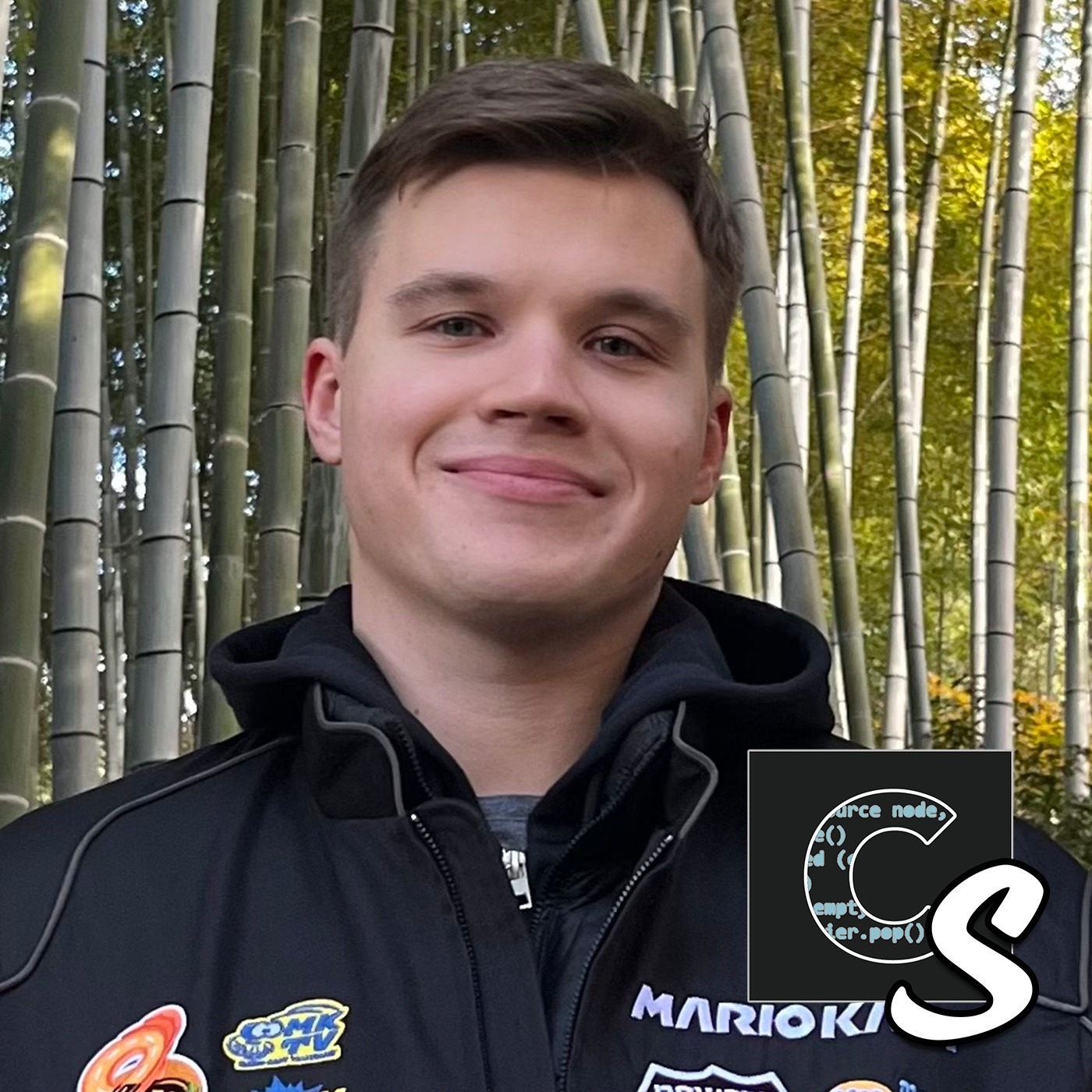
Today, we are continuing our series, entitled Developer Chats - hearing from the large scale system builders themselves.
In this episode, we are talking with Pavel Shchekotov, Founding Engineer of specializing in voice-first, conversational AI products. Pavel is going to take us through his experience as an agency founder, leading into building voice driven, consumer AI.
Questions
- Today you're building AI-native consumer products around conversational interfaces and user engagement. How has that journey shaped the way you think about product engineering?
- What did those agency years teach you about product development that most engineers never learn?
- What convinced you that voice could be the primary interface rather than just another feature?
- What are the hardest engineering and product challenges that emerge when conversation itself becomes the product?
- What’s one problem that seemed trivial on paper but became surprisingly difficult at scale?
- What did you learn about technology adoption, trust, and user behavior from building for a demographic that much of the tech industry tends to ignore?
- How do you decide whether a startup problem should be fixed, optimized, or completely reimagined?
- What does being a Founding Engineer actually look like day-to-day, and how is it different from being a senior software engineer?
- Where do you think people are overestimating AI today, and where are they still underestimating it?
- Looking forward three to five years, what do you think the most important category of AI-native consumer product will be—and what capabilities will those products need that don’t exist yet?
Sponsors
Links
Our Sponsors:
* Check out Cash App and use my code CASHAPP10 for a great deal: https://cash.app
* Check out Plaud AI and use my code CODESTORY for a great deal: https://plaud.ai
Advertising Inquiries: https://redcircle.com/brands
Privacy & Opt-Out: https://redcircle.com/privacy
[SPEAKER_00]: Hello listeners, today we are dropping another episode in our chat series, specifically in the developer's side, hearing from those scaling the solutions themselves.
[SPEAKER_00]: In this episode, we are talking with Pavel Shokatov, founding engineer specializing in voice-first conversational AI products.
[SPEAKER_00]: Pavel is going to take us through his experience as an agency founder, leading into building voice-driven, consumer AI.
[SPEAKER_00]: I'm Pablo, thank you for being on the show today.
[SPEAKER_00]: Thanks for being on code story.
[SPEAKER_00]: Thank you, Noel.
[SPEAKER_00]: excited to have you here, excited to dive into your experience leading into Sophie Connects and all those things.
[SPEAKER_00]: Before we do, tell me about your path to this point.
[SPEAKER_00]: You've had an unusual path into startup engineering.
[SPEAKER_00]: You started as a developer, you co-founded an agency, and then worked with clients across Europe all the things.
[SPEAKER_00]: And today you're building AI native consumer products around conversational interfaces and user engagement.
[SPEAKER_00]: How has that journey shaped how you think about product engineering?
[SPEAKER_01]: So basically, when working as an agency, you have to fulfill the clients' requirements, right?
[SPEAKER_01]: If you don't personal think that some of them lead to right outcome, then the product perspective or the product itself is not needed in the market, still it's like not your decision.
[SPEAKER_01]: You can advise, introduce improvements or changes, but the end decision is not yours, it's the client.
[SPEAKER_01]: And while the final product is built by you, it is not owned by you.
[SPEAKER_01]: However, while working in a startup on a product as a founding engineer, that implies that your success equals product success, and it asks you basically to think deeply on HDC during keeping in mind all the moving parts that are in the startup.
[SPEAKER_01]: For example, how you change here would influence the marketing strategy.
[SPEAKER_01]: You change some interface while the interface is shown in ad.
[SPEAKER_01]: Will it work right?
[SPEAKER_01]: Will it come outside?
[SPEAKER_01]: while when you get a change request in the product, as an agency, you imply that the customer has thought about it previously, so you should just change it and you're done, basically.
[SPEAKER_00]: I appreciate you walking through the differences there.
[SPEAKER_00]: I'm curious about the agency years, right?
[SPEAKER_00]: So before joining a startup, he spent years building products for clients rather than yourself.
[SPEAKER_00]: And you kind of touched on a little bit there, but you described your role as sitting
[SPEAKER_00]: Business problem into technical solutions, you're extracting requirements, you're making plans, all those sorts of things.
[SPEAKER_00]: What did those agency years teach you about product development that most engineers never learn?
[SPEAKER_01]: I think it's the product thinking, as I work closely with the clients and their product teams, like you see how different companies think, what they value in the products and how they read the problems that occur on the way.
[SPEAKER_01]: I wouldn't say that most engineers never learned it, probably they do, but in a longer period of time, that is, for example, change the employers and working different companies.
[SPEAKER_01]: While here I had a very intense experience and a lot of new knowledge during a short period of time, so you see what works and what doesn't, and that's probably one of the best things about working in a agency as a co-founder.
[SPEAKER_00]: Now that makes total sense as a former agency founder myself I can relate to all the things you're speaking of there and then there are things that may be that other developers have learned but they're definitely crystallized when you're running an agency or building projects for other folks.
[SPEAKER_00]: Okay, most AI products today still assume a screen and app or a chatbot interface, right?
[SPEAKER_00]: That's the things in the media for the most part, but your team has made a much more radical bit.
[SPEAKER_00]: You're building a consumer product where the entire user journey happens through phone calls and AI conversations.
[SPEAKER_00]: What convinced you that voice could be the primary interface, rather than just another feature?
[SPEAKER_01]: So when we started the project, the age barrier was
[SPEAKER_01]: And I think during the product tests and early exploration stage, the average age of the users was around 65.
[SPEAKER_01]: So under our assumption, these people are more used to calling each other rather than swiping or testing or texting.
[SPEAKER_01]: Also, common dating in the faces, use swiping or similar interfaces, and there is a tiredness in the market for that.
[SPEAKER_01]: When users have Tinder-like user experience, they associated with their prior experience in different apps, and they associated with dating straight away, and sometimes that was, for example, something bad happened, or it was just not a pleasant
[SPEAKER_01]: So I think using waste here was a differentiator because it reduces users to something completely new that they haven't seen previously.
[SPEAKER_01]: That makes sense.
[SPEAKER_00]: Let's stay on the unmenix.
[SPEAKER_00]: I want to dig into building a product with no visual UI.
[SPEAKER_00]: Most engineers spend their careers designing buttons, screens, workflows.
[SPEAKER_00]: You're building a system.
[SPEAKER_00]: where users never touched an interface at all.
[SPEAKER_00]: What are the hardest engineering and product challenges there that emerge when conversation itself becomes the product?
[SPEAKER_01]: That's great question.
[SPEAKER_01]: I think we can split these challenges into separate categories.
[SPEAKER_01]: First is the user's experience when talking to the agent.
[SPEAKER_01]: Right?
[SPEAKER_01]: So they call and AI answers that.
[SPEAKER_01]: And we had to work hard on the latency on the human-like interaction so it doesn't feel like talking to a simple bot.
[SPEAKER_01]: And we have succeeded here as many users even talked on different
[SPEAKER_01]: However, this creates a separate issue.
[SPEAKER_01]: Each call with the user has a goal.
[SPEAKER_01]: You need to get some information on them or schedule a date or introduce someone.
[SPEAKER_01]: And when users talk on some different topics, I have to apply today to get them back on track.
[SPEAKER_01]: As tokens and computers are being spent on each fall and a call one call can cost you like one dollar, for example.
[SPEAKER_01]: So if you double the length of the call, it's already $2 and you get the same outcome same information.
[SPEAKER_01]: So you have to work on your strategy there.
[SPEAKER_01]: Secondly, when you have an app, you can send notifications for free to drive retention and not let users forget about you.
[SPEAKER_01]: So they get back to you in your product.
[SPEAKER_01]: and having null app implies that you have to use calls or text messages, which is also not free, so some optimizations should be done on each step.
[SPEAKER_01]: For example, text messages are charged based on segments, so if you make a slightly bigger text message, it can cost you double over slightly
[SPEAKER_01]: And thirdly, the main challenge was getting both parties on the line at the same time, so they could have a conversation or a date, and I think this was one of the hardest parts.
[SPEAKER_00]: Yeah, no doubt.
[SPEAKER_00]: That's a challenge there.
[SPEAKER_00]: I'm sure there's more challenges in the reality of production, voice systems in general.
[SPEAKER_00]: A lot of people will imagine voice AI is simply connecting speech to text in an LLM.
[SPEAKER_00]: You actually had to run these systems in production, handle real users, phone networks, interruptions, latency, all the things, all the messy edge cases, tell me about a
[SPEAKER_01]: I would say that one problem was handling the voicemail, not the latency and not the scaling parts, because you could previously thought of them, but facing the voicemail was one of the unexpected problems.
[SPEAKER_01]: When we started with thought that a simple flag and thinner, this is a service for handling funcals, so they had a flag for detecting without it would handle that, but they ever
[SPEAKER_01]: and create from scratch, we built a multi-layer system that uses many techniques from simple euristics tool based detection and a lot of efforts came into building this voicemail detection system because voicemail actually put ruin a lot of business metrics and play all the user experience.
[SPEAKER_00]: Yeah sure, no that makes sense, think about that aspect of it.
[SPEAKER_00]: So one thing that stands out about your work is the audience, right?
[SPEAKER_00]: Many consumer tech companies optimize for the younger, highly digital users, kind of the easier route to go, but your product focuses heavily on people in their 40, 50s and beyond.
[SPEAKER_00]: which makes sense with the voice being what they're used to.
[SPEAKER_00]: What did you learn about technology, adoption, trust, and in general user behavior from building for a demographic that much of the tech industry tends to ignore?
[SPEAKER_01]: I think the good thing about this demographic is that less companies will projects target it.
[SPEAKER_01]: which gives you a room to grow and it implies less competition.
[SPEAKER_01]: But there is a reason for that 50 and 60-plus people are often less tax-avvy and have less experience with apps or digital products so have to thoroughly work on each step and each feature.
[SPEAKER_01]: And on three-wheel example is that when we have checked the replays on the app we saw people zooming in a lot so we have decided to increase the size of the phone and many other elements.
[SPEAKER_01]: and also trust is definitely lower as this demographic is often targeted by cameras so you have to build you trust there.
[SPEAKER_00]: Yeah, building stress is super critical with all the users, but there's a little bit of hesitancy maybe with the demographic you're targeting.
[SPEAKER_00]: Okay, let's clear you're the founding engineer, and that can be different things of different companies, right?
[SPEAKER_00]: In your case, it seems to sit somewhere between engineering, products, strategy, experimentation, and company building.
[SPEAKER_00]: What does being a founding engineer actually look like day-to-day, and how does it different from being, say, a senior software engineer?
[SPEAKER_01]: I think a very different thing for me was that especially during early stages, every day started with a review of yesterday's user sessions.
[SPEAKER_01]: The dates that were rammed were in the evening hours for the US, so for me in Europe those were night hours.
[SPEAKER_01]: Sometimes I had to monitor them live to see what is going wrong, how users can act, what fails, and what goes smoothly, and sometimes even make changes on the
[SPEAKER_01]: Then, in the morning, review the albums with the team and make decisions based on that, like changing something in the days that are upcoming the following night.
[SPEAKER_01]: So basically, the main difference was working very closely with the product and constantly monitoring it.
[SPEAKER_01]: It's not done once you push the changes to the production.
[SPEAKER_01]: It's like a constant feedback loop.
[SPEAKER_00]: Sure, it certainly is a constant feedback loop.
[SPEAKER_00]: Okay, so let's switch to the topic that everybody is buzzing about and talking about AI, right?
[SPEAKER_00]: In building products in an AI era, AI tools are making engineers dramatically more productive, but they're also changing how products get built.
[SPEAKER_00]: And you've said that AI can execute many tasks that understanding the problem and taking responsibility of decisions, still belongs to humans.
[SPEAKER_00]: I would double that, triple that, amen to that.
[SPEAKER_00]: Where do you think people are overestimating AI today and where they still underestimating it?
[SPEAKER_01]: I think we can say about the estimation and other estimation in many fields, but for me, the main thing is I think AI is less creative thinking, which is a crucial thing when you build a completely new product.
[SPEAKER_01]: And have to reimagine how things should work, however, we understand the speed of development of AI.
[SPEAKER_01]: So if today you think that AI can do something, you shouldn't be stuck with this opinion in the months, or in two months, or probably in a week, when a new thing comes out and disrupts and you've failed.
[SPEAKER_01]: You have to be flexible and erase your opinion.
[SPEAKER_01]: For example, AI content field, AI generated content,
[SPEAKER_01]: Half a year ago was very different from the one that the carton himself was very different from the one that you can make today.
[SPEAKER_01]: As several new models came out, clean 3.0 or students at 2.0 and the quality of produce content is improving at such high speed.
[SPEAKER_01]: That if yesterday you believe that you have to hire people for creating some videos maybe today It's not the case and you're missing out on more production costs and high stability that new models provide So basically you have to constantly re-estimate your opinion.
[SPEAKER_00]: Yeah
[SPEAKER_00]: That's well said.
[SPEAKER_00]: It moves and shifts and shakes and you have to consistently be checking in on it.
[SPEAKER_00]: That's for certain.
[SPEAKER_00]: Okay, I got one more question.
[SPEAKER_00]: Probably you're looking ahead.
[SPEAKER_00]: He spent the last few years working at the intersection of conversational AI, consumer products, gross systems, and startup of experimentation.
[SPEAKER_00]: Looking forward 3 to 5 years, say, what do you think the most important category of AI native consumer product will be?
[SPEAKER_00]: And what capabilities will those products need that don't exist yet?
[SPEAKER_01]: I think maybe you first about the dynamic user interfaces, I think that they might have a big future.
[SPEAKER_01]: For example, when I was working as an agency, an agency would have to adapt the products for the customers and their needs while the core of the product could be the same.
[SPEAKER_01]: Different clients require different tweaks and don't reach business.
[SPEAKER_01]: We could do a new version of the product, slightly, or heavily adapted to their needs while keeping the poor and the idea.
[SPEAKER_01]: But this required to work off multiple engineers and a lot of time and businesses paid for that.
[SPEAKER_01]: While as the cost of software engineering are going down due to AI, we may see this with a consumer tech and map that depths to your needs and everyone have a slightly different version of it.
[SPEAKER_01]: This could drive the retouch to rate and the LTE and the creators of the app, the startups wouldn't think
[SPEAKER_01]: a lot about the tradeoffs, the tradeoffs of changing certain features, so you don't think when you change some button or remove a feature that it could drive lower retention rates, some users might need this feature while when you have a dynamic user interface, everyone has what they need,
[SPEAKER_00]: All that registers, Paul, thank you for being on the show today, it's clear your experience, has been really pivotal to what you're building.
[SPEAKER_00]: You've spent many years in an agency building solutions for clients and that really taught you the product lifecycle, taught you product development, translating user requirement to the technical solution.
[SPEAKER_00]: And that's a skill that is
[SPEAKER_00]: Hang-off dividends for you as you build this new system for Sophie Connects and designing things for a certain demographic really focusing on voice and then moving into where AI is going to go.
[SPEAKER_00]: I think you're a point of view there in keeping up with AI and constantly re-evaluating what you're overestimating and underestimating makes total sense to me.
[SPEAKER_00]: So, Pauval, I really appreciate you being on the show.
[SPEAKER_00]: I think it has been a fantastic conversation.
[SPEAKER_01]: Thank you, Noel.
[SPEAKER_01]: Have a great time
[SPEAKER_00]: Pavel's experience in building solutions for clients really built a foundation and delivering market-back solutions.
[SPEAKER_00]: In doing so, it's helping Kim and his team build a solution that not only meets a need, but meets one of the demographic that has been typically overlooked.
[SPEAKER_00]: If you'd like to connect with Pavel, check the show notes for all the appropriate links.
[SPEAKER_00]: And thanks again for listening.
Latest Season of the Podcast is Sponsored By
 Apple Podcasts
 Castbox
 Castro
 Goodpods
 Moon FM
 Overcast
 Pocket Casts
 Podbean
 Podcast Addict
 Podcast Republic
 Spotify