S12 E23: Why Traditional Enterprise Linux Starves Your Multi-Million Dollar AI Hardware and How to Reclaim Lost GPU ROI with Gregory M. Kurtzer, Founder & CEO of CIQ
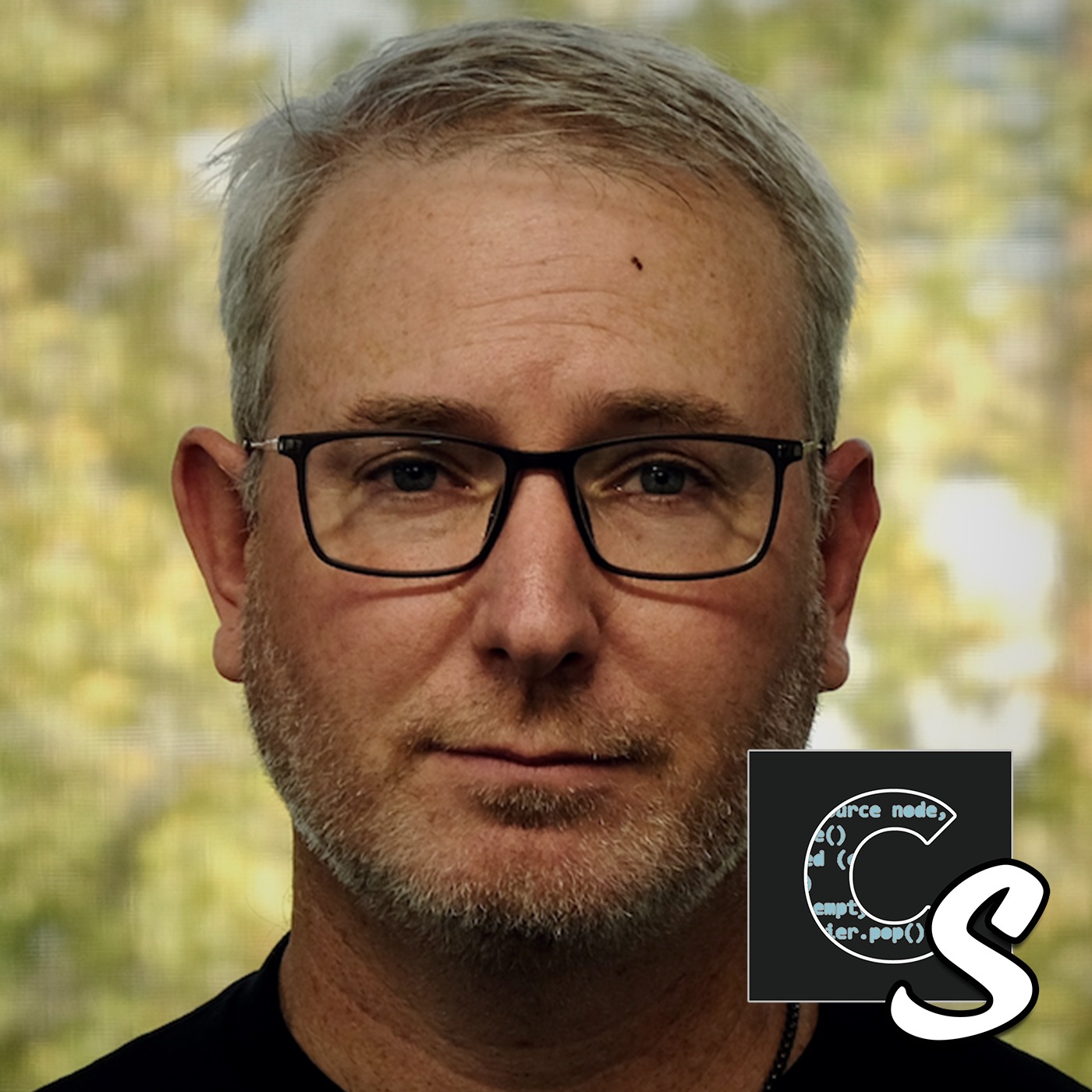
Gregory M. Kurtzer is a veteran open-source pioneer, technologist, and entrepreneur with over 25 years of experience in high-performance computing (HPC) and large-scale enterprise infrastructure. He first gained widespread industry prominence as the co-founder of CentOS Linux, which grew into one of the world's most ubiquitous enterprise operating systems, and he later created other foundational open-source projects like the Warewulf cluster management toolkit and the Singularity (now Apptainer) container system.
In 2020, Gregory founded his current venture, with the goal of modernizing infrastructure stacks for the cloud and AI era. He and his team recognized that traditional enterprise infrastructure was too fragmented and ill equipped to handle the next generation of data intensive computing.
This is the creation story of CIQ.
Sponsors
Links
Our Sponsors:
* Check out Cash App and use my code CASHAPP10 for a great deal: https://cash.app
* Check out Plaud AI and use my code CODESTORY for a great deal: https://plaud.ai
Advertising Inquiries: https://redcircle.com/brands
Privacy & Opt-Out: https://redcircle.com/privacy
[SPEAKER_01]: A founder of a startup is somebody who is generally the best at what they do.
[SPEAKER_01]: They know their stuff, they know their discipline backwards and forwards.
[SPEAKER_01]: And tech founders are usually at the top of their game, they're top of their class in what they do.
[SPEAKER_01]: Then they go and build a company.
[SPEAKER_01]: And when they build a company, they're given some resources, generally speaking, and or they're taking on a role they've never done before.
[SPEAKER_01]: So they go from being top of their game, doing what they're best at, to doing something that they've got no idea, no experience, and probably no education in doing.
[SPEAKER_01]: I am Gregory Kerzer, I'm the CEO and founder of CICU.
[SPEAKER_02]: a podcast bringing you interviews with tech visionaries.
[SPEAKER_02]: Six, six months moonlighting goes.
[SPEAKER_00]: It's the last and last of the big hands.
[SPEAKER_02]: Who share what it takes to change an industry?
[SPEAKER_00]: I don't exactly know what to do.
[SPEAKER_02]: It doesn't go as to get right.
[SPEAKER_03]: who built the teams that have their bad company is its team's help each other, a team's proud of her team.
[SPEAKER_02]: Keeping scalability top of mind, all that infrastructure was up there.
[SPEAKER_02]: Yes, we've been fighting it as we grow.
[SPEAKER_02]: Total waste of time.
[SPEAKER_03]: The stories you don't read in the headlines.
[SPEAKER_03]: It's not an easy thing to achieve.
[SPEAKER_02]: To get yourself a deficit of off, try to begin to ride the ups and downs of the start-up line.
[SPEAKER_03]: To really want it.
[SPEAKER_02]: Not just about technology.
[SPEAKER_02]: All this and more on code story.
[SPEAKER_02]: I'm your host Noah Lapart, and today how Gregory M. Kurtzer is building you software infrastructure for the age of AI, optimized, validated, and under your control.
[SPEAKER_02]: Gregory M. Kurtzer is a veteran open-source pioneer technologist and entrepreneur with over 25 years of experience in high performance computing and large-scale enterprise infrastructure.
[SPEAKER_02]: He first gained widespread industry prominence as the co-founder of CentOS Linux, which grew into one of the world's most ubiquitous enterprise operating systems.
[SPEAKER_02]: And he later created other foundational open source projects, like the Wear Wolf Cluster Management Toolkit and the Singularity, now App Tanner, Container System.
[SPEAKER_02]: In 2020, Gregory founded his current venture with the goal of modernizing infrastructure stacks for the Cloud and AI era.
[SPEAKER_02]: He and his team recognized that traditional enterprise infrastructure was too fragmented and ill-equipped to handle the next generation of data intensive computing.
[SPEAKER_02]: This is the creation story of CIQ.
[SPEAKER_01]: CIQ is really focused on doing software infrastructure for enterprises.
[SPEAKER_01]: Unlike most startups that are really focused on doing one thing, and doing it better than everything else, we're doing a lot.
[SPEAKER_01]: And it's sometimes it's hard to keep up.
[SPEAKER_01]: There's a lot of stuff going on at CIQ.
[SPEAKER_01]: We started off really building a high-performance computing platform, designed to modernize the high-performance computing infrastructure, which is about 30 plus years old, which in tech, that's pretty antique.
[SPEAKER_01]: So, we started off modernizing that and then bringing a lot of those capabilities to enterprises.
[SPEAKER_01]: And then while we were doing that, the whole ecosystem was disrupted with the end of life of one of the most widely utilized operating systems in the world, an operating system that I was lucky enough to be part of founding called Centos.
[SPEAKER_01]: When that was end of life, I raised my hand to the world and said, I want to recreate this.
[SPEAKER_01]: Anybody wants to join me?
[SPEAKER_01]: Here's where I'm hanging out.
[SPEAKER_01]: And almost overnight, we had 10,000 members of the open source community all joining.
[SPEAKER_01]: Rocky Linux was born and CICU's vision kind of opened up and expanded quite a bit.
[SPEAKER_01]: But now we do software infrastructure across the board for enterprises.
[SPEAKER_02]: I'm curious what you would call the MVP.
[SPEAKER_02]: Maybe it's Rocky, right?
[SPEAKER_02]: The MVP for CICU and the CICU vision.
[SPEAKER_02]: What was the first thing that you set out to build?
[SPEAKER_02]: And how long take to build and what sort of tools you're using to bring it to life?
[SPEAKER_01]: So what we initially set out to build was this computing platform.
[SPEAKER_01]: And the MVP is everything you shouldn't have done.
[SPEAKER_01]: Everything you shouldn't do.
[SPEAKER_01]: So for example, the MVP for an entire computing platform, which I think of it as,
[SPEAKER_01]: It is Kubernetes for performance intensive workloads.
[SPEAKER_01]: It's not something a small startup generally would take on, but we did.
[SPEAKER_01]: Here we are six years later, and we're still building.
[SPEAKER_01]: And it's not that we don't have customers using it, but it is still moving forward, and we still have a ton of effort and energy on making football the greatest platform ever.
[SPEAKER_01]: In terms of the MVP of it, it was pretty massive.
[SPEAKER_01]: There was a lot of things that we wanted to get into that to make sure that we were hitting the needs of our user base.
[SPEAKER_02]: You're serving the enterprise.
[SPEAKER_02]: So I imagine it.
[SPEAKER_02]: The MVP of anything that you build has a lot of requirements.
[SPEAKER_02]: Is that true?
[SPEAKER_01]: Yeah, this is as I alluded to.
[SPEAKER_01]: This is kind of like Kubernetes for performance intensive computing and Kubernetes is a gigantic project.
[SPEAKER_01]: A lot of features, a lot of capabilities.
[SPEAKER_01]: an MVP of that is not exceedingly useful.
[SPEAKER_01]: So, for us, our MVP was actually fairly significant.
[SPEAKER_01]: And again, this isn't what you should do in a startup, but our vision was extremely bold.
[SPEAKER_01]: And we had a huge amount of confidence that we could build this and luckily, other people that stand behind us are customers and are early adopters all, seem to believe in us as well, and so we were able to build this.
[SPEAKER_02]: Tell me about maybe a key decision or trade off you had to make in the early days and how you cope with that decision.
[SPEAKER_01]: A founder of a startup is somebody who is generally the best at what they do.
[SPEAKER_01]: They know their stuff, they know their discipline backwards and forwards.
[SPEAKER_01]: They're guru.
[SPEAKER_01]: They understand what needs to happen, what it needs to look like, how it needs to go, how to build it even, and tech founders are usually at the top of their game, their top of their class, in what they do.
[SPEAKER_01]: Then they go and build a company and when they build a company they're given some resources generally speaking and or they're taking on a role they've never done before.
[SPEAKER_01]: So they go from being top of their game doing what they're best at.
[SPEAKER_01]: To doing something that they've got no idea, no experience and probably no education in doing.
[SPEAKER_01]: And as a result, there's a lot of mistakes that founders are going to make.
[SPEAKER_01]: Interestingly, what I found is in talking with lots of my fellow founders, generally take a lot of the same mistakes, but if I can summarize what some of the areas in which I focused on, and some of the important aspects, it really had to do with initial hires that we make, have to be jack of all traits, people that know how to do a ton of different things.
[SPEAKER_01]: that a TARDIS, which is Doctor Who's Eical, this is how he travels and moves around, but it's some sort of weird, four-dimensional quantum vehicles that's bigger on the inside than it is on the out.
[SPEAKER_01]: Start-ups exactly the opposite.
[SPEAKER_01]: It's bigger on the outside, or at least it should seem bigger on the outside than it actually is on the inside.
[SPEAKER_01]: And the way to do that is you've got to hire people that are very skilled in a lot of different things.
[SPEAKER_01]: That means they're generally speaking, you know, they're really good at a lot of different things.
[SPEAKER_01]: They're not necessarily experts in everything that you're doing.
[SPEAKER_01]: So you need to hire those people initial.
[SPEAKER_01]: You have to hire people who can do a lot of things, fill the gaps across the board.
[SPEAKER_01]: And from there, as the company starts building some inertia and getting successful, then you have to reconsider.
[SPEAKER_01]: And you have to start bringing in people who are much more specialised and gurus and experts in specific disciplines.
[SPEAKER_01]: And then surround yourself by these people.
[SPEAKER_01]: Because again, tech founders generally don't know how to be a CEO.
[SPEAKER_01]: This is something you're going to have to learn over time.
[SPEAKER_01]: So yeah, so in the meantime, you have to surround yourself with people who know how to do all the things that you don't.
[SPEAKER_01]: And if I were to say that something I had to reconsider and something I had to think through, it's probably one of my biggest lessons learned.
[SPEAKER_02]: Let's move forward then.
[SPEAKER_02]: I'm curious about, you know, how you are progressing and maturing, what you're building at CICU.
[SPEAKER_02]: And I kind of, you know, wrap in a box little and looking for a roadmap.
[SPEAKER_02]: How do you build your roadmap at CICU?
[SPEAKER_02]: How do you go about deciding that?
[SPEAKER_02]: Okay, this is the next most important thing to build or to address.
[SPEAKER_01]: Early on, when the company is still brand new and you're charting everything out, it's really it's about the founder's vision.
[SPEAKER_01]: And from the founder's vision, there's a lot of that's based in the expertise that the founder kind of brings along with that person.
[SPEAKER_01]: Over time, as the company starts to scale, it's incredibly important to formalize this.
[SPEAKER_01]: And product, a very strong and empowered product team, is incredibly imperative.
[SPEAKER_01]: And it's important for the product team to be not aligned necessarily with engineering and not aligned necessarily with sales.
[SPEAKER_01]: and to read the market differently than from an engineering perspective, what's cool and what would an engineer want versus a sales perspective, what does your latest prospect look like?
[SPEAKER_01]: It really comes back to that product team and making sure that you are empowering that product team to make the appropriate priority decisions.
[SPEAKER_01]: Such that you know what you're building, you can have confidence in what you're building, is actually solving a real problem in the market.
[SPEAKER_02]: Let's flip to team.
[SPEAKER_02]: Gregory, I'm curious about how you build your team.
[SPEAKER_02]: What do you look for in those people to indicate that they are the winning horses to join you?
[SPEAKER_01]: Again, because this is a founder podcast, I don't mind being pretty open about the things that I've done that are good, of course, I can brag about, but some of the mistakes that I've made.
[SPEAKER_01]: And one of the mistakes that I made early on.
[SPEAKER_01]: And again, I come from being an engineer.
[SPEAKER_01]: I come from being a techie.
[SPEAKER_01]: Somebody who I see with maybe a team underneath me, but I never really had to manage, because I had to manage or just being teamly, dark-tech.
[SPEAKER_01]: When I started working as a CEO, the most important thing for me is to get stuff done, get stuff built, innovate, drive, be aggressive in the sense of you want this to, you want to overachieve and that was kind of that's how I approached this.
[SPEAKER_01]: So I bring on Pete, I brought on people who were kind of similar in that sense.
[SPEAKER_01]: Some of them came out of a very large hyperscaler that many people know.
[SPEAKER_01]: that has a very strong drive of culture, a top-down drive of culture.
[SPEAKER_01]: And when I'd run in some of these individuals, first questions they had was, where's our core values?
[SPEAKER_01]: Where's our, what do you want the culture to be?
[SPEAKER_01]: And my response was, I really don't have time to think about core values.
[SPEAKER_01]: I don't have time to just get your job done.
[SPEAKER_01]: And they really kept pushing on this.
[SPEAKER_01]: And at some point, they proposed a draft of, I think it was like, 14 or 15 different core values for CIQ, and this is what was important to them and whatnot.
[SPEAKER_01]: At some point, it occurred to me that it's not fair for everybody to not know how I rate their success.
[SPEAKER_01]: What do I consider success?
[SPEAKER_01]: What do I consider?
[SPEAKER_01]: I'm doing a good job.
[SPEAKER_01]: How do they know that they're doing a good job to me?
[SPEAKER_01]: And all of a sudden, it clicked.
[SPEAKER_01]: Oh my gosh, an eat corvallius, and I start doing all this research in corvallius.
[SPEAKER_01]: and I wrote a few books and it's interesting because the most impactful book for me was the book that actually I couldn't finish.
[SPEAKER_01]: I couldn't finish this book because I got so excited about it that halfway through we're just over halfway through of this book.
[SPEAKER_01]: I'm like, I'm gonna go do this, I'm not reading about that.
[SPEAKER_01]: I just gotta go do this now.
[SPEAKER_01]: I read it all of the core values.
[SPEAKER_01]: And I built the core values in terms of what is important to me.
[SPEAKER_01]: And previously, nobody really knew our core values, even though they were documented and we told everybody that they have to memorize them and whatnot.
[SPEAKER_01]: It's kind of hard to memorize 10 plus core values and figure out how do you put them in a life.
[SPEAKER_01]: So made five core values super simple.
[SPEAKER_01]: And they are customer centric, optimistic, dedicated, efficient, and excellent.
[SPEAKER_01]: And that happens to spell code, yeah, with two ease, or the spells code, everybody at our company, especially the coders, can remember our core values.
[SPEAKER_01]: And they're super simple, so everybody knows how to bring them and operate with them in a day-to-day perspective.
[SPEAKER_01]: That has done miracles for building the team that CIQ needs for success and if I were to give advice to any other tech founders who are discounting the need for core values, take my lessons learned please.
[SPEAKER_01]: They're incredibly valuable and useful.
[SPEAKER_02]: I'm curious about scalability, right?
[SPEAKER_02]: And this is baked in, I'm sure, since early days, you know, building the MVP that needed to be a big deal, right?
[SPEAKER_02]: I'm curious about how you approach scalability, but also I'm interested if there's been interesting areas where you've had to fight it as you've grown.
[SPEAKER_01]: Scalability starts with the founder.
[SPEAKER_01]: And I'm going to go back to one of the earlier statements that I made.
[SPEAKER_01]: The founder comes from being an expert in a particular domain, in a particular scenario.
[SPEAKER_01]: And then going into an entirely new role, it is so incredibly important.
[SPEAKER_01]: For the founder to leave the ego at the door, be self-reflective and be honest with themselves on what are the things that they can do and they are great at.
[SPEAKER_01]: And then what are the gaps that you have to bring in others for?
[SPEAKER_01]: and you have to be able to build the team around you.
[SPEAKER_01]: Even if you're a unicorn founder and you could do the technology, you can invent the technology, build it, manage people, then figure out go to market, marketing, sales, do finance, HR, and you can do everything.
[SPEAKER_01]: And I'm not saying that those people don't exist, but I'm definitely not one of those.
[SPEAKER_01]: It's absolutely incredibly imperative that you are surrounding yourself with people who know how to do these things.
[SPEAKER_01]: and are graded these things.
[SPEAKER_01]: And again, even if you are one of those people, you don't scale.
[SPEAKER_01]: You're just one of you.
[SPEAKER_01]: So you're going to have to bring in people that you can trust.
[SPEAKER_01]: People that are going to run with the same core values that you believe in, and the same perspectives and vision.
[SPEAKER_01]: and they're excited about that vision and the just cause of what you're setting out to accomplish, and so they're super excited about it and super passionate about making sure that you're building the same thing.
[SPEAKER_01]: From there, you have to encourage them to also scale and also build more capabilities around themselves in all the things that they don't maybe not excel at, and then make sure they
[SPEAKER_01]: especially as you continue to grow.
[SPEAKER_01]: Scaling and efficiency is going to be a challenge for a lot of startups, especially as they start to go from development of MVP, proving that out, getting go to market nailed, but then really nailing that product market fit.
[SPEAKER_01]: Soon as you have that product market fit, you're going to end up having a scale, fast and strong, and you're going to want to make sure you scale so you're not just scaling your growing pains.
[SPEAKER_02]: Okay, so as you step out on the balcony and you look across all that you've built within CIQ, what do you most proud of?
[SPEAKER_01]: My just cause for so much of what I do is to help other people to do amazing things.
[SPEAKER_01]: Going all the way back to early in my career, I found that I had a knack for certain things and where some of my peers had a knack for other things and I can help them to do their jobs better.
[SPEAKER_01]: I can help them and support them in ways that they can actually do amazing things.
[SPEAKER_01]: The amount that has now scaled by creating open source projects by having those open source projects solve real needs, real pain points for people, and watch how those open source projects have proliferated into the community and into the world.
[SPEAKER_01]: to do things that I never would have dreamed that I would be able to be part of.
[SPEAKER_01]: And a really few good examples of this is my background comes out of science, and I did high performance computing for the majority of my career, and I created some open-source projects that have actually helped people hear diseases find better energy sources, aerospace, launching rockets into the atmosphere and space.
[SPEAKER_01]: driving satellites.
[SPEAKER_01]: All of these sorts of things are things I've tangently been part of because of what my career has allowed me to build.
[SPEAKER_01]: So now becoming going from science working for the U.S. Department of Energy and now becoming an entrepreneur, I can now take those even to the next level and I can now help support a lot of those initiatives much more directly.
[SPEAKER_01]: And that has been incredible for me because it feeds right back into the just cause that has been my reason for working so hard and being such an overachiever all the way through my career.
[SPEAKER_02]: Okay, let's flip the script a little bit.
[SPEAKER_02]: Tell me about a mistake you made and how you and your team responded to it, specifically in C.I.C.I.C.U.
[SPEAKER_01]: I love to mentor other young CEOs, young not necessarily from an age perspective, from an experience perspective, but some of the biggest mistakes I've already volunteered.
[SPEAKER_01]: I would say discounting the need for core values and building culture is probably the biggest mistake that I've made and had to recover from.
[SPEAKER_01]: It's been an extraordinarily eye-opening journey.
[SPEAKER_01]: And I'll share this for other tech founders or other who are just kind of coming into this.
[SPEAKER_01]: I joke a little bit about that having a life partner spouse is one of those things that every, and I'm a software person.
[SPEAKER_01]: So I think about it in terms of bugs.
[SPEAKER_01]: So every bug that you have, every glitch in your system that you have, you can count on the other person to kind of tickle.
[SPEAKER_01]: It makes you a better person and it grows you in ways that you wouldn't grow otherwise.
[SPEAKER_01]: Being a CEO, being a founder, will tickle so many different bugs and glitches that you didn't even know you had.
[SPEAKER_01]: He amount of scar tissue that is going to develop from mistakes which will then cause you to learn and cause you to grow again in ways that you never even thought possible.
[SPEAKER_01]: Lots of mistakes, lots of scar tissue, and lots of learning across the board.
[SPEAKER_02]: Okay, let's look to the future then for CICU.
[SPEAKER_02]: I'm curious about what that future looks like for, you know, for the industry for CICU for all of the products that you're building all the things tell me about what the future looks like.
[SPEAKER_01]: We started off with this vision of innovation, then it was thrust upon us this opportunity of stability.
[SPEAKER_01]: In the sense of products, not talking about the company, but products.
[SPEAKER_01]: So innovation, building a new computing platform.
[SPEAKER_01]: It's the ability in terms of organizations needed lots of production, all of a sudden.
[SPEAKER_01]: Like, they needed to focus on their production capabilities within their infrastructure, things like their operating system.
[SPEAKER_01]: people generally don't want to have fast moving innovation on something that needs to be absolutely rock stable.
[SPEAKER_01]: They want something that they won't have to think about, something that is going to be so incredibly boring that it just runs, it does its job, and they can sleep at night.
[SPEAKER_01]: So our product vision kind of went from mass amounts of innovation, creating something brand new that doesn't exist.
[SPEAKER_01]: To now we also have to think through the production side of how do we do this in such a way that the people that have to maintain it and the people whose jobs are depending on this are able to sleep at night they're able to be comfortable with what they're running and they know it's going to just work.
[SPEAKER_01]: To then, all of a sudden, the entire ecosystem was transformed over a matter of just a couple years with this new thing called AI, and it has transformed how everybody works.
[SPEAKER_01]: And I often say, this is the biggest innovation to happen in tech since the internet.
[SPEAKER_01]: What this means now is all of a sudden we're thinking about several different perspectives.
[SPEAKER_01]: We're thinking about fast innovation.
[SPEAKER_01]: How do we enable organizations to innovate, move and drive super, super fast?
[SPEAKER_01]: While at the same time, recognizing that these same organizations have to run production, which means everything has to be completely stable, rock solid, and which is countered to the entire idea of, let's be fast, let's drive fast,
[SPEAKER_01]: So we got one side innovation, we got one side production, so as we look towards the future in the era of AI, we're seeing a really interesting cross between both of these.
[SPEAKER_01]: Organizations are saying, we need, we know we recognize that we have to be doing something with AI.
[SPEAKER_01]: We have to be using this internally.
[SPEAKER_01]: We have to be gaining all these advantages that all these organizations are,
[SPEAKER_01]: We also need to do this in a way that's suitable for production.
[SPEAKER_01]: Suitable for their own controls and compliance requirements, all large organizations have to manage these sorts of things.
[SPEAKER_01]: So now it's no longer just it's something that they're thinking about in terms of testing and development.
[SPEAKER_01]: How do they roll it out in a production?
[SPEAKER_01]: This is created and incredibly amazing opportunity for us because this is exactly where we fit best.
[SPEAKER_01]: We have the knowledge in terms of
[SPEAKER_01]: dealing with very large-scale production.
[SPEAKER_01]: We have the knowledge on dealing with innovation and driving innovation.
[SPEAKER_01]: And now we can help organizations do that, so what does the future look like?
[SPEAKER_01]: The future looks like organizations adopting a lot of these new capabilities and modernizing their infrastructure to be able to handle that in a way that manages their controls, their compliance, and allows them to be sovereign in nature.
[SPEAKER_02]: Okay, Gregory, last question, so you're getting on a plane, and you're sitting next to a young entrepreneur who's built the next big thing.
[SPEAKER_02]: They're jazz about it, they can't wait to show it off to the world, and can we show it off to you right there on the plane?
[SPEAKER_02]: What advice do you give that person, having on down this road a bit?
[SPEAKER_01]: There's a theme here from my perspective, and that is, they've created this thing.
[SPEAKER_01]: They've are so excited about it, and they love it.
[SPEAKER_01]: And in their future, they're going to now have to become a CEO.
[SPEAKER_01]: They're going to now have to run an entire company.
[SPEAKER_01]: And in many cases, that means they're not going to have time to play with that technology anymore.
[SPEAKER_01]: They're not going to have time to go build that in that excitement that they have.
[SPEAKER_01]: For that product, it's going to get bisected in different ways to focus on other things.
[SPEAKER_01]: One of the best things they can do is hire people that can do the things that they are not the best expert in the world to do.
[SPEAKER_01]: Bring in other people, allow other people to do what they do best.
[SPEAKER_01]: So hire the best people you can find and then empower them to do that.
[SPEAKER_01]: And the faster you do that, the faster you can actually get back to doing the stuff that you're best at and the stuff that you are most passionate about.
[SPEAKER_02]: Let's fantastic advice.
[SPEAKER_02]: Well Gregory, thank you for being on the show today.
[SPEAKER_02]: Thank you for telling the creation story of CICU.
[SPEAKER_02]: Been pleasure, thank you, Noah.
[SPEAKER_02]: And this concludes another chapter of Coat Story.
[SPEAKER_02]: Code Story is hosted and produced by No Alapart.
[SPEAKER_02]: Be sure to subscribe on Apple podcast, Spotify, or the podcasting app at your choice.
[SPEAKER_02]: And when you get a chance, leave us a review, both things help us out tremendously.
[SPEAKER_02]: And thanks again for listening.
Latest Season of the Podcast is Sponsored By

 Apple Podcasts
 Castbox
 Castro
 Goodpods
 Moon FM
 Overcast
 Pocket Casts
 Podbean
 Podcast Addict
 Podcast Republic
 Spotify