S12 Bonus: Rewriting the Rules of End-User Computing and the Rise of Autonomous, Agentic AI IT Operations with Yoni Avital, Co-Founder & Chief Evangelist of ControlUp
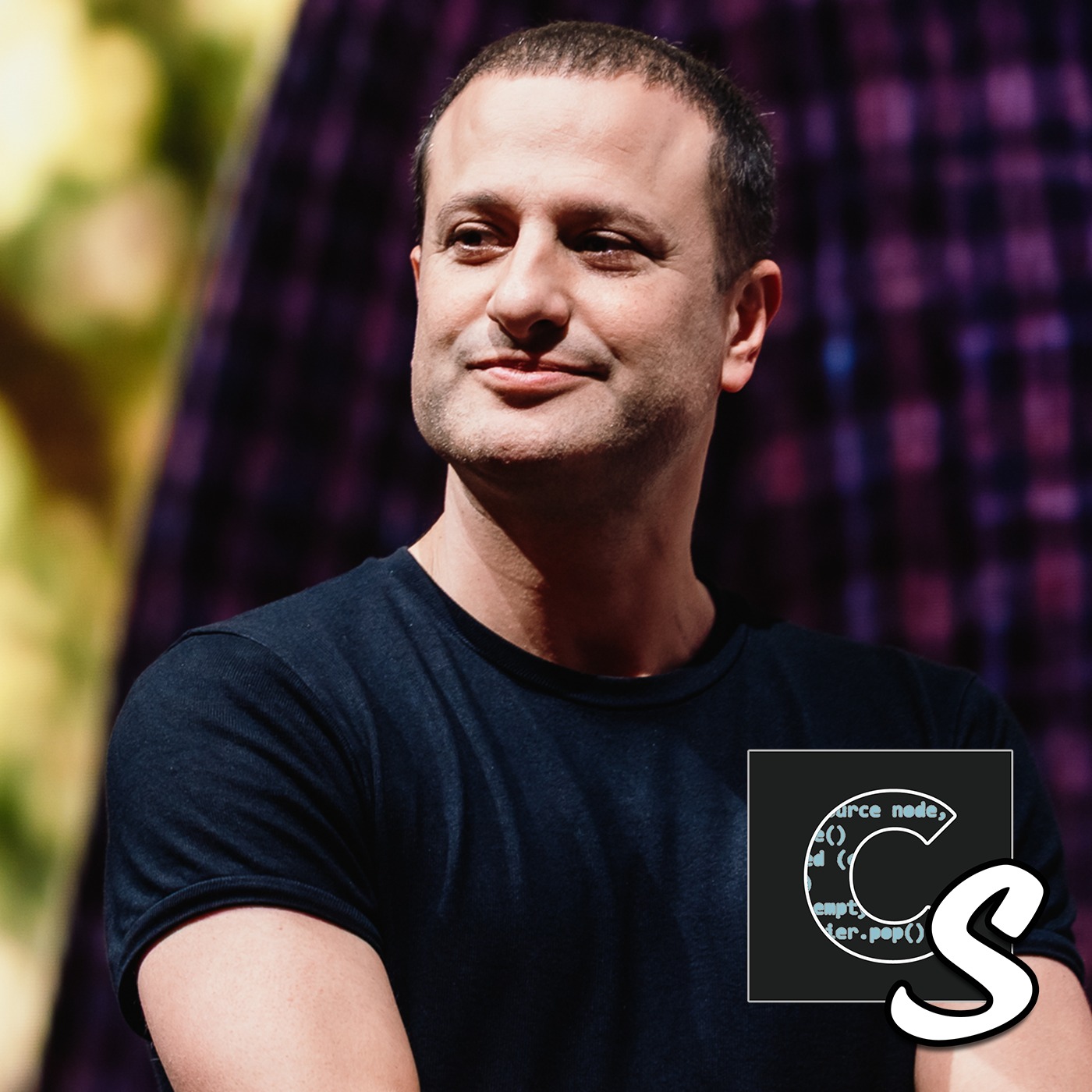
Yoni Avital lives in Tel Aviv, Israel, with his wife and 3 older children. The oldest kid is a boy, so Yoni and he try to see as many football games as possible. He enjoys shopping with this girls, though it's cause he is their Dad, not because he enjoy shopping. He likes to travel, hike, and enjoys a nice white wine in warmer weather. His most memorable hike was at Yosemite, when he started at 4 am and came across a lot of wildlife.
Yoni was in the virtual desktop space in the past. What he and his team realized was that troubleshooting these virtual experiences were incredibly complicated. They started to build an enterprise task manager, to centralize a task management UI to control the endpoints. When customers started asking to use it daily, Yoni figured out they had something unique.
This is the creation story of ControlUp.
Sponsors
Links
Our Sponsors:
* Check out Cash App and use my code CASHAPP10 for a great deal: https://cash.app
* Check out Plaud AI and use my code CODESTORY for a great deal: https://plaud.ai
Advertising Inquiries: https://redcircle.com/brands
Privacy & Opt-Out: https://redcircle.com/privacy
[SPEAKER_00]: At some point, the company became big enough for us to think about additional products to use cases.
[SPEAKER_00]: So we thought about all kinds of stuff and what we chose to do are eventually we chose to try and go and expand ourselves into managing virtual servers.
[SPEAKER_00]: Again, we were focusing on endpoints and virtual desktop, and we said, why not, let's just try managing virtual servers, that sounded like something easy we can do, and we failed miserably, right?
[SPEAKER_00]: We developed a solution in 2K here,
[SPEAKER_00]: There was dozens of solutions out there, many of them really good, it's funny, but we worked it for a year in which I just studied for another year, we end up selling a single license to a single customer, not a really great ROI.
[SPEAKER_00]: My name is Johnny Avital, I'm the co-founder and chief evangelist here at Control Up.
[SPEAKER_01]: A podcast bringing you interviews with tech visionaries.
[SPEAKER_01]: Six months moonlighting goes.
[SPEAKER_00]: It's the last and last of the backends.
[SPEAKER_01]: Who share what it takes to change an industry?
[SPEAKER_00]: I don't exactly know what to do.
[SPEAKER_01]: Many girls to get right.
[SPEAKER_01]: Who built the teams that have their back.
[SPEAKER_01]: A company is its people.
[SPEAKER_01]: The teams help each other achieve this proud of our team.
[SPEAKER_01]: Keeping scalability top of mind.
[SPEAKER_01]: All that infrastructure was up there.
[SPEAKER_01]: Yes, they've been fighting it as we grow.
[SPEAKER_01]: Total waste of time.
[SPEAKER_01]: The stories you don't read in the headlines.
[SPEAKER_01]: It's not an easy thing to achieve.
[SPEAKER_01]: To get the shelf invested it off, try to begin.
[SPEAKER_01]: To ride the ups and downs of the startup line.
[SPEAKER_01]: Need to really want it.
[SPEAKER_01]: It's not just about technology.
[SPEAKER_01]: All this and more.
[SPEAKER_01]: On code story.
[SPEAKER_01]: I'm your host, Noah Lapphart.
[SPEAKER_01]: And today, how Yoni Avatalk is building you a workspace as intelligent as you.
[SPEAKER_01]: So you aren't tethered by tickets, nor slowed down by tech.
[SPEAKER_01]: Yoni Avatar lives in Tel Aviv, Israel with his wife and three older children.
[SPEAKER_01]: The oldest kid is a boy, so Yoni and he try to see as many football games as possible.
[SPEAKER_01]: He enjoys shopping with his girls, though it's because he is their dad, not because he enjoys shopping.
[SPEAKER_01]: He likes to travel, hike, and enjoy a nice, white wine and warmer weather.
[SPEAKER_01]: His most memorable hike was at Yosimite, when he started at 4am and came across a lot of wildlife.
[SPEAKER_01]: Yoni was in the virtual desktop space in the past.
[SPEAKER_01]: What he and his team realized was that troubleshooting these virtual experiences were incredibly complicated.
[SPEAKER_01]: They started to build an enterprise task manager to centralize a task management UI to control the endpoints.
[SPEAKER_01]: When customers started asking to use it daily, Yoni figured out they had something unique.
[SPEAKER_01]: This is the creation story of control-up.
[SPEAKER_00]: control of these days, we actually have a category thanks to Galkner and a few other analysts out there.
[SPEAKER_00]: The category is called digital employee experience management, right?
[SPEAKER_00]: So what we do is, essentially, we do a few things.
[SPEAKER_00]: First, we usually walk with the IT teams, at the customer sites, right?
[SPEAKER_00]: That's the main customer, by the IT team, the chief of CIO, the IT director, and their teams.
[SPEAKER_00]: And what we do starts usually with collecting telemetry and data
[SPEAKER_00]: All right, so honestly, every company out there are using endpoints and apps, whether it's Windows laptops or Macbooks, all kinds of other more exotic endpoints.
[SPEAKER_00]: I was software seats on all those endpoints at the customer side, continuously collecting telemetry.
[SPEAKER_00]: This can be as simple as who is long, who is long-dine and what kind of apps are using all the way to location and activity and performance metrics and stability metrics and stuff like that.
[SPEAKER_00]: So that's pretty deep.
[SPEAKER_00]: Now, what we do with those telemetry in data,
[SPEAKER_00]: is quite an industry.
[SPEAKER_00]: We first give visibility to IT, so what's walking, what's not working, if they have issues, they use our data to fix them more quickly, they can see stuff like productivity.
[SPEAKER_00]: I so how does productivity look like compared the walking from one versus walking the office?
[SPEAKER_00]: or for this team versus that team, or if they just move from Zoom to Teams, which is happening quite a lot, is Teams performing nicely as Zoom from a stability point of view, and if not, why?
[SPEAKER_00]: And how can you fix that?
[SPEAKER_00]: So, a lot about the actual digital experience, working with the apps, working with the endpoints.
[SPEAKER_00]: The main goal is to ensure a consistent and awesome user experience.
[SPEAKER_00]: Because, as you can imagine, you found that,
[SPEAKER_00]: The better the user experience, the more productive the employees, which means better outcomes for the business.
[SPEAKER_00]: So I will say that this is transforming quickly into what we now call autonomous endpoint management.
[SPEAKER_00]: So not surprising AI is changing the whole thing.
[SPEAKER_00]: So even before the AI boom we were doing a lot of automations,
[SPEAKER_00]: to help with that consistent user experience.
[SPEAKER_00]: So imagine, let's take something very simple.
[SPEAKER_00]: If you ever walk with a Windows endpoint, you know that if you know that enough space on your hard drive, that can become an issue.
[SPEAKER_00]: So a very popular and simple automation for customers would be to detect when a Windows endpoint is about to run out of this space.
[SPEAKER_00]: and to run a script to try and clear all the temp files, everything and not really using, to fix the issue before it even impacts the end use.
[SPEAKER_00]: So that's in the current for in the old days of detects some endpoint manager.
[SPEAKER_00]: Today with AI, we are looking at going way beyond that.
[SPEAKER_00]: Right, so we use AI already by the way to find more issues.
[SPEAKER_00]: It would be more proactive and complex issues that may affect the end user, and more importantly, to have way more autonomous processes to deflect issues before they become a thing.
[SPEAKER_00]: For the early story, we need to go back all the way to probably the early 2010, so that's almost like 15-16 years ago.
[SPEAKER_00]: back then I was working with a staff who was the other Ko-Founder and the original CEO.
[SPEAKER_00]: We actually had this valuable research business in Israel, we were working with the largest customers here, supporting their major virtual desktop states.
[SPEAKER_00]: In a natural virtual desktop was always a very popular way to deliver lines of business applications to end users via a central solution, right to imagine a bunch of either.
[SPEAKER_00]: If your company has 5,000 employees, you may have, I know, a hundred, Windows service in your data center, on the servers you're running the top line of business apps like your CRM, your peer officers,
[SPEAKER_00]: and end users just connecting to those virtual desktop remotely to run those apps.
[SPEAKER_00]: So it's more secure, it's more performant, it's a really great solution for enterprises globally.
[SPEAKER_00]: And we were helping those customers deploy managed troubleshoot these of Citrix VMware Microsoft environments.
[SPEAKER_00]: Oh, we added business a nice small company 1520, 25 strong, business well, okay, it was all good.
[SPEAKER_00]: But we found that troubleshooting those big Citrix or virtual investment environments is very hard.
[SPEAKER_00]: With the current two sets, right, it'll give you a very simple example.
[SPEAKER_00]: If you ever use Windows again, you probably familiar with Task Manager, which is a very simple to see what's causing CPU, bigs, right, whether it's an Excel process, going astray, or a chrome browser with a big YouTube view view of what not.
[SPEAKER_00]: So when you're all alone, your endpoint here, and something is very, very, very, very snowy, just open task manager, find the offending process and you kill it.
[SPEAKER_00]: How would you do that if you have 5,000 new sessions running on 100 servers?
[SPEAKER_00]: Right, would you log into each one of those open task manager and sought by CPU that can take the old day?
[SPEAKER_00]: And the tools that were out there,
[SPEAKER_00]: Well, not real-time, though showing things based on five minutes agreed at that data points and not in an easy-to-use, nice, great-like task manager, so that was a big thing.
[SPEAKER_00]: So, to be honest, we actually developed the first version of control-up for our own selfish internal needs, right?
[SPEAKER_00]: So we developed, I would say, like an enterprise task manager, that was really the main thing about control-up V1.
[SPEAKER_00]: The old point was to have a central, task manager like UI that can connect to hundreds of thousands of Windows service on endpoints and show you everything in a single place, but just show you all the processes of the user sessions everything going on.
[SPEAKER_00]: And we did that right, we developed that for ourselves.
[SPEAKER_00]: It became probably the number one tool our technical team was using to fix issues with customer sites.
[SPEAKER_00]: And I actually remember the first time I opened the tool at one of our customers' sites I'm a big travel agency in Israel, and they became very intrigued with what they saw and they asked me Hey, can we use that?
[SPEAKER_00]: Is that something we can use?
[SPEAKER_00]: And I said, you know what?
[SPEAKER_00]: Yeah, why not?
[SPEAKER_00]: This is just an eternity for sure.
[SPEAKER_00]: I left the binary for them to use.
[SPEAKER_00]: I came back the next week.
[SPEAKER_00]: And I still control a UI open on all of their desktop, that's what they're using, no training, no nothing, just a pure need, a very intuitive UI and feature sets.
[SPEAKER_00]: And at that moment I called the Safi, obviously my my ugly, I look old-founder and I was like, yeah Safi, I have something here, this can be big.
[SPEAKER_00]: And that's how it started.
[SPEAKER_01]: Tell me about the MVP, so the first version of the product you built, and maybe that's the version that you shared with customers the internal tool, or maybe it's post that when you decide to make its own product, you decide.
[SPEAKER_01]: But tell me about that first version, you built how long to take to build and what sort of tools were you using to bring it to life.
[SPEAKER_00]: I think the maturity of the MVP and the quality is really important, we had the luxury because of the services company we were working for, we had the luxury of walking with real customers.
[SPEAKER_00]: The first version I mentioned was very basic, very simple and obviously it needs to be enhanced to walk at scale.
[SPEAKER_00]: So what we did I think for almost a year?
[SPEAKER_00]: Probably between 2010-2011 or 2011-2012, we walked with most of our Israeli customers on enhancing the MDP.
[SPEAKER_00]: I commend everyone who was trying to develop software if you have the ability to walk with customers, all day and all they are just do it, right?
[SPEAKER_00]: I was able to...
[SPEAKER_00]: I was usually visiting these customers once a week as part of the technical services we provided, so each week I went to one of these big customers' sites, I showed them the new version,
[SPEAKER_00]: They will possess these 11 environments.
[SPEAKER_00]: We can kick spugs and make the product more scalable.
[SPEAKER_00]: But more importantly, we got constant feedback.
[SPEAKER_00]: Hey, maybe you guys can add this metric, maybe we just can add this view, this report, this action.
[SPEAKER_00]: And this was a very strong process, which actually enables us to come up with this control-up V1 thing after a year.
[SPEAKER_00]: It became really, really strong awesome MVP.
[SPEAKER_00]: Very far from once we have today, but still something that can be used by enterprise customers from day one.
[SPEAKER_01]: So, let's stay on that for a minute, I'm curious about, you know, a core decision or trade off you had to make in building that MVP, and that could be around a pro, each feature cut, and you know, a proprietary pick a few things that you said that might be where you go, but I'm curious what that core decision was and how you coped with it.
[SPEAKER_00]: Actually, it's a great question because we had exactly that type of big decision to make early on.
[SPEAKER_00]: As you may have figured out, the product we built can be used on any Windows environment.
[SPEAKER_00]: Right, whether it's physical, just Windows laptops or Windows servers, obviously virtual desktop's like the one we're dealing with all day.
[SPEAKER_00]: And, quite early on, we sat there in a woman, still remember that with a surf and with the G. and Shlami, the folks who helped us build the solution one day, and with the mirror was our first of CRO, the gun, the first sales guy.
[SPEAKER_00]: And we were like, okay, should we go to a more generic windows, performance management solution, or should we really stick into these secretary virtual desktop area and make the product very specific?
[SPEAKER_00]: And I was all for going to the Citrix use case.
[SPEAKER_00]: I knew that this is a, it's a very well-defined problem.
[SPEAKER_00]: And we knew that there was a big problem.
[SPEAKER_00]: We knew we can solve it.
[SPEAKER_00]: Be, it's very easy to find leads that way.
[SPEAKER_00]: Right?
[SPEAKER_00]: You go to the Citrix event.
[SPEAKER_00]: You go to the Citrix user groups.
[SPEAKER_00]: You know who the customer is?
[SPEAKER_00]: This is the Citrix team at the customer site.
[SPEAKER_00]: So I thought it would be a great idea to do that.
[SPEAKER_00]: We had some heated debates around that, but we luckily, for all of us, if you think we rent with that decision,
[SPEAKER_00]: And we were all very happy with that for the next four or five years.
[SPEAKER_00]: Everything we did with Angelopozole about the Citrix VMware Virtual Desfuse case.
[SPEAKER_00]: And it turned out to be a great thing for us because of everything I mentioned, right?
[SPEAKER_00]: I did find the customer having the very specific use case.
[SPEAKER_00]: We can fix and all that, so yeah, that was a big one for us.
[SPEAKER_01]: Let's move forward then.
[SPEAKER_01]: I'm curious about how you, from that point, matured and progressed the product and to wrap in a box a little bit, I'm curious about how you did and how you do it now, build your roadmap.
[SPEAKER_01]: You know, how you go about deciding that, okay, this is the next most important thing to build or to address with control up.
[SPEAKER_00]: But we were always a thing from day one, a very customer driven, but even a would say business driven, right?
[SPEAKER_00]: So we had a solution, we knew it, it's solving a real problem when you customers are using it.
[SPEAKER_00]: Usually the roadmap was determined by two two main things, right?
[SPEAKER_00]: One.
[SPEAKER_00]: our own innovation innovative ideas and what we think would make sense because we know customers are usually not seeing outside of the box.
[SPEAKER_00]: So probably we would say half of the roadmap was just our pure wildlife ideas which sometimes walls really great and sometimes not really.
[SPEAKER_00]: But the other effort was heavily impacted by the big prospects and big customers asked, right?
[SPEAKER_00]: They were asking for more visibility, they were asking for us to connect with the vendor APIs to have more data,
[SPEAKER_00]: They were asking for historical reporting and whatnot and we made sure we followed that because let's say the customer is always right, I think that's the case here.
[SPEAKER_00]: As long as you balance this with some innovations that only, I think only the fundals like did that and can come up with.
[SPEAKER_00]: It was always a good mixture.
[SPEAKER_00]: It's the same thing these days, by the way.
[SPEAKER_00]: They will take it to exams, right?
[SPEAKER_00]: So obviously, customers that give you two exams or it won't have customers that Google Chromebook OS is becoming a thing in the enterprise, right?
[SPEAKER_00]: It's a other cheap endpoint, compared to MacBooks or Windows laptops.
[SPEAKER_00]: So we follow their advice, and now we have full support for Google Chromebooks.
[SPEAKER_00]: That's like a customer during the season.
[SPEAKER_00]: On the other end we are now developing this rather crazy AI Insight service, which is looking on the global telemetry scale and we're using all kinds of LLMs to find meanings in that and give back insights to our customers that's all really coming from us, right?
[SPEAKER_00]: I think that mixture is walking these days well and I'm very happy with that, that's actually a good balance, a good thing.
[SPEAKER_01]: What about team?
[SPEAKER_01]: You know, here you are, you're saying we tell me about how you built that team and what do you look for in those people to indicate that they're the winning horses to join you?
[SPEAKER_00]: Yeah, I think the team is really crucial.
[SPEAKER_00]: I know there are some founders who did it all by themselves.
[SPEAKER_00]: They'll founders with a big team.
[SPEAKER_00]: Specifically, in our case, we will three founders to begin with the stuff that the CEO, I was the CEO for the initial ride and a meal was the first to zero, if you will.
[SPEAKER_00]: We had a really great Sino-Jadec relationship, right?
[SPEAKER_00]: So, a staff was very strong and the product and the engineering side.
[SPEAKER_00]: I was very strong with relationship and community and really understanding the customer needs.
[SPEAKER_00]: And, I mean, it was strong with money, right?
[SPEAKER_00]: So, we knew how to get some value from these customers while we were struggling with that.
[SPEAKER_00]: So, it was a great Sino-Jadec, and I think that was initially convinced our first VC to invest a money and be really helped us.
[SPEAKER_00]: for the first 5-10 years to really have a great team leading the country.
[SPEAKER_00]: And beyond the funding team that we always want to really awesome awesome professionals, right?
[SPEAKER_00]: I happen to really appreciate things that go beyond the mere skills that need for job, right?
[SPEAKER_00]: So obviously if you ever develop really needs to know how to write code,
[SPEAKER_00]: and I said, you guys need to know how to post quotes and do some negotiations, but we always thought, as we are so afraid and nice, I don't know, I swear to frame this, it was like, when we were interviewing Kulman close, especially in the first the early years, it was like, hey, do we want to sit with this guy for a beer and a bar?
[SPEAKER_00]: Beyond the skillset, right?
[SPEAKER_00]: Do we want to sit with this guy with this?
[SPEAKER_00]: With this girl art, is the interesting, is it as the conversation flow?
[SPEAKER_00]: And you know what, that's all created nicely because we found ourselves for the first 50 million employees.
[SPEAKER_00]: We were all kinds of friends.
[SPEAKER_00]: And that had a huge positive effect on the business, right?
[SPEAKER_00]: People wanted to blend out together in the office and in the company events, and that customer tourism need to make everything much nicer, divide the atmosphere, it kept people a year for a long time.
[SPEAKER_00]: So, yeah, I think that's probably one of the secretive not sure if the team is usually caused beyond the day-to-day corporate relationship we, maybe it's a big cheesy, but I do think we're all family and friends in this adventure, which is great.
[SPEAKER_01]: Let's flip to scalability, and this will be interesting, given, you know, the size of companies you're building this for, how you are approaching it, all the things I'm curious about how scale was thought up from the beginning, but also if there's been interesting stories where you've had to fight it as you've brought.
[SPEAKER_00]: Yeah, I wouldn't lie and say that we, from day one, me imagine this is going to grow from nine employees to four or four, fifty were today, and there were years where we double the size in a few months, scalability was always challenging, right?
[SPEAKER_00]: I do think that quite early on realize that this is crucial for our success, right?
[SPEAKER_00]: If you want to scale, you need the big enough sales team, you need the big enough engineering team, product team, you name it.
[SPEAKER_00]: And that, that happened to us gradually, right?
[SPEAKER_00]: Neither a sufferer itself would never manage a big team before that, right?
[SPEAKER_00]: We grew with the parts, I think, luckily for us, it was in a reasonable rate.
[SPEAKER_00]: I'd each year, if found a self-managing, if initially it was then 20.
[SPEAKER_00]: The link was then, it grew to 50 and 100 and 200.
[SPEAKER_00]: So, I think we had to wear the luxury of growing with the part over the years.
[SPEAKER_00]: I think we have realized many times during this ride that we need to bring in experience manager to help us.
[SPEAKER_00]: Right, so maybe the VP of Engineering is a good example, right?
[SPEAKER_00]: So we obviously will influence that as founders, but early on we try to bring in professionals who add a lot of experience managing scaled environments.
[SPEAKER_00]: The same goes for the head of sales in the US.
[SPEAKER_00]: So in Europe, for the head of support.
[SPEAKER_00]: So I think we try to balance our immaturity, but to begin enthusiasm with some highly trained folks coming in from the outside.
[SPEAKER_00]: And if you can nail that touch, that's great thing to do.
[SPEAKER_01]: As you step out on a balcony and you look across all that you've built with control of, what are you most proud of?
[SPEAKER_00]: Few things actually, but maybe I start with the first thing because that's really the one of the most proud of so.
[SPEAKER_00]: I wasn't this customer call a while back and it probably a few years ago and the customer, it was in an existing control of customer, that was walking over a small while and it was the before.
[SPEAKER_00]: It'd be before we even started the meeting, it was like, wait, I want to say something, I was like, yeah, for sure, I was like, yes, I just want to tell you that.
[SPEAKER_00]: We are using your software for a few years now the entire team and it really made their lives better.
[SPEAKER_00]: It's easy as fast to solve issues, we know our users have great user experience because of your tool and I just wanted to acknowledge that and I was like, wow, this is amazing and it really makes a difference, especially if you think that a big part of our customers are actually health careers, IT teams in the biggest health care in the world who are profusions and nurses do their job.
[SPEAKER_00]: So when you think that like this is to me it was a very proud moment.
[SPEAKER_00]: I just see customers and on the wrong comment say hey you made our lives better this is really great.
[SPEAKER_00]: But that's one thing and the other thing I will say and that's another story that I like to repeat remember is that one of the days I was sitting in my office in the in the israeli office and at the interval is guy right and apparently it was waiting for me for a while it was sitting in the in the main area for 10 to 20 minutes because I was being delayed so finally when we met
[SPEAKER_00]: It was like, hey, I want to tell you something before we start the interview and I was like, yeah, for sure.
[SPEAKER_00]: And listen, I sat here and every two minutes another employee came to me and said, ask if I need some assistance or if I'm fine.
[SPEAKER_00]: Do I need water or coffee or can he help me?
[SPEAKER_00]: Don't worry, listen.
[SPEAKER_00]: I was in many companies, but I never seen so many folks carrying so much about a stranger and asking for if he needs help.
[SPEAKER_00]: And I was like, wow, man, that's impressive.
[SPEAKER_00]: And that's exactly the kind of vibe you manage while trying to instill in the companies.
[SPEAKER_00]: Yeah, these two are probably two very proud moments for me, but what the years.
[SPEAKER_01]: Let's flip the script a little.
[SPEAKER_01]: Tell me about a mistake you made and how you and your team responded to it.
[SPEAKER_00]: One that comes to mind is that, so we, as I said before, were very much focused on the whole Citrix, virtual desktop use case scenario.
[SPEAKER_00]: At some point, the company became big enough for us to think about additional products use cases.
[SPEAKER_00]: Right?
[SPEAKER_00]: If you really want to grow a big company, it can't rely on a single product or a single niche.
[SPEAKER_00]: So we thought about all kinds of stuff and what we chose to do, eventually we chose to try and go and expand ourselves into managing virtual servers.
[SPEAKER_00]: Alright, so, again, we were focusing on endpoints and virtual desktop, and we said, why not, let's just try managing the virtual servers, but sounded like something easy we can do, and we failed miserably, right, we developed a solution in 2k here, turned out this was a very, we made the wood dozens of solutions out there, many of them really good.
[SPEAKER_00]: Some of them are coming with the vendor tools, it's funny, but we worked it for a year and we tried to sell it for another year, we end up selling a single license to a single customer,
[SPEAKER_00]: We learned a lot for him, right?
[SPEAKER_00]: I need to, I will instinct and intuition was never on that.
[SPEAKER_00]: It was like almost like a force to choose and I think one of the last issues we made, but without feeling the instinct behind the tells us it's right thing to do.
[SPEAKER_00]: So, yeah, I'm being mistake, but luckily we really covered.
[SPEAKER_00]: She's good.
[SPEAKER_01]: Okay, let's move forward than you only.
[SPEAKER_01]: What's the future look like?
[SPEAKER_01]: We're control-up for the product, for what you're building, for your team, where the industry is going, all the thing.
[SPEAKER_00]: So, yeah, I think no one will be surprised to say that we are leaving a fascinating time.
[SPEAKER_00]: I'd like to...
[SPEAKER_00]: The AI revolution, and it started a few years ago, but I can definitely say that in the last four or six months, it truly manifested into and encompassing crazy evolution affecting everything we do.
[SPEAKER_00]: And it's very apparent in our market.
[SPEAKER_00]: I mentioned this before, but I can expand on that.
[SPEAKER_00]: So, again, tools that I control up, they were always about fixing issues, weekly, and improving the user experience, and allowing the customer to save costs on hardware and software and all that.
[SPEAKER_00]: With the birth of the LLMs and the AI technology we're seeing, customers now have really high expectations for what we can do.
[SPEAKER_00]: I'll give you one example, okay, one example is that customers are expecting and I think we're going there to reach what you may call like zero support tickets.
[SPEAKER_00]: Okay, using a technology like controller, right?
[SPEAKER_00]: So imagine that.
[SPEAKER_00]: A big part of your customer's support, it's so ideal based on performance issues, or application crashing, or Zoom not working, we think we can probably deflect 70-80-90% of those with the upcoming existing AI technologies, but it goes beyond customer tickets, right imagine a walkthrough, right, to use the ones in your application or we need the new hardware piece, so
[SPEAKER_00]: All of that can also be automated with chat ports and with obviously sub-human in the loop, or some decisions, but just the difference between the way we're doing things now.
[SPEAKER_00]: Maybe I'll give you one, one, one rather technical example to explain the craziness we're saying.
[SPEAKER_00]: In Windows, one of the most complicated things to solve is the Windows Blue screen of that.
[SPEAKER_00]: Maybe because of a driver conflict or some bad code or whatever the case may be, Windows may crash right to the blue screen.
[SPEAKER_00]: Before the AI revolution, to actually find the root cause for something like that, you really needed the top Microsoft's escalation engineers to all walk on that usually for days if not weeks, to analyze dumb files and source code and really come up with the root cause that that's a costly and a complicated operation and this is something which inflex for every customer on a daily basis.
[SPEAKER_00]: Today, our solution can once detect something like a Windows blue string of death, or we use the current AI technologies and in seconds, we can come up with the root cause and with the suggested solution.
[SPEAKER_00]: So something that took very costly resources and long time to fix can now be fixed in honestly seconds or minutes.
[SPEAKER_00]: And that's just one example, right?
[SPEAKER_00]: So I think the future is very interesting.
[SPEAKER_00]: We, the pace of the stage is really crazy.
[SPEAKER_00]: I'm not going to predict what will happen in the next six or two or one.
[SPEAKER_00]: So I didn't know that we are aiming very high for like full blown autonomous input management.
[SPEAKER_00]: We want to be in a place where the IT team can really focus on new projects and initiatives that enhance the business, other than firefighting and then ticketing and stuff like that.
[SPEAKER_00]: And I really think this is now doable with technology way up.
[SPEAKER_00]: So.
[SPEAKER_00]: Very fun times.
[SPEAKER_00]: We have very, very brave customers or walking these these path with us and they're willing to test and try and break things.
[SPEAKER_00]: So yeah, yeah, I think the future is bright and the future is not going to be mind-blowing.
[SPEAKER_00]: We'll sure.
[SPEAKER_01]: Let's watch a new, young, who influences the way that you work.
[SPEAKER_01]: And my person or many persons are something you look up to and why.
[SPEAKER_00]: I was all influenced from the folks I'm working with, right, whether it's a staff or me or in the early days, right, like on me a walk ethics where a beacon, a beacon of light to me, they do, they do as walking 247, so it was infectious and then I found myself also definitely there earlier, it's just finishing the walk day at 6 p.m. in the office and then opening the laptop at 8 p.m. to do extra more for hours with customers got from the U.S. so I'm that's.
[SPEAKER_00]: everyone friends by a mirror and as staff honestly had the same crazy walk at it.
[SPEAKER_00]: So yeah, every influence on that and many of the folks I'm walking with here in the office and in part of a reality are influenced me in a great way.
[SPEAKER_00]: I guess on a larger tone and I'm sure you have seen movies like The Wolf of Wall Street and The Swords really don't follow up with you and that's partly due to me.
[SPEAKER_00]: I'm taking foolish sensibility.
[SPEAKER_00]: We are trying to really
[SPEAKER_00]: combine between how to walk in hard play.
[SPEAKER_00]: To seeing those movies, those dudes who do this crazy party in the office and then out and the office and trying to take themselves not too seriously while doing big things that that was a huge influence on my part time.
[SPEAKER_00]: If you ever come not one of our parties you see what I mean but we leave it a death for now.
[SPEAKER_01]: Last question, Yoni.
[SPEAKER_01]: So, you're getting on a plane and you're sitting next to a young entrepreneur who's built the next big thing.
[SPEAKER_01]: They're jazzed about it, they can't wait to show it off to the world and can't wait to show it off to you right there on a plane.
[SPEAKER_01]: What advice do you give that person happen going down this road a bit?
[SPEAKER_00]: Funnily enough, maybe because I've been doing it for a while actually, have those type of discussions quite frequently?
[SPEAKER_00]: I think the last one was like two months ago, so that's a good question.
[SPEAKER_00]: There are lots of things I can think of, but one thing I keep saying to those folks is try to walk directly with the customer to validate the pain points and your solution.
[SPEAKER_00]: That's probably the biggest one, right?
[SPEAKER_00]: Because sometimes you can see it home, we're in the garage, you'll hear office and imagine things.
[SPEAKER_00]: And they may be great ideas, but when the each reality things may be very different, right?
[SPEAKER_00]: So if you have the luxury of walking with prosperous customers, whether it's customers from your current business, so friends, or whatever that may be, do that and do that a lot.
[SPEAKER_00]: All right, nothing beats.
[SPEAKER_00]: Confronting your ideas and thoughts with the reality.
[SPEAKER_00]: if you can come with your MVP and actually do it in the real world, that's even better.
[SPEAKER_00]: In the Moldemaria, sometimes the first two customers will not find your solution interesting, but maybe the next 10 will.
[SPEAKER_00]: Don't give up so easily, go try those 10, 20, 30 customers on prospects, but don't do it too late, because maybe everything you thought is just very far for what's really happened out there.
[SPEAKER_00]: Though, yeah, that's probably the big one I have to say to those young entrepreneurs.
[SPEAKER_01]: Uh, it's fantastic advice, but he only thank you for being on the show today.
[SPEAKER_01]: Thank you for telling the creation story of controller.
[SPEAKER_00]: Thanks, though, I'm not sure appreciate it.
[SPEAKER_01]: And this concludes another chapter of Coat Story.
[SPEAKER_01]: Code Story is hosted and produced by Noah Labhart.
[SPEAKER_01]: Be sure to subscribe on Apple Podcasts, Spotify or the podcasting app at your choice.
[SPEAKER_01]: And when you get a chance, leave us a review.
[SPEAKER_01]: Both things help us out tremendously.
[SPEAKER_01]: And thanks again for listening.
Latest Season of the Podcast is Sponsored By
 Apple Podcasts
 Castbox
 Castro
 Goodpods
 Moon FM
 Overcast
 Pocket Casts
 Podbean
 Podcast Addict
 Podcast Republic
 Spotify