S12 Bonus: The App Is Dead, Long Live the Outcome: Why Autonomous AI Agents Are Rewriting Data Infrastructure and Transforming PostgreSQL Into a Dynamic Scratch Pad with Ajay Kulkarni, Founder & CEO of Tiger Data
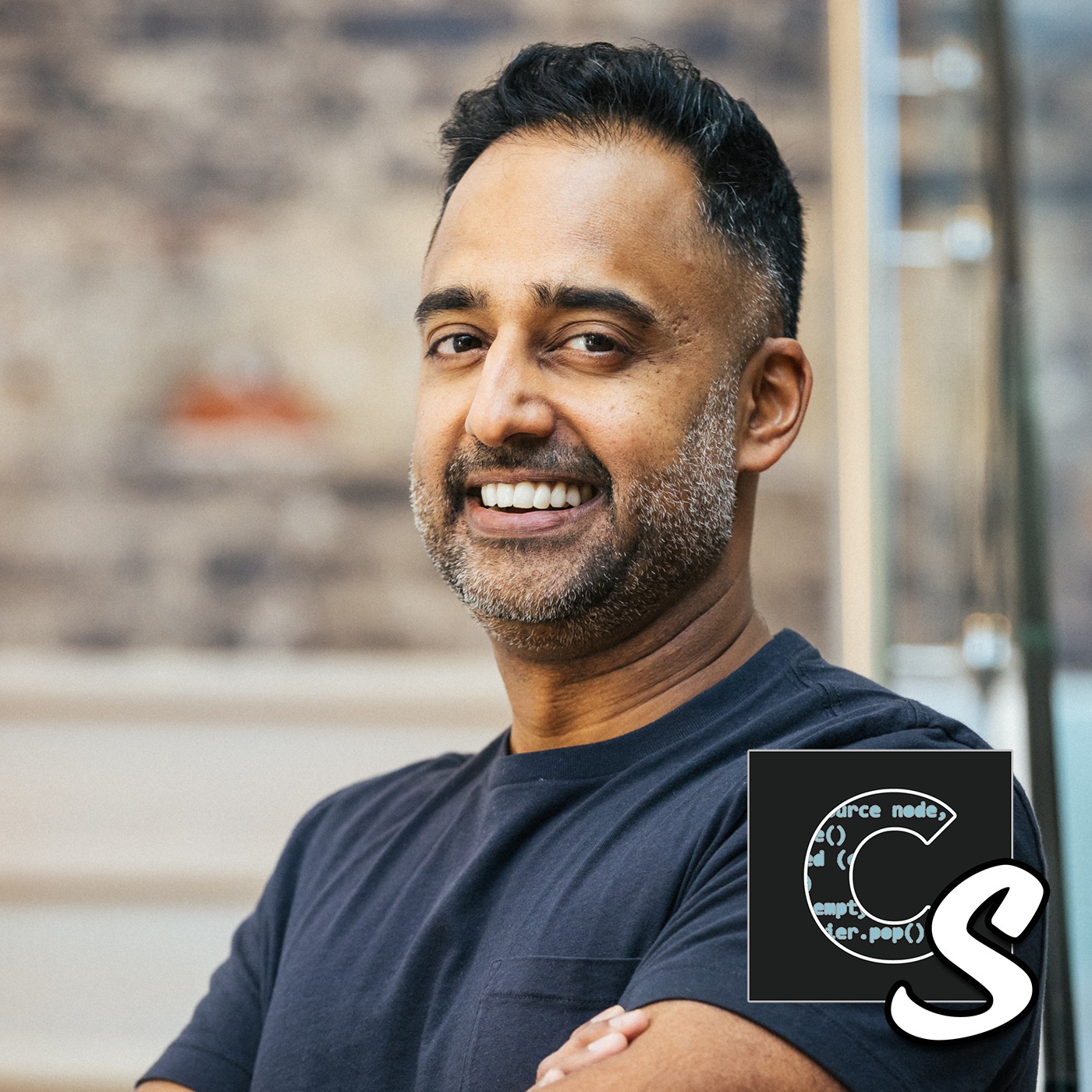
Ajay Kulkarni grew up in tech, as his father was a tech entrepreneur selling PC's in the early 80's. He went to college in MIT, and eventually founded a startup that was acquired by GroupMe (while it was being acquired by Skype... while they were being acquired by Microsoft). He's always been attracted to building things, so startups are right up his alley. Outside of tech, he is married with 2 young kids. He is a big exercise guy... he loves to run, swim and track his steps. Additionally, he loves music - to listen, and to play guitar, piano and drums.
Ajay and his co-founder met 30 years ago at MIT. They reconnected after years of doing their own thing, starting to dig into the iOT world. In doing this, they built a database because they the best solution to store this data... and in doing so, they unlocked their next venture out of this necessity.
This is the creation story of Tiger Data.
Sponsors
Links
Timestamps
00:00 Accidental Database MVP
00:41 Podcast Intro Setup
01:34 Ajay Background
02:50 Meeting Co Founder
04:11 Why Tiger Data
05:36 MVP Building TimescaleDB
07:06 Postgres Not NoSQL
08:50 Roadmap And Agents
10:40 Hiring The Right Team
11:59 Scaling As CEO
13:23 Resilience And Pride
14:36 Mistakes And Lessons
17:33 Future Physical World
19:18 Stoicism And Influence
21:01 Advice Play Love Triumph
23:54 Closing And Credits
Our Sponsors:
* Check out Cash App and use my code CASHAPP10 for a great deal: https://cash.app
* Check out Plaud AI and use my code CODESTORY for a great deal: https://plaud.ai
Advertising Inquiries: https://redcircle.com/brands
Privacy & Opt-Out: https://redcircle.com/privacy
[SPEAKER_03]: 2015 rebuilding an IoT platform, we needed a database to store all the sensor data we were collecting from our customers over 100,000 devices.
[SPEAKER_03]: One of my engineers who stole the company, well, if you just later, was like, hey, I think I could build this and it'll take me a month.
[SPEAKER_03]: And I'm like, cool, you're an office engineer, it'll probably take three months.
[SPEAKER_02]: 12 months later.
[SPEAKER_03]: 12 months later, we had this database and that was the MVP.
[SPEAKER_03]: It was really a post-Rex extension and as soon as we launched it, we had more press in the first three weeks than we had the last year and a half of the IoT platform.
[SPEAKER_03]: Hey, I'm Ajay Co-Fender CEO of TigerData.
[SPEAKER_02]: This is Co-Story.
[SPEAKER_02]: A podcast bringing you interviews with tech visionaries.
[SPEAKER_02]: Six months moonlighting goes.
[SPEAKER_00]: Lassin on the backhand.
[SPEAKER_02]: Who share what it takes to change an industry?
[SPEAKER_00]: I don't exactly know what to do.
[SPEAKER_02]: It doesn't go as to get right.
[SPEAKER_02]: Who built the teams that have their bad company, is it's that teams help each other achieve this proud of our team.
[SPEAKER_02]: Keeping scalability top of mind, all that infrastructure was that we had been fighting it as we grew up.
[SPEAKER_02]: Total waste of time.
[SPEAKER_02]: The stories you don't read in the headlines.
[SPEAKER_01]: It's not an easy thing to achieve.
[SPEAKER_02]: Because the shelf itself, it does to do off and try to begin to ride the ups and downs of the start-up line.
[SPEAKER_01]: Need to really want it.
[SPEAKER_02]: Not just about technology.
[SPEAKER_02]: All this and more on code story.
[SPEAKER_02]: Find your host, Noel Labhart, and today, how a J. CoolCarny created Postgres for sensor and machine data built for industrial energy and robotics systems.
[SPEAKER_02]: But J. Kokarni grew up in tech, as his father was a tech entrepreneur selling PCs in the early 80s.
[SPEAKER_02]: He went to college at MIT and eventually found out a startup that was acquired by Grootme, while it was being acquired by Skype, while they were being acquired by Microsoft.
[SPEAKER_02]: He's always been attracted to building things, so startups are right up his alley.
[SPEAKER_02]: But outside of tech he is married with two young kids.
[SPEAKER_02]: He is a big exercise guy.
[SPEAKER_02]: He loves to run, swim, and track his steps.
[SPEAKER_02]: Additionally, he loves music, to listen, and to play guitar, piano, and drums.
[SPEAKER_02]: But Jay and his co-founder met 30 years ago at MIT.
[SPEAKER_02]: They reconnected after years of doing their own thing, starting to dig into the IOT world.
[SPEAKER_02]: In doing this, they built a database because they needed the best solution to store this type of data, and in doing so, they unlocked their next venture
[SPEAKER_02]: This is the creation story of Tiger Data.
[SPEAKER_03]: The story tiger data actually starts in September 1997.
[SPEAKER_03]: First we acknowledge an MIT when I was sitting across the table at lunch from my co-founder Mike.
[SPEAKER_03]: And that's where we met.
[SPEAKER_03]: We actually met at almost 30 years ago.
[SPEAKER_03]: And the back then, we both computer science majors was at the same test at the same time.
[SPEAKER_03]: Was it okay, but Mike always did better?
[SPEAKER_03]: He always got better grades than I did.
[SPEAKER_03]: I think it's very rare that you have a pretty scientific measurement of who is smarter, but I kind of know definitively that Mike is academically smarter than me because he has got better grades, but that's where the story started.
[SPEAKER_03]: We kind of went to seven paths and then stayed in touch, regrouped to start, went out of becoming Tiger data.
[SPEAKER_03]: We actually started off in IOT, which was a big wave everyone was talking about maybe 10, 12 years ago.
[SPEAKER_03]: Internet of Things, when we built the product, to store sensor data for devices, as a result, and needed to build their own database for that behind the platform.
[SPEAKER_03]: We realized that the database was solving a bigger problem than the plot from itself, and then we kind of relaunched this time scale, and that's when things really took off.
[SPEAKER_03]: So this is a class example of we built a better mouse trap because we needed it.
[SPEAKER_03]: We scratched our own itch, so to speak.
[SPEAKER_03]: And when we did that, we realized a lot of people had this in-problem, and that really, that's really unlocked the story of Tiger Data.
[SPEAKER_03]: Comedy was called Time Scale.
[SPEAKER_03]: Our mascot was always a tiger, a tiger.
[SPEAKER_03]: We wanted to make the database feel approachable, and a lot of people picked different animals, post-resses of elephant, my sequels of dolphin.
[SPEAKER_03]: We like tiger because tigers are powerful and fast.
[SPEAKER_03]: Like our database, we like the tiger timescale of liberation.
[SPEAKER_03]: And then we realized that I think for the first six people on the team all had Princeton connections.
[SPEAKER_03]: Mike's a professor there, some of the folks were PhDs in post-docs at Princeton, and the Princeton mascot is the tiger.
[SPEAKER_03]: And so that's the, that kind of sealed it.
[SPEAKER_03]: And over the years, we became more than what time series database we're doing a lot more than what the name time scale indicated.
[SPEAKER_03]: And we decided we need to change our name not to change who we were, but to properly reflect who we had become.
[SPEAKER_03]: Tigers always are mascot companies called Timescale, and then we just made our name Tiger Data.
[SPEAKER_03]: Timescale DB still exists as a sub-brand, but we didn't change our way out to change our logo, we didn't change any colors, so it's a pretty smooth transition, but that's what the Tiger comes from.
[SPEAKER_03]: And you know what?
[SPEAKER_03]: We've always described ourselves as tigers, like our weekly old hands, it's called Tiger Time.
[SPEAKER_03]: When new people join the company, they're called Tiger Cubs, when people join the company, we say, welcome to the jungle.
[SPEAKER_03]: I think the Tiger was always a theme internally and making an official name was like the most natural.
[SPEAKER_02]: I'm curious then about what you would consider the MVP and perhaps this is time scale, but I'm curious how you're going to shape this story, but I want to know about the MVP, the first version of what is now Tiger data that you built, how long it takes to build and what sort of tools were you using to bring it to life?
[SPEAKER_03]: So 2015, we're building an IoT platform.
[SPEAKER_03]: We needed a database to store all the sensor data we were collecting from our customers over 100,000 devices.
[SPEAKER_03]: And we was a few authorship databases and it didn't like the database to know.
[SPEAKER_03]: And at this point, one of my engineers who's still at the company, well, we just later, was like, hey, I think I could build this and it'll take me a month.
[SPEAKER_03]: And I'm like, cool, you're an office engineer,
[SPEAKER_02]: 12 months later.
[SPEAKER_03]: 12 months later, we had this database and that was the MVP.
[SPEAKER_03]: It was really a post-res extension post-gres, really popular database platform has a framework called extensions.
[SPEAKER_03]: You can think of them almost as super powerful plugins and it was an open source post-res extension and as soon as we launched it, as soon as we launched it, we had a
[SPEAKER_03]: more press in the first three weeks than we had last year and a half of the IOT platform.
[SPEAKER_03]: And I remember thinking, like, I don't know this is a big idea, but it's definitely better than our previous ideas.
[SPEAKER_03]: So let's do it.
[SPEAKER_03]: And so that was the MVP, but post was extension to make the database scale for sensor data time series data.
[SPEAKER_02]: Okay, let's stay on that for just a minute.
[SPEAKER_02]: In building this, I know you and the team probably had to make certain decisions and trade off.
[SPEAKER_02]: Tell me about one of those you had to work through and how you went about building that first version and how you cope with the decision.
[SPEAKER_03]: Any time we're solving a problem.
[SPEAKER_03]: whether it's in tech or otherwise.
[SPEAKER_03]: It is very tempting to say, hey, let's just throw everything out and start from scratch.
[SPEAKER_03]: And a lot at that point, especially a lot of the leading databases were no SQL databases, and that's what they had done.
[SPEAKER_03]: Mongo, Cassandra, other folks, other database companies, they essentially said, you know what?
[SPEAKER_03]: The original database model doesn't scale.
[SPEAKER_03]: Let's totally throw it out and start from scratch.
[SPEAKER_03]: And the inside we had was,
[SPEAKER_03]: actually the relational database model does scale if you do it right.
[SPEAKER_03]: And while it is tempting to throw everything out, maybe we shouldn't throw it there, maybe with the bath water, so to speak.
[SPEAKER_03]: What if we actually took the time to improve postgres to make it scale?
[SPEAKER_03]: And a lot of people were like, it's not worth it, you couldn't do it, it's the can't be done.
[SPEAKER_03]: But we knew that if we did this, we did the hard work of actually building on post-res.
[SPEAKER_03]: And making it really scale.
[SPEAKER_03]: And really having to work around is old, but evolving codebase.
[SPEAKER_03]: That it would be an easier experience and a better experience for our customers.
[SPEAKER_03]: So I think that was probably the key thing, it's to say, you know what, we're building this on top of post-res, we're not building for scratch.
[SPEAKER_03]: Yes, there's some effort required, but at the same time you build on Postgres, you've been a bit from the 25 now, kind of 35 years of development, reliability, stability, ecosystem, versatility, and postgres now, I think, is accepted as the developer's favorite database.
[SPEAKER_03]: 10 years ago, that was not the case, and let me make the right bet.
[SPEAKER_02]: So then from that point, I'm curious about how you've progressed and matured it, right?
[SPEAKER_02]: And there's lots of stories there, I'm certain, I'm maturing time scale and then moving into what is now tiger data, tell me about that process and I think to wrap it in a box a little bit when look for it, how do you build your roadmap?
[SPEAKER_02]: How do you go about deciding that, okay, this is the next most important thing to build or to address?
[SPEAKER_03]: I think the two ways and the first is how we both time scale the first place, which is, you kind of scratch your own niche, you say, hey, this thing is really bugging me and no one else is solving it and what if we solve it?
[SPEAKER_03]: I think the second thing you do is you just listen to the market, you just listen and you say,
[SPEAKER_03]: Huh, like, when we launched TimeSkilledDB, we thought 2017 we thought there's a thing for IoT, and we saw all these users using us in FinTech, in Crypto, and other areas, and we were like, oh, this is much bigger than just IoT.
[SPEAKER_03]: And again, more recently, as we were continuing to build on their database, platform a lot of us are using coding agents or building with agents.
[SPEAKER_03]: And I firmly believe agents are the new developer, the new coworker, they're the new assistant.
[SPEAKER_03]: And we're like, you know what, Postgres is great, but it doesn't feel like it's really designed for this model world.
[SPEAKER_03]: What would it look like if we could modernize Postgres just so even we could use it with our agents?
[SPEAKER_03]: And that's where some of our newer things came out of, like, ghost, which we officially launched this week.
[SPEAKER_03]: And so, I think in my mind, I think if there's two ways to do it first is, you kind of look at your own needs, got your own age, and then the second is, you listen to the market.
[SPEAKER_03]: Now the problem is the market will never tell you what it needs, but it'll tell you what it, they're problems.
[SPEAKER_03]: And then it's your job as the entrepreneur, founder, whatever, to listen that, be like, oh, but what if we could solve that?
[SPEAKER_03]: What would that look like?
[SPEAKER_03]: So that's been our philosophy.
[SPEAKER_02]: Let's flip over to team men, right?
[SPEAKER_02]: To accomplish something like this, you gotta have the right team.
[SPEAKER_02]: Tell me about how you built that team and would you look for in those people to indicate that they were the winning horses to join you?
[SPEAKER_03]: Team, it really is everything and it's a cliche, but I think it's a cliche for a reason.
[SPEAKER_03]: I have found that success comes from getting the right people on the bus or getting the right people on board, pointing them in the right direction and then just letting them run, let them run and take any obstacle out of their way.
[SPEAKER_03]: And I've learned this the hard way.
[SPEAKER_03]: You get some people who seem talented, who maybe aren't as successful.
[SPEAKER_03]: You say, why, how can I get the more successful?
[SPEAKER_03]: And the reality is you can't.
[SPEAKER_03]: I think people, you need to find people who are intrinsically motivated who are hungry, scrappy, and get stuff done.
[SPEAKER_03]: And so I think that's what we've done.
[SPEAKER_03]: And I think it's something that when thing in the beginning, we had a really interview for that.
[SPEAKER_03]: And we'd out people who thought that would not deal with a fit that.
[SPEAKER_03]: But over time, the culture ends up developing
[SPEAKER_03]: The immune system, so to speak, where at some point someone comes in, but it feels they can't.
[SPEAKER_03]: Number one values can't shit done.
[SPEAKER_03]: They can't get shit done.
[SPEAKER_03]: Then the company will say, wait, they're not a good fit.
[SPEAKER_03]: So I think it's due get the right people on board and then the culture then forms around that.
[SPEAKER_02]: Let's move into scalability.
[SPEAKER_02]: And this is obviously baked into your bread and butter.
[SPEAKER_02]: I'm curious about how you approach that in the beginning.
[SPEAKER_02]: And if there's been interesting areas where you've had to fight scale as you've grown.
[SPEAKER_03]: I think organizational scale is interesting.
[SPEAKER_03]: One thing I have found as a founder is that, and as a CEO is that your job changes every six months.
[SPEAKER_03]: And in fact, the thing that was the right thing to do six months ago might be the exact wrong thing to do today.
[SPEAKER_03]: The situations where six months ago, maybe I had to get super involved in solving certain types of problems.
[SPEAKER_03]: But now, because the company has grown and scaled and hired some people who hired some teams, if I get involved, I'm actually going to get into the way.
[SPEAKER_03]: And so, I think that is a challenge about scaling is that...
[SPEAKER_03]: As you scale, things will break.
[SPEAKER_03]: And sometimes it's some of the things that you thought where your best policies or behaviors are even systems.
[SPEAKER_03]: But you need to be okay with that and you'd be aware and then evolve.
[SPEAKER_03]: I think it's, you kind of the constantly ask yourself and constantly ask your team like, hey, like what's not working?
[SPEAKER_03]: What could be better?
[SPEAKER_03]: If you could maybe wave a magic wand, what would you fix?
[SPEAKER_03]: And then you try to fix it and then maybe that works for six months and then you do it again.
[SPEAKER_03]: And so I guess I guess when you're in a process of scaling, I think you just have to be okay with things constantly breaking because that's a sign that you're growing.
[SPEAKER_02]: But Jay, as you step out on the balcony, and you look across all that you've built thus far, with Tiger Dead, what are you most proud of?
[SPEAKER_03]: The thing that I'm most proud of is our resilience.
[SPEAKER_03]: I think it is easy to do well when times are good, but there's some ancient proverb I forget where it's from, but smooth seas don't make strong sailors.
[SPEAKER_03]: It's easy to be a sailor when seas are smooth, but when they're choppy, that's when you really become strong.
[SPEAKER_03]: And as a company we've gone through ups and downs, the industry's gone through ups and downs, we're in upswing right now, which is nice, but we've seen this before and we know that it doesn't always last, and I think I've been most proud by our resilience as a company, and our ability to stay motivated, excited, optimistic.
[SPEAKER_03]: Horsemen times are good, but demand and when times are not good, and I think that's the only way to build a company.
[SPEAKER_03]: You can't run at the first side of trouble, you can't lay down at the first side of trouble, you got to keep fighting.
[SPEAKER_03]: And I think we're a company built by fighters.
[SPEAKER_03]: I'm very proud of that.
[SPEAKER_02]: Let's flip the script a little bit.
[SPEAKER_02]: Tell me about a mistake you made and how you and your team responded to it.
[SPEAKER_03]: First is, dude, let me start it?
[SPEAKER_03]: Yeah, we thought we knew what we were doing.
[SPEAKER_03]: Obviously, we did.
[SPEAKER_03]: And this is my first time really building an open-source database company.
[SPEAKER_03]: And I never done open-source database sales.
[SPEAKER_03]: And so we brought in these advisors and people help us.
[SPEAKER_03]: And oftentimes, they'd be like, what, why, why that way?
[SPEAKER_03]: Why in the big nuts, that's the way it's done.
[SPEAKER_03]: Okay, cool, like I would, why not?
[SPEAKER_03]: And my mistake was not to trust my instinct.
[SPEAKER_03]: Because it turns out that in rapidly changing industries like database, like software, like AI, experience can become a light ability.
[SPEAKER_03]: And my mistake was not early on trusting my instinct.
[SPEAKER_03]: Versus being like other and expert and deferring to experts.
[SPEAKER_03]: Now, I think there's this value and experience, but as long as you temper it with, hey, how, what, what, what are my priors, which are my assumptions might be different now?
[SPEAKER_03]: I'd say that's number one, and the video I've gone through a lot of bad hires on my part, but that reason.
[SPEAKER_03]: I think a second mistake, and we've gotten better at this, but of course we get better.
[SPEAKER_03]: Any company, any founder, it's always tempting to go after the next shiny thing.
[SPEAKER_03]: Oh, it's crypto.
[SPEAKER_03]: Oh, it's vector databases.
[SPEAKER_03]: Oh, it's AI.
[SPEAKER_03]: Oh, it's this.
[SPEAKER_03]: Oh, it's that.
[SPEAKER_03]: And the reality and the thing what we've learned is that you don't get successful by chasing the next shiny thing.
[SPEAKER_03]: You're a successful by believing in something, having conviction when it's not shiny.
[SPEAKER_03]: And then being right so that when it becomes shiny, you're already there.
[SPEAKER_03]: And you're already, you're growing.
[SPEAKER_03]: So I think, I think those were made to two lessons, is that okay, experience isn't always a good thing, and oftentimes, in fast-moving industries, you're going to be a liability.
[SPEAKER_03]: And the second is, yeah, like, it's not about chasing the shiny thing, it's about having conviction.
[SPEAKER_03]: And it's even better if your conviction isn't something that is not shiny today, because that means that when it does become shiny, you'll be in the forefront.
[SPEAKER_03]: The way he sold databases back then was like, you sold on-prem software, you sold top-down, and it was all about a real enterprise sales lead motion with nine to 18-month sales cycles.
[SPEAKER_03]: And we had a kind of a nascent cloud business at that time.
[SPEAKER_03]: And I remember at a sales leader, braided individual, great human being, but came from the older world.
[SPEAKER_03]: Every weekly, real update, he would ignore the cloud business and just focus on this legacy.
[SPEAKER_03]: And I remember thinking, I think the cloud business is going to be bigger.
[SPEAKER_02]: That's where the picture is, like, it might sound crazy.
[SPEAKER_03]: Yeah, man, like a year later, we went all in on cloud.
[SPEAKER_03]: And that was the vast majority of our revenue.
[SPEAKER_03]: And so, dude, it's real, man.
[SPEAKER_03]: It's real, and as a founder, you're going to make mistakes.
[SPEAKER_03]: But if you have a voice in your head that's telling you something, I think it booves you to listen to that voice.
[SPEAKER_02]: Okay, let's move forward then.
[SPEAKER_02]: Tell me what the future looks like for Tiger Data so now you've come to this point.
[SPEAKER_02]: The industry is moving in shaken.
[SPEAKER_02]: Tell me about what the future looks like when we're taking the company in the product.
[SPEAKER_03]: Obviously being at the database company, we feel very good about that, where we are in the market.
[SPEAKER_03]: Data is everywhere, it's only compounding.
[SPEAKER_03]: And even if the SaaS apocalypse happens or agents take over, data is slow going to be underlying all that.
[SPEAKER_03]: So I feel good about that.
[SPEAKER_03]: Our bet on Postgres has been totally right, it's become the leading database.
[SPEAKER_03]: And so continue to embrace that.
[SPEAKER_03]: I think in terms of a business, I think the two areas where we're finding the most opportunity to really help customers, companies out there.
[SPEAKER_03]: One is in the physical world, so again, getting back to IoT roots, helping companies who make hardware, or make software for the hardware.
[SPEAKER_03]: There might be manufacturing that might be in the electrical vehicle ecosystem, there might be an oil and gas, there might be another energy, there might be battery companies, there might be nuclear fusion companies, all customers that we have.
[SPEAKER_03]: And I'd be customers like Seribris or making next generation chips, right?
[SPEAKER_03]: And what I think really found is that.
[SPEAKER_03]: That world, the physical world, has a ton of data and we are uniquely suited to serve them.
[SPEAKER_03]: So I think you'll see more from us there in terms of serving the physical world than challenges they have.
[SPEAKER_03]: And then the second trend is this agent, spent a totally believe agent's in the new developer.
[SPEAKER_03]: They're the new thing.
[SPEAKER_03]: It's the next patch packaging to software.
[SPEAKER_03]: And again, our philosophy isn't you.
[SPEAKER_03]: Anytime a new trend comes, did you rebuild everything from scratch?
[SPEAKER_03]: Our philosophy is when a new trend comes, you take what's working and you make it better.
[SPEAKER_03]: And so, you'll see us continue to make Postgres better for agents, then line with F-Loss.
[SPEAKER_02]: Okay, Jay, let's switch to you who influences the way that you were.
[SPEAKER_02]: Name a person or many persons or something, you look up to and why.
[SPEAKER_03]: In a past few years, I've picked out a huge fan of stoicism.
[SPEAKER_03]: I love the philosophy of stoicism.
[SPEAKER_03]: Number one, it's like, focus on what you can control.
[SPEAKER_03]: And as a founder, wow, man.
[SPEAKER_03]: Yeah, that's very valuable.
[SPEAKER_03]: Another one is, and I think as Marcus or really, who said this is that, if you're not happy with what you currently have, then you could rule the world, and you would still be unhappy.
[SPEAKER_03]: So the interesting balance was, as an entrepreneur, you need to be hungry and keep striving for the next thing.
[SPEAKER_03]: But as a person, you also have to be grateful for what you currently have.
[SPEAKER_03]: Okay, everything is a gift.
[SPEAKER_03]: I think that's another philosophy, right?
[SPEAKER_03]: Everything is a gift.
[SPEAKER_03]: Whatever things you have in your life, come and go and just be grateful to the time you had with them, whether they're people or objects or whatever.
[SPEAKER_03]: So I do men I love those as a mama big fan of just trying to striving to think clearly and being like dude at the end of the day.
[SPEAKER_03]: Or I'll gonna die.
[SPEAKER_03]: We're all gonna die.
[SPEAKER_03]: You can't take any of this with you no matter what your religious beliefs are.
[SPEAKER_03]: Live your life with that kind of purpose in meaning.
[SPEAKER_03]: That's what I strive for.
[SPEAKER_03]: I'm not a hardcore or less some people, but I'm a Tony Robbins fan.
[SPEAKER_03]: And more than he talks about is, problems don't happen to you, they happen for you.
[SPEAKER_03]: And problems happen for you, and I find that so powerful.
[SPEAKER_03]: And it's, and the idea isn't that this literally happened for you, but the idea is that like when something happens you just think about what good comes out of it.
[SPEAKER_03]: How do you find the gratitude in it?
[SPEAKER_03]: And I find that so powerful that like instead of beating yourself up, you can brace it, you can brace the struggle, you can brace it as a gift because it's happening for you.
[SPEAKER_02]: Okay, last question, so you're getting on a plane and you're sitting next to a young entrepreneur who's built the next big thing.
[SPEAKER_02]: They're jazzed about it that can't reach show it off to the world and can't we show it off to you right there on a plane?
[SPEAKER_02]: What advice do you give that person having gone down this road a bit several times?
[SPEAKER_03]: 3 words that I repeat to myself in this journey.
[SPEAKER_03]: The first is play that if you approach your this journey, if you approach it as if you look at it like, oh, it's gonna be a struggle.
[SPEAKER_03]: This is gonna be a lot of work, then it's gonna suck.
[SPEAKER_03]: I can't have an awful time, right?
[SPEAKER_03]: If the approach is like play, you're just a kid playing.
[SPEAKER_03]: You're a kid playing, and you're building this company, you're solving this problem because you enjoy it.
[SPEAKER_03]: You love it.
[SPEAKER_03]: And which also means that, hey, do something you love, right?
[SPEAKER_03]: Because the money will come and go.
[SPEAKER_03]: And yeah, again, when things are good, when the Caesar smooth, it's easy.
[SPEAKER_03]: But the key is sticking through, and building a team that sticks through when the seas get choppy.
[SPEAKER_03]: And I think that comes from a sense of play.
[SPEAKER_03]: My second tenant is love.
[SPEAKER_03]: I'm also a big stalwarts fan, I'm not sure if you are, but I believe that with anything there's a light side and a dark side approach to things, I know some people who have a chip on their shoulder and are motivated because they want to prove someone wrong.
[SPEAKER_03]: I'm not saying that's bad or the wrong thing to do, I'm saying that it can get unhealthy because you end up like eating yourself a lot.
[SPEAKER_03]: And so I approach things from a position of love, just the man, yeah, I love that I get to do this, I love I get to prove myself a let's go.
[SPEAKER_03]: And I can equate that to the Jedi or the light side of the Force.
[SPEAKER_03]: And the third word is triumph, man.
[SPEAKER_03]: There's so many people, especially entrepreneurs who are like, they accomplish something and, but it's the next thing and they're like, oh man, I'm a $50 million business, but when I get to $100, I'll be happy.
[SPEAKER_03]: Okay, now you get to $100.
[SPEAKER_03]: You're like, I want to get the $200, I'll be happy.
[SPEAKER_03]: Get the $200, I want to get to a billion.
[SPEAKER_03]: There's no finish life, right?
[SPEAKER_03]: Like Simon Seenek talks about the infinite game, the gig, what's called the infinite game?
[SPEAKER_03]: There's no finish line, the game never ends.
[SPEAKER_03]: Slack was acquired for 28 billion by Salesforce, and people were like, oh man, Slack really totally lost out to Microsoft Teams.
[SPEAKER_03]: They're like 28 billion dollars.
[SPEAKER_03]: Come on.
[SPEAKER_03]: And so in my mind, it's triumph.
[SPEAKER_03]: Like you've already won, be proud of what you've already built, because it's been fucking hard.
[SPEAKER_03]: And then you might ask, then one motivator, it's the first to its play and love.
[SPEAKER_03]: You've already run, but I'm still doing this because I enjoy it.
[SPEAKER_03]: I feel like I'm a kid playing in a sandbox.
[SPEAKER_03]: And I do that of love because I just, I love working with people.
[SPEAKER_03]: I get to work with the challenges we get to take on.
[SPEAKER_03]: And every day isn't easy, but if you approach it, I think with that perspective is what I tell the young entrepreneur.
[SPEAKER_03]: Yeah, be able to just hand it, like you will thrive, you will succeed, you will be able to write out any storm and make it out on the other side.
[SPEAKER_02]: I certainly appreciate that advice and those three words that appreciate you sharing those.
[SPEAKER_02]: Well, did I thank you for being on the show today?
[SPEAKER_02]: Thank you for telling the creation story of Tiger data.
[SPEAKER_03]: Thank you, thanks for having me.
[SPEAKER_02]: and this concludes another chapter of Coat Story.
[SPEAKER_02]: Coat Story is hosted and produced by Noah Labhardt.
[SPEAKER_02]: Be sure to subscribe on Apple Podcasts, Spotify or the podcasting app at your choice.
[SPEAKER_02]: And when you get a chance, leave us a review, both things help us out tremendously.
[SPEAKER_02]: And thanks again for listening.
Latest Season of the Podcast is Sponsored By


 Apple Podcasts
 Castbox
 Castro
 Goodpods
 Moon FM
 Overcast
 Pocket Casts
 Podbean
 Podcast Addict
 Podcast Republic
 Spotify