S12 E26: Your Automated CRM Texts are Ending up in the Spam Folder (And How to Fix It) with John Wright, Co-Founder & CEO of TrueDialog
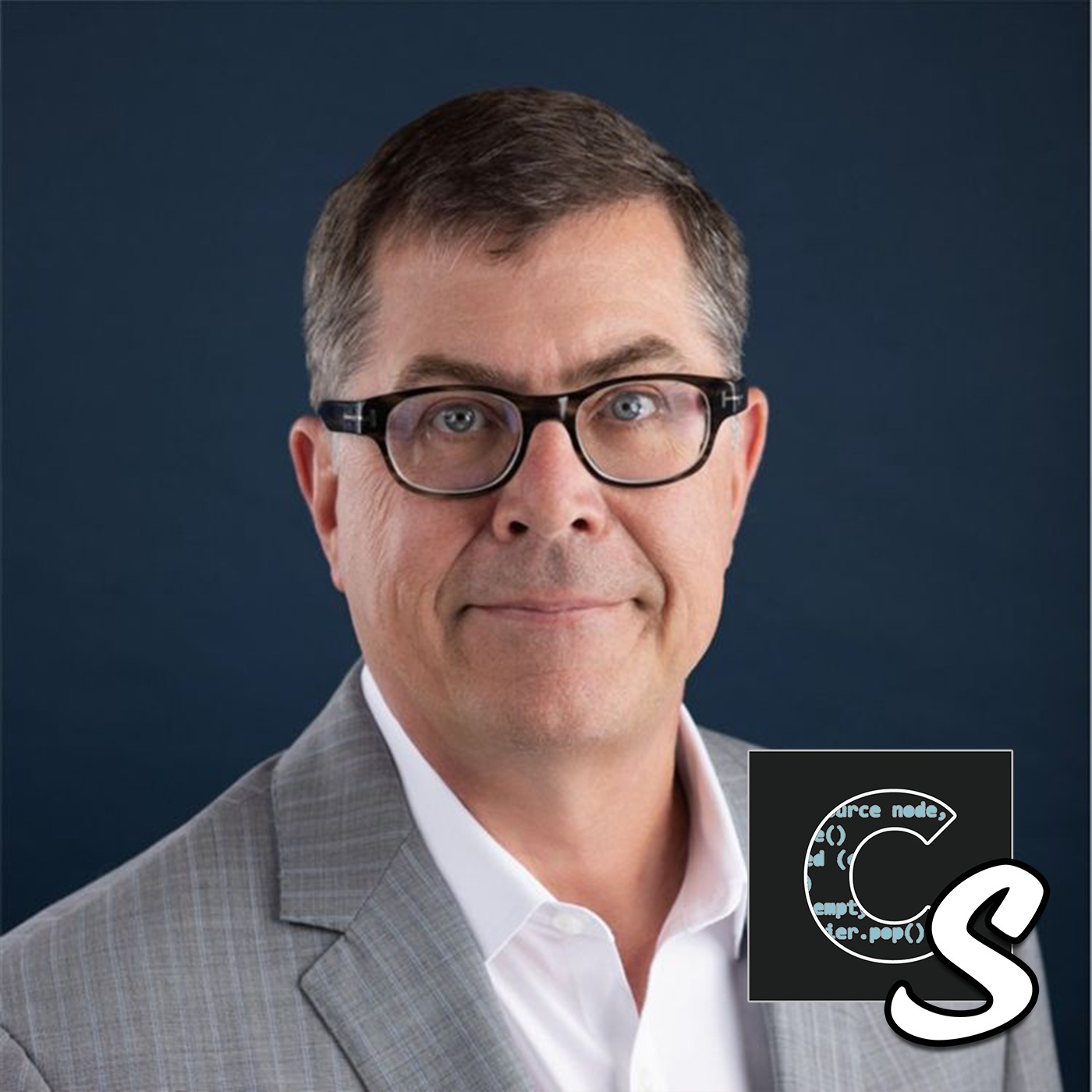
John Wright grew up in Arkansas, when his family moved from Wisconsin for his Dad's job. He was influenced heavy by his father, who became an entrepreneur with several successful exits. As a kid, he got to see the ups and downs, and how you ride the roller coaster of being a business owner. Outside of tech, he is an active sailor and certified instructor in yacht racing.
Growing up with a family of wood workers, he also likes to build things and make stuff with his hands. Finally, he lives in sobriety and recovery from past addiction, and is active in this community of people.
In the past, John and his team built a platform around email, which they sold in 2001 to a company that is now apart of Google. Post that, he started to noticed the proliferation of SMS in the messaging world, in similar patterns as to what email did - and they decided to build a platform to serve the enterprise in this capacity.
This is the creation story of TrueDialog.
Sponsors
Links
Our Sponsors:
* Check out Cash App and use my code CASHAPP10 for a great deal: https://cash.app
* Check out Plaud AI and use my code CODESTORY for a great deal: https://plaud.ai
Advertising Inquiries: https://redcircle.com/brands
Privacy & Opt-Out: https://redcircle.com/privacy
[SPEAKER_02]: where I really see the future, and specifically for SMS is the crossing of SMS into RCS.
[SPEAKER_02]: If you think about it in the early days of text, when you had AOL, copieservemail.com, it was a text-based messaging system, and then somewhere around the early 2000s,
[SPEAKER_02]: HTML e-mail came on and now that is the dominant way of which e-mail is used.
[SPEAKER_02]: RCS is the same thing.
[SPEAKER_02]: It is a rich media-based application.
[SPEAKER_02]: It's a thinner with regards to the bandwidth it consumes, but still allows you full interactive abilities specifically for marketers.
[SPEAKER_02]: This is John Wright, I am the CEO and co-founder of True Dialogue.
[SPEAKER_03]: This is Co-Story.
[SPEAKER_03]: a podcast bringing you interviews with tech visionaries.
[SPEAKER_03]: Six, six months moonlighting goes.
[SPEAKER_03]: It's the last and all of the backgrounds who share what it takes to change an industry.
[SPEAKER_00]: I don't exactly know what to do.
[SPEAKER_03]: It doesn't go as to get right.
[SPEAKER_01]: who built the teams that have their bad company is its team's help each other, which is proud of our team.
[SPEAKER_03]: Keeping scalability top of mind, all that infrastructure was up there.
[SPEAKER_03]: Yes, we've been fighting it as we grew up.
[SPEAKER_03]: Total waste of time.
[SPEAKER_03]: The stories you don't read in the headlines.
[SPEAKER_01]: It's not an easy thing to achieve.
[SPEAKER_03]: To get yourself a deficit of off, try to begin to ride the ups and downs of the start-up line.
[SPEAKER_01]: To really want it.
[SPEAKER_03]: Not just about technology.
[SPEAKER_03]: All this and more on code story.
[SPEAKER_03]: I'm your host Noel Labpart, and today, how John Wright has built the ultimate messaging solution and made it easy to use flexible and enterprise gray.
[SPEAKER_03]: John Wright grew up in Arkansas when his family moved from Wisconsin for his dad's job.
[SPEAKER_03]: He was influenced heavily by his father who became an entrepreneur with several successful exits.
[SPEAKER_03]: As a kid, he got to see the ups and downs and how you ride the roller coaster of being a business owner.
[SPEAKER_03]: Outside of tech, he's an active sailor and certified instructor in yacht racing.
[SPEAKER_03]: Growing up with a family of woodworkers, he also likes to build things and make stuff with his hands.
[SPEAKER_03]: Finally, he lives in sobriety and recovery from past addiction and is active in this community of people.
[SPEAKER_03]: In the past, John and his team built a platform around E-mail, which they sold in 2001 to a company that is now a part of Google.
[SPEAKER_03]: Post that, he started to notice the proliferation of SMS in the messaging world in similar patterns as to what E-mail did.
[SPEAKER_03]: And they decided to build a platform to serve the enterprise in this capacity.
[SPEAKER_03]: This is the creation story of True Dialog.
[SPEAKER_02]: True dialogue is an enterprise communications platform.
[SPEAKER_02]: We initially started with the thesis of the business being that SMS was going to start creeping up with regards to business use and start carving in, much like what email did with direct mail that text would start coming in and being a formative communication channel for businesses.
[SPEAKER_02]: We help.
[SPEAKER_02]: At this juncture, we primarily are working with large organization enterprises and have since added to just the basis of SMS, which we started out just doing both one-way communications.
[SPEAKER_02]: And their sense expanded our offerings to include two-way SMS, email, RCS, and boys.
[SPEAKER_02]: We work with a variety of industries, those include health care, higher education, staffing, retail, and professional sports franchises, like we were just talking about the Packers.
[SPEAKER_02]: We've got a number of the leading NHL, NFL, NBA, MLS, and MLB teams that we work with, and our application allows them to work in a variety of channels and communicate both on a
[SPEAKER_02]: with hundreds of thousands and millions of people at any particular time and also manage the two-way communication stream that doing it for about 10 years and building and grinding since we started the company my partner and I and it is it's been a fun ride.
[SPEAKER_03]: Let's dive into what you would consider the MVP for true dialogues that first version you built.
[SPEAKER_03]: I want to take to build and what sort of tools or methodology you're using to bring it to life.
[SPEAKER_02]: I started out my career as a DVA and I worked for a company which is now a part of EG in a public group.
[SPEAKER_02]: It's called Axiom Corporation and it's a large data and data services company based out of Arkansas.
[SPEAKER_02]: The primary function which they were building direct or they were building databases for is for direct mail.
[SPEAKER_02]: That evolved in the late 90s.
[SPEAKER_02]: I was very fortunate to see that class email was popping in.
[SPEAKER_02]: That email was going to become a formative channel.
[SPEAKER_02]: Much like SMS has become one in the last 10 years for businesses.
[SPEAKER_02]: And that direct mail is awfully expensive.
[SPEAKER_02]: You gotta pay postage paper, processing time, all of those things that's very slow.
[SPEAKER_02]: It's hard to read.
[SPEAKER_02]: And as email came into the forefront in the late 90s,
[SPEAKER_02]: that businesses would start using it as a communication channel for them to communicate with their clients.
[SPEAKER_02]: And I got involved with that and got involved with some guys out of Canada called Flow Network.
[SPEAKER_02]: We built that company and in the email world and sold it in 2000 and closed in 2001 to a company called DoubleClick, which is now part of Google.
[SPEAKER_02]: And I've been involved in several email businesses since that point in time.
[SPEAKER_02]: When we built an MDP, the foundation was very similar with regards to how you build things.
[SPEAKER_02]: And with the mist inside of this company, it was just very scrappy.
[SPEAKER_02]: We took what the flow and process was foundationally for building an SMS platform and based it a lot of what operationally how things worked inside of email.
[SPEAKER_02]: And obviously there's a lot of regulatory items that exist inside of the world of telephony that did not exist inside of the email.
[SPEAKER_02]: And we built the platform from the ground up.
[SPEAKER_02]: They used in a variety of tools.
[SPEAKER_02]: We were in very early adapter in the world of Microsoft to ensure using cloud computing.
[SPEAKER_02]: And that was the basis of everything.
[SPEAKER_02]: We initially used Microsoft tools specifically.
[SPEAKER_02]: Shared SQL was the first database back end that we used.
[SPEAKER_02]: And ViewJS was the front end component of it.
[SPEAKER_02]: And we also used
[SPEAKER_02]: some logging tools specifically elastic search.
[SPEAKER_02]: Everything was built in C sharp, if you're talking about technically.
[SPEAKER_02]: That is of all pretty significantly since then.
[SPEAKER_02]: My experience was as that early on as shared sequel was an offering of the jour.
[SPEAKER_02]: Did not scale, and we had to, in the early scaling days of true dialogue, we had to quickly move off of that platform, and we moved on to my sequel, which is now owned by Oracle.
[SPEAKER_02]: Foundationally, that's how we did things in the MVP.
[SPEAKER_02]: We're still in an MVP mode.
[SPEAKER_02]: I think it's just a consistent process of,
[SPEAKER_02]: be in scrappy and continually evolving our MVP and we're offering our latest MVP was with a new form of messaging in the inbox called RCS messaging.
[SPEAKER_02]: You might see that inside of your device, whether you're using Android or iPhone, it now says ICRCS message at the bottom of your ring, RCS is was built by Google to compete with eye message on the iPhone.
[SPEAKER_02]: And much like VHS and DCR beta max, rather VHS and beta, those two technologies competed with each other.
[SPEAKER_02]: And roughly two years ago, Apple made the decision to allow RCS on the iPhone.
[SPEAKER_02]: And that looks like it's going to be the dominant platform for more multi-medium messaging inside of the text inbox.
[SPEAKER_03]: I'm curious about how you progressed in matured true dialogue.
[SPEAKER_03]: And you touched on some of that.
[SPEAKER_03]: And I kind of want to dig into it a bit more and wrap it in a box because what I'm really looking for is how do you build your roadmap?
[SPEAKER_03]: How do you go about deciding that, okay, this is the next most important thing to build or to address.
[SPEAKER_02]: our feature set and applications that has matured significantly.
[SPEAKER_02]: But what we have today versus when we first launch is almost unrecognizable.
[SPEAKER_02]: On the road map, I'm a big believer in listening, and we have very good collection tools and
[SPEAKER_02]: Those tools are primarily geared around our services and success teams and sales teams and listing to our customers and our prospective new customers with regards to what they're looking for.
[SPEAKER_02]: And they'll tell you if you listen hard enough.
[SPEAKER_02]: I think that our roadmap today, we have some certain items that come from a regulatory side that the agencies require us to build in specifically around compliance.
[SPEAKER_02]: It's that we have to make adjustments in our roadmap and add to
[SPEAKER_02]: in order to fill regulatory requirements, but from a teacher set, it is 99.9% driven by our customer.
[SPEAKER_02]: And we got very narrow early on.
[SPEAKER_02]: I think one of the phrases that we use internally does that when everything's important, nothing's important.
[SPEAKER_02]: and that goes inside of sales.
[SPEAKER_02]: I think one of the challenges that I was faced early on as a CEO was that the use cases of text are so massive that you can use it for appointment setting.
[SPEAKER_02]: You can use it for two-factor authentication.
[SPEAKER_02]: You can use it for marketing.
[SPEAKER_02]: You can use it for customer service.
[SPEAKER_02]: It just is so massive that if you try to focus and take care of all customers, you just run around
[SPEAKER_02]: So we got very narrow early on and decided our first vertical that we were going to attack was education and we got extremely fortunate in that one of the customers that we started working with was a leading for profit university and we sat down with them, we listened to them and in the early days 90% of our features and road map was contributory by the university that we had partnered with.
[SPEAKER_02]: And they're still a client today, and still have an enormous impact on what we deliver today.
[SPEAKER_02]: When you say, what does our roadmap look like today?
[SPEAKER_02]: And where do we build it?
[SPEAKER_02]: It's 100% from listening to our clients.
[SPEAKER_02]: Where their problems are, how they use of our applications that can be used to bridge the gap.
[SPEAKER_02]: And if you listen hard enough and ask the right questions, they'll tell you exactly what's needed.
[SPEAKER_03]: So, here you're saying, we're talking about how you built your team, and what do you look for in those people to indicate that they are the winning horses to join you?
[SPEAKER_02]: It's certainly been slow, I think all things considered, I think that what we found is that we'd rather have a small team of people who are all in than a large number of passengers.
[SPEAKER_02]: That's how we phrase it internally.
[SPEAKER_02]: People that are just grabbing on and trying to catch the ride.
[SPEAKER_02]: What I really look for is work ethic, intellectual honesty, and integrity, and someone who can handle ambiguity without falling apart, skills can be taught.
[SPEAKER_02]: Attitude can't.
[SPEAKER_02]: People who've lasted are people who treat it like it's their own company, and we take that position and make our employees sureholders inside of our company, and we want them having that owner mindset.
[SPEAKER_03]: Let's move into scale, and this will be interesting.
[SPEAKER_03]: It's always interesting to see how this is approach, especially building for the enterprise.
[SPEAKER_03]: I'm curious how scale was thought about in the early days, and that can be technology, can be business.
[SPEAKER_03]: And I'm also interested in, and have there been areas where you've had to fight scale as you've grown.
[SPEAKER_02]: The phases which you're building out ahead of growth and phases where growth is out running you and your duct tape and things together.
[SPEAKER_02]: And I use that phrase loosely.
[SPEAKER_02]: I don't think any founder who tells you that it's all clean and planned is being straight up.
[SPEAKER_02]: The goal is to make sure that the duct tape phases are short and you learn from them.
[SPEAKER_02]: And then I think that there's constant improvement with regards to taking the lessons that he've learned along the way of scale.
[SPEAKER_02]: and there are certain parts of scale that you can plan for and work great on a white board and look very elegant and then there's reality.
[SPEAKER_02]: We're in a world of operators, where we have to, we call them M&O's mobile network operators and we work with them, I have to work with them quite a bit and learning how to work in scale with the restrictive nature that they impose on their end.
[SPEAKER_02]: provides an additional level of challenge, but I think that we have learned from it over time and we've built an application set that scales horizontally and vertically in order to meet our customer's needs.
[SPEAKER_02]: We also look at advances in technology and how we can bridge gaps.
[SPEAKER_02]: Most notably, I think that in the world of which we live in today, if I think back in my early days in technology, you might remember those days.
[SPEAKER_02]: It was easy to turn things on and turn things off on business hours.
[SPEAKER_02]: We're in a world of 24-7, international on all the time, and where customers are—oh, we're having a maintenance window between two and three to clock this morning, and you've got ten customers that say you can't do that.
[SPEAKER_02]: That's during this particular time, and you can't turn things down and update the systems at that period of time.
[SPEAKER_02]: So we've been able to basically build and scale an infrastructure that we can update in real time with little in a latency in our systems and scale without having to take the system down and scale on a on-demand basis.
[SPEAKER_02]: And frankly, that is one of the reasons why we initially went in cloud is because of the on-demand nature that cloud provides.
[SPEAKER_02]: There's a higher
[SPEAKER_02]: but the availability and replication and redundancy provided inside of cloud allows us to manage our application set and offering with little to no disruption to our clients and same thing inside of scale during high load periods, everything scales and our pods and Kubernetes are able to basically add on.
[SPEAKER_02]: and a predictive nature now with AI.
[SPEAKER_02]: It can look over time and say during this period of time, 20 minutes before that, big times during the day, whether it's users or messaging, it knows and it's able to scale in real time and meet our customer demand and keep our customers happy.
[SPEAKER_03]: As you step out on the balcony and you look across all that you've built, specifically
[SPEAKER_02]: But there are a couple of things I think are probably closest to my heart, and I would say, first of all, I look back and I've got you look back in this longevity, just ten years of doing this and everything that I've been able to learn.
[SPEAKER_02]: But the thing I'm probably most proud of is my employees and the people.
[SPEAKER_02]: in the talent and the team, and secondly, we've been very fortunate in that we have a number of customers who've been with us for the entire tenure of our business.
[SPEAKER_02]: They came and they stayed.
[SPEAKER_02]: It drives me kuku when people call and say, I want to talk about a partnership and they're glorified salespeople and they're just saying, okay, how does the two-way partnership work?
[SPEAKER_02]: And they're trying to sell you something.
[SPEAKER_02]: I've been still inside of my team is that if you listen to your customers and try to figure out how to make it a partnership where you're listening to their feedback and you're helping themselves problems.
[SPEAKER_02]: And they're helping you solve problems as well and grow your product.
[SPEAKER_02]: And that other customers are going to need that and need those features and offerings, it's you build longevity.
[SPEAKER_02]: And I'm just super proud of the a lot of the people who've been here the entire 10 year of the company.
[SPEAKER_02]: We've got employees that have been here the entire 10 years.
[SPEAKER_02]: It's just amazing.
[SPEAKER_02]: And we've got customers who have been here the entire 10 years.
[SPEAKER_02]: So I think the two pentacles when I look out of the balcony are customers and people.
[SPEAKER_03]: Okay, let's flip the script a little bit.
[SPEAKER_03]: Tell me about a mistake you made and how you and your team responded to it.
[SPEAKER_02]: Probably one of the hardest lessons and I'm still growing as a CEO today is, you know, I think that it's holding on to talent too long.
[SPEAKER_02]: One of the hardest lessons is holding on to the wrong people, either whether it's out of loyalty or optimism, that things can turn around.
[SPEAKER_02]: But ultimately, when you look back on it, what I've really learned is that by holding on to poor talent, it disrupts your culture.
[SPEAKER_02]: Because you've got people who are working hard
[SPEAKER_02]: the pilots and the passengers, you got the pilots who are in there flying with you and then you got the passengers and they're just dragging you down.
[SPEAKER_02]: And that's a hard thing to overcome and learn.
[SPEAKER_02]: I think the phrase is higher slow and fire fast and I'm still have a hard time doing that sometime and holding on to people too long, but I think it's better as a leader to avoid mistakes and have those conversations earlier.
[SPEAKER_02]: and I think that the another thing that we say internally, we've got a lot of little sayings like in AA, he's got a lot of things inside of recovery, little phrases and things, but the other thing that we say is that unresolved conflict is expensive conflict.
[SPEAKER_02]: And having those conversations earlier, the biggest mistakes that I've made is not having those conversations soon.
[SPEAKER_03]: Let's move forward then.
[SPEAKER_03]: I'm really curious what the future looks like for True Dialogue, for where you see the industry going, for what you've built, for your team, all the things.
[SPEAKER_02]: With regards to SMS and email and voice, SMS is going to continue to grow, email and voice are voices actually in the decline.
[SPEAKER_02]: I think more people are using email.
[SPEAKER_02]: Still pretty, they're still growth inside of the email.
[SPEAKER_02]: However,
[SPEAKER_02]: I think that the laws that basically have been erected to protect the email system were what it's called CAN spam.
[SPEAKER_02]: And those laws were erected post email already being a dominant communication tool, whereas the rules that regulate SML and the text inbox have been in place for quite a long time will protect that environment.
[SPEAKER_02]: where I really see the future in specifically for SMS is the crossing of SMS into RCS.
[SPEAKER_02]: And if you think about it in the early days of text, when you had AOL, and Composer, and Mail.com, it was a text-based messaging system.
[SPEAKER_02]: And then somewhere around the early 2000s,
[SPEAKER_02]: HTML email came along.
[SPEAKER_02]: And now that is the dominant way of which email is used.
[SPEAKER_02]: RCS is the same thing.
[SPEAKER_02]: It is a rich media-based application.
[SPEAKER_02]: It's a thinner with regards to the bandwidth it consumes, but still allows you full interactive ability, specifically for marketers.
[SPEAKER_02]: And if you get your Verizon bill or your team mobile bill or your FedEx shipping notification, those are all now, most mostly have moved over to RCS.
[SPEAKER_02]: And that gives you an idea of what's capable inside of RCS.
[SPEAKER_02]: Drop down boxes and variable content, the ability to send images, which you can send images over text.
[SPEAKER_02]: They were called MMS, but you couldn't click on an image
[SPEAKER_02]: That is a big change that's happening.
[SPEAKER_02]: I think, at the same time, we're at a moment in time where a gent of AI is really coming in.
[SPEAKER_02]: And agents being able to communicate with each other is very easy, because they can just make a connection over the internet.
[SPEAKER_02]: talk to each other, make a handshake.
[SPEAKER_02]: However, there's also a enormous need, specifically for organizations that are adding a gent of into their customer service, into their sales and marketing, for them to be able to communicate with human.
[SPEAKER_02]: And the need for tools like ours, for those attentive agents to be able to provision, scale up, and add those tools sets so they can effectively communicate outside of just their agent to agent communications.
[SPEAKER_03]: John, let's switch to you.
[SPEAKER_03]: Who influences the way that you work?
[SPEAKER_03]: Name a person or many persons or something you look up to and wine.
[SPEAKER_03]: I know in our early conversation you mentioned your father.
[SPEAKER_03]: I'm curious what your answer is now.
[SPEAKER_02]: Still, I think, foundationally, he was the man who made me the man I am today, and he obviously was the early and probably the largest influence, but in my career, I've just been so fortunate.
[SPEAKER_02]: I tell my wife constantly, I'm very lucky in, I think, that finds the prepared, but I early on.
[SPEAKER_02]: When I was in college, I worked at a restaurant and Chili's still very popular today, but I had a manager named Howard Con.
[SPEAKER_02]: It was a general manager and we were the number two or number three Chili's and the all of North America.
[SPEAKER_02]: And for a general manager that rolled up his sleeves and could do every position inside that restaurant and did every present, he led by example.
[SPEAKER_02]: And I think that when college, I saw how he attacked things and he was a major influence and mentor early on.
[SPEAKER_02]: And then that led me into my first job out of college and I got very lucky.
[SPEAKER_02]: I had Axiom and I had one of the gentlemen who was a head of one of the divisions, a gentleman by the name Steve Brighton.
[SPEAKER_02]: And he was an early mentor of mine, and I think that the things that I learned from him with regards to don't be afraid to take chances, and it's his velocity and effort, and the culture, he was a culture builder, and I just really learned a lot about how to build culture from him.
[SPEAKER_02]: And today I'd say that my business partner is a successful investor.
[SPEAKER_02]: People call their investors, oh my investor or my chairman, I'm lucky in that I've got a business partner who's also the chairman and investor inside of our business.
[SPEAKER_02]: And I think that learning from his experience and his successes and the things that he's taught me in enormous impact.
[SPEAKER_02]: And it shows up at every point along the way
[SPEAKER_02]: And finding a business partner who shoots straight down the middle every time no questions asked, there was a lot of litigation that are industry early on.
[SPEAKER_02]: And we got sued, I think in the first six months, one of our customers got sued.
[SPEAKER_02]: And it was probabilistic litigation in the early days of texting.
[SPEAKER_02]: There's the law that governs, this is called the TCPA or telephone consumer
[SPEAKER_02]: And there was a lot of gray here and it's been cleaned up through the Facebook Act of 2021 and all of that's gone away.
[SPEAKER_02]: But we got nailed.
[SPEAKER_02]: It was quite expensive.
[SPEAKER_02]: He looked at me and I looked at him and do he pack up our bags and call it quits.
[SPEAKER_02]: We put our head down and march forward and he said are we right and I said yes, and he goes let's fight it And if you feed the pigeons they keep coming back and I got your back and he showed me just what a true partner is and Pelt his head high and doing the right thing good things happen and
[SPEAKER_02]: Highly influential in, I just feel blessed every day that I've had the people in my life that I have and finding him as a business partner, and as an influence in how I conduct my life, both personally and professionally, I can't tell you and other entrepreneurs who are founding businesses, how important it is just surround yourself with people like that in life.
[SPEAKER_03]: Last question.
[SPEAKER_03]: So, you're getting on a plane, you're sitting next to a young entrepreneur who's built the next big thing.
[SPEAKER_03]: They're jazzed about it, they can't wait to show it off to the world and can't wait to show it off to you right there on the plane.
[SPEAKER_03]: What advice to give that person having gone down this road a bit?
[SPEAKER_02]: probably the biggest lesson, and I'd have to explain it for a second, but equity is the most expensive form of capital.
[SPEAKER_02]: If you're going out and you're building a company and you're excited about what you do, there's a lot of people that are willing to write checks.
[SPEAKER_02]: Know your worth and don't sacrifice hypergrowth in the form of given money away unnecessarily.
[SPEAKER_02]: Be in a scrappy entrepreneur and bootstrapping
[SPEAKER_02]: I think I've seen a lot of people along the way who take DC money and the first bump in the road.
[SPEAKER_02]: But when things start going sideways, the DC pull up, they've got 100 investments, they just need one or two to hit, to get their money back.
[SPEAKER_02]: But they bail and they decide, all of a sudden, as a founder, you're seeing your business get thrown to the side and because they don't have the same conviction you do and taking
[SPEAKER_02]: So, just, that is probably one of the hardest and most important things to do is to have conviction and don't sacrifice your control for the sake of trying to raise money rapidly.
[SPEAKER_02]: For every Facebook or...
[SPEAKER_02]: SpaceX or Tesla or whatever company it is that's gone out and then successful.
[SPEAKER_02]: There's a thousand others that took money and the DC got shy, stopped putting money in and all of a sudden you're upside down and you're burning at a rate that's unsustainable.
[SPEAKER_02]: Having controlled measured growth is a perfectly acceptable building a good business.
[SPEAKER_02]: That to me is probably the best lesson you can learn.
[SPEAKER_03]: Let's fantastic advice.
[SPEAKER_03]: Well, John, thank you for being on the show today, and thank you for telling the creation story of true dialogue.
[SPEAKER_03]: Thank you again for having me.
[SPEAKER_03]: And this concludes another chapter of Code Story.
[SPEAKER_03]: code story is hosted and produced by Noah Labhart.
[SPEAKER_03]: Be sure to subscribe on Apple podcast, Spotify, or the podcasting app at your choice.
[SPEAKER_03]: And when you get a chance, leave us a review.
[SPEAKER_03]: Both things help us out tremendously.
[SPEAKER_03]: And thanks again for listening.
Latest Season of the Podcast is Sponsored By


 Apple Podcasts
 Castbox
 Castro
 Goodpods
 Moon FM
 Overcast
 Pocket Casts
 Podbean
 Podcast Addict
 Podcast Republic
 Spotify