S12 Bonus: The Global Talent Mirage: Why Rigid Immigration Frameworks Fail Elite Tech Teams and the Rise of the Global Mobility OS with Ramiro Roballos, Co-Founder & CEO of Tukki
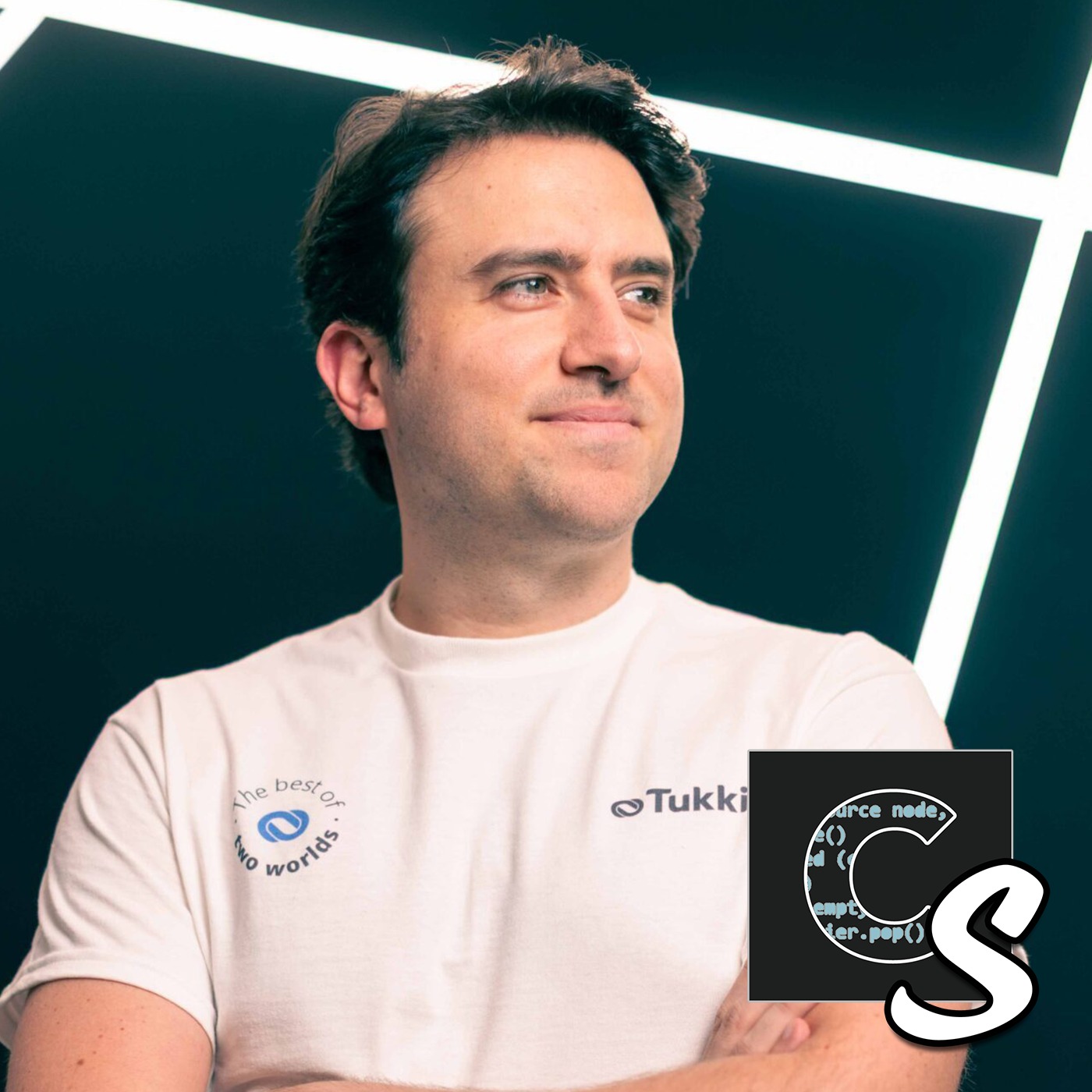
Ramiro Roballos grew up in Buenos Aires, and 6 or 7 years ago, moved to Miami and now lives in Buffalo, NY. His path to entrepreneurship has been different, as he started out as a musician, and then an orchestra conductor for several years. He eventually got into building how companies, starting his own music school and his own orchestra. Eventually, he got his MBA, worked for McKinsey and some startups before doing his own. Outside of tech, he is married to a cellist, and keeps playing music for fun. He also enjoys Formula 1, and watches every change he gets.
Ramiro went through the immigration process in the US, and was very disappointed in the quality of the service, given the importance of this process in determining a pillar life outcome. He felt there should be a better way, one that has excellent service and quality, and centralizes the expansive process into one platform.
This is the creation story of Tukki.
Sponsors
Links
Our Sponsors:
* Check out Cash App and use my code CASHAPP10 for a great deal: https://cash.app
* Check out Plaud AI and use my code CODESTORY for a great deal: https://plaud.ai
Advertising Inquiries: https://redcircle.com/brands
Privacy & Opt-Out: https://redcircle.com/privacy
[SPEAKER_02]: So I would say the MVP was myself working as a paralegal and an attorney with no technology.
[SPEAKER_02]: That was actually the MVP even before having a product.
[SPEAKER_02]: So we were building the product and then we already started getting clients before we even have the first version of it.
[SPEAKER_02]: So we ended up doing that very manually and we learned a lot about our clients but
[SPEAKER_02]: The first, like, platform of the first version of the platform was actually a place where you could upload documents, where you could send those documents to the attorney could provide some feedback, work on then, approve them, and then put it together and send it to USCIS.
[SPEAKER_02]: My name is Romeo Robioz, I'm the CEO and co-founder of 2K.
[SPEAKER_03]: This is Code Story.
[SPEAKER_03]: a podcast bringing you interviews with tech visionaries.
[SPEAKER_03]: Six, six months moonlighting goes.
[SPEAKER_03]: It's the last and all of the backgrounds who share what it takes to change an industry.
[SPEAKER_00]: I don't exactly know what to do.
[SPEAKER_03]: It doesn't go as to get right.
[SPEAKER_01]: who built the teams that have their bad company is its team's help each other, which is proud of our team.
[SPEAKER_03]: Keeping scalability top of mind, all that infrastructure was up there.
[SPEAKER_03]: Yes, we've been fighting it as we grew up.
[SPEAKER_03]: Total waste of time.
[SPEAKER_03]: The stories you don't read in the headlines.
[SPEAKER_01]: It's not an easy thing to achieve.
[SPEAKER_03]: To get yourself a deficit of off, try to begin to ride the ups and downs of the start-up line.
[SPEAKER_01]: To really want it.
[SPEAKER_03]: Not just about technology.
[SPEAKER_03]: All this and more on code story.
[SPEAKER_03]: I'm your host, Noah Labpart.
[SPEAKER_03]: In today, I'll remeer over bios.
[SPEAKER_03]: Is making immigration much, much simpler.
[SPEAKER_03]: Making quality transparency and communication table stakes.
[SPEAKER_03]: Romero Rebio grew up in Buenos Aires, and six or seven years ago moved to Miami and now lives in Buffalo, New York.
[SPEAKER_03]: His path to entrepreneurship has been different as he started out as a musician, and then an orchestra conductor for several years.
[SPEAKER_03]: He eventually got into building his own company, starting his own music school and his own orchestra.
[SPEAKER_03]: Eventually, he got his MBA, worked for McKinsey and some startups for for doing his own.
[SPEAKER_03]: But outside attack, he's married to a celloist and keeps playing music for fun.
[SPEAKER_03]: He also enjoys Formula One and watches every chance he gets.
[SPEAKER_03]: Ramiro went through the immigration process in the U.S. and was very disappointed in the quality of the service, given the importance of this process and determining a pillar of life outcome.
[SPEAKER_03]: He felt there should be a better way, one that has excellent service and quality, and centralizes the expansive process into one platform.
[SPEAKER_03]: This is the creation story of Tuki,
[SPEAKER_02]: Essentially it was out of personal frustration, of my own green card process, of being stressed, not knowing what was happening, having zero visibility going through many mistakes from the attorneys along back and forth, and just like an overall feeling that it's one of the most important processes of your life when you're going through that and that determines where you and your family can live if your business can thrive or not this really an essential thing and you should have
[SPEAKER_02]: an excellent service, an excellent quality, and I didn't get that done.
[SPEAKER_02]: Talking with many immigrant friends, I thought that was a trend.
[SPEAKER_02]: It was not the exception, so there should be another way.
[SPEAKER_02]: Basically what we did is a tech-enabled service.
[SPEAKER_02]: So we at the end of the day provide a service.
[SPEAKER_02]: We do, we have our own immigration attorneys that work full-time with us.
[SPEAKER_02]: They still remain independent, because legally the attorney needs to be independent, they need to be the one.
[SPEAKER_02]: Making the legal decisions, so we are always working under the supervision of this license, very experienced attorneys, but then we build an entire platform and workflow so that the actual process is way more efficient.
[SPEAKER_02]: Some of these petitions that you send to the government, sometimes they might have more than 1,000 pages, sometimes more than 2,000 pages.
[SPEAKER_02]: It's a monster to put together, so basically our product is this platform where everything happens in there.
[SPEAKER_02]: So forms, letters, document collection, review, AI feedback, AI drafting, writing the legal argument, just putting together the entire thing and all the connection between the companies, the immigrants and the Americans.
[SPEAKER_03]: Let's dive into what you would consider the NDP Romero of Tuki, the first version of the Proxy Build.
[SPEAKER_03]: How long did it take to build and what sort of tools were you using to bring it to life?
[SPEAKER_02]: So I would say the NBP of the service was myself working as a paralegal and an attorney with no technology.
[SPEAKER_02]: that was actually the MVP, even before having a product.
[SPEAKER_02]: So we were building the product and then we already started getting clients before we even have the first version of it.
[SPEAKER_02]: So we ended up like doing that very manually and we learned a lot about our clients.
[SPEAKER_02]: But
[SPEAKER_02]: The first, like, platform of the first version of the platform was actually a place where you could upload documents, where you could send those documents to the attorney could provide some feedback, work on then, approve them, and then put it together and send it to USCIS.
[SPEAKER_02]: I would say that from the first line of code, until we had like a usable first version to do a case and to Andy was probably six months.
[SPEAKER_02]: I want to say.
[SPEAKER_03]: But this is interesting, given that the MVP was you as a pair of legal, I'm curious about there's probably a pivot point or a tough decision you made that became a cornerstone in how you built the platform.
[SPEAKER_03]: I'm curious about that decision and how you cope with it.
[SPEAKER_02]: One decision we made very early on was that nothing was going to happen outside of the platform, which is more complicated at its sounds.
[SPEAKER_02]: So I'll give you an example, right?
[SPEAKER_02]: Let's say you have something in the platform that is going to create the legal argument that is like 20, 30 pages, right?
[SPEAKER_02]: And you have many things there.
[SPEAKER_02]: You have preferences, you have format, you have several details,
[SPEAKER_02]: So, if you allow the user to download that into a Word document, then make some finalities on the Word document, then you can be very flexible because if there's some mistakes, some things that are not perfectly worked out in the platform,
[SPEAKER_02]: It's not really such a big issue because then you download in the editable form and then you modify it or similar with forms like demigration form most platforms I've seen out there.
[SPEAKER_02]: That's what they do, like they pre-complete a version of the form and then you download it and then you can keep editing it.
[SPEAKER_02]: which is great because it gives you a lot of flexibility but for us even though we understood that flexibility we didn't want to have two sources of truth right because once you do that and then there are things happening outside of the platform then you end up paying for all that flexibility that now there are two sources of truth and some things might happen outside of the platform.
[SPEAKER_02]: And also, if that doesn't hurt, you are not going to improve the platform because it's not a problem, you just work it outside of it.
[SPEAKER_02]: But then you lose visibility and then you lose a lot of things for the future.
[SPEAKER_02]: So I think that was the one, each decision we made early on.
[SPEAKER_02]: It has been very painful to be honest.
[SPEAKER_02]: It's not easy, but then that has really given us a north star on how to develop
[SPEAKER_02]: And then in the long run, it makes everything way more organized and you have 100% transparency of what's happening at 100% control.
[SPEAKER_03]: So then moving forward, I'm curious about how you progressed and mature the platform with it.
[SPEAKER_03]: That North Star in mind, and I'm curious about how you built your roadmap.
[SPEAKER_03]: How you went about deciding that, okay, this is the next most important thing to build or to address with Tookie.
[SPEAKER_02]: When we started day one, very mind that we started developing this around June of 2023, even before there was a real company like just an idea and just a few guys coding, it was like three four months after the big explosion of chatchipity, so we were all enveloped and super excited about AI.
[SPEAKER_02]: So day one, we were significantly more focused on applying AI to everything.
[SPEAKER_02]: I think after a few months of working on this, we realized that there were so many more important things to build before.
[SPEAKER_02]: You really double down on AI so just building the workflow, the pipes, the infrastructure to upload documents and review and comment and interact with the people.
[SPEAKER_02]: So I would say that first year we did have for a year the roadmap and that was the last year we did an yearly roadmap because it did not be useless because you don't know what you don't know one no matter how smart you are or how smart you think you are once you're doing something completely new you end up learning so much about the reality of the job you're doing that
[SPEAKER_02]: Priority, switch, very often, and you end up doing things you never thought you were going to do.
[SPEAKER_02]: I'll give you an example, we ended up building an internal chat with Intukey, and that was something that was completely out of my radar when we started.
[SPEAKER_02]: But then it proved to be essential because it doesn't matter how perfect your system is with comments and everything you want to have at communication with people.
[SPEAKER_02]: And again, if things are happening through email, then you stop having visibility and you no longer have a source of truth.
[SPEAKER_02]: So if you want to avoid that, you need to have something else.
[SPEAKER_02]: That was something we realized more than a year and a half in.
[SPEAKER_02]: That's my point, so at this point in time, we don't do any yearly planning.
[SPEAKER_02]: We do quarterly and we do have a backlog of very important features that we have and then once a quarter We meet with the entire team and we decide what we're going to prioritize, but again at least this early At least for us it doesn't work to plan beyond three months I hear you saying we tell me about how you built that team and what did you look for in those people to indicate that they were the winning horses to join you?
[SPEAKER_02]: My co-founder, we have been friends now for eight years.
[SPEAKER_02]: We work together back at McKinsey.
[SPEAKER_02]: Many years ago, even though I told you I became technical, I became an amateur technique.
[SPEAKER_02]: All right, so I did two-three years of coding.
[SPEAKER_02]: So I can call, I can build an app, but that was not my...
[SPEAKER_02]: main profession, so this is, so he has a PhD in computer science, he's been in academia, he has been doing very complex in for a long time and he's great.
[SPEAKER_02]: And beyond being great technically, he's a great person, he's very honest, I think we manage, we share many values.
[SPEAKER_02]: And again, we're very good friends, so I think he was a perfect person for the jobs of very early on.
[SPEAKER_02]: When I was, I started building this a few months later, which out and he was excited enough to join.
[SPEAKER_02]: And then, honestly, like developers, there were people that already knew for before that we have been working together or studying together or doing technical things together.
[SPEAKER_02]: And after that, actually we had to recruit most of folks from new, like we met them for this job.
[SPEAKER_02]: Basically, I don't trust myself to choose the right person after a few interviews, so what we do is we do a very extensive process, so we start a process typically by asking candidates to do something, it can be a very simple thing that takes you 30 minutes one hour, but we want to see how they think and how they do things.
[SPEAKER_02]: The ones that do that in a way we like, we interview them and then once we like them in the interview we give them like a test period of one or two months and if they have another job we ask them not to quit and just work for us for whatever one hour per day to hours per day and only after working with them for one or two months only then we are fully convinced to hire them.
[SPEAKER_03]: Let's move into scalability, this will be interesting, because scale can be so many things, it could be technology, it can be people, it can be business, all the things.
[SPEAKER_03]: Tell me about how you've thought about scale in the early days, and maybe, but what I'm really curious about is, have there been interesting areas we've had to fight scale as you've grown?
[SPEAKER_02]: Yeah, absolutely.
[SPEAKER_02]: And look, we are obsessed about scaleability, because, again, we are doing a service.
[SPEAKER_02]: We're not that we do this as traditionally scale is where service is die or really struggle, because you depend on people.
[SPEAKER_02]: And that's what, in our industry and US immigration that was, has historically has prevented people from growing quickly because at some point,
[SPEAKER_02]: The demand outgrowns you and then you can not provide good service anymore and then you are swamped and then people start recommending you and everything becomes initial, right?
[SPEAKER_02]: So I think that's our main challenge and not just ours but anyone trying to do AI or tech-enabled services.
[SPEAKER_02]: So we have been always obsessed about that and
[SPEAKER_02]: we are very methodical.
[SPEAKER_02]: So we have been doing things from measuring exactly how many minutes each task take for each person doing a lot of sessions with them.
[SPEAKER_02]: Developers or product people literally looking over the shoulder of an attorney seeing what they do and getting ideas constantly, just to improve that efficiency, especially in a process where so death by a thousand cuts, there's no one single thing that really kills the
[SPEAKER_02]: We are all the time obsessed about how to do that, and how to make this as efficient as possible.
[SPEAKER_02]: And that's from an operational perspective, and then in terms of people.
[SPEAKER_02]: Again, the more people you add to a team, the more connectivity, the more connections are, and the more bureaucratic everything gets.
[SPEAKER_02]: So we actually do a very proactive effort not to hire.
[SPEAKER_02]: And then we only hire when it's really hurting or where we're really thinking it's strategicly is really important, but consciously we try to push against that growth in head count because of that reason.
[SPEAKER_03]: Romero, as you step out on the balcony, you look across all that you've built with Tuki.
[SPEAKER_03]: What do you most proud of?
[SPEAKER_02]: I am proud of the team, we build the team pushing this forward and I'm proud of how high the bar it is for us for providing the best service, I think many times I'm a big fan of Pareto, the Pareto principle that you can get 80% out of 20% therefore, 80% of the value from 80% of the effort.
[SPEAKER_02]: I don't think you can do that rule for everything and sometimes you just need to be the absolute best at something and you need to be the goal to the absolute limit and I think that you can see that a number of proud of us doing that many ways and sometimes even where I think that we are the benchmark in that particular feature way of doing things just
[SPEAKER_02]: Keep improving it because we know that there's more out there and that's what immigrants and companies deserve and I like to have that bar and do it just because someone needs to do it and it's not just about being practical, but really about aiming to be the complete standard and to really reinvent how these things are done.
[SPEAKER_03]: Let's flip the script a little bit.
[SPEAKER_03]: Tell me about a mistake you made and how you and your team responded to it.
[SPEAKER_02]: One of the biggest mistakes with the aid was taking too long to focus on organic initiatives of marketing.
[SPEAKER_02]: So we were always very product and service focus and we still are.
[SPEAKER_02]: But some initiatives of marketing, especially awareness and organic and SEO and social media, they take a long time to develop.
[SPEAKER_02]: And I think we were too obsessed about service, about product, about all these things that we left that avenue without a real effort for a long time and now it's working well but again it's taking so long that I think we should have started probably a few years early just to be at that point where we would like to be right now in that regard.
[SPEAKER_03]: Okay, Ramiro, let's move forward then.
[SPEAKER_03]: What does the future look like for Tuki for the platform you built, the product, the team, where the world and the industry is going, come about all the things?
[SPEAKER_02]: So I think the future for us is still to build, to go above and beyond with the level of automation and technology we have.
[SPEAKER_02]: And for me, for example, AI implementation is mostly with two tracks.
[SPEAKER_02]: One is catching mistakes and quality control and quality review and the other one is drafting.
[SPEAKER_02]: Those are the I think the two things, so I think we still have a long way to go.
[SPEAKER_02]: They are to really make the humans role be most.
[SPEAKER_02]: A quality check, a criteria, decision and more the human interaction with folks versus doing repetitive tasks.
[SPEAKER_02]: So I think there's a lot of automation there.
[SPEAKER_02]: Still to be made.
[SPEAKER_02]: And I think the future is probably long-term, expanding even beyond immigration at some point.
[SPEAKER_02]: I think all the technology and all the expertise we build is of course very center right now in immigration, but I think it could be extensible to other areas.
[SPEAKER_02]: And I think for us, the future is to keep improving processes, to keep making really
[SPEAKER_03]: Let's switch to you, Romero, who influences the way that you work.
[SPEAKER_03]: Name a person or many persons are something you look up to and why.
[SPEAKER_02]: I honestly pay a little attention to a lot of entrepreneurs on what they say.
[SPEAKER_02]: I think the internet right now is a great source of learning.
[SPEAKER_02]: Just being on social media, on X, seeing what people say, what they think about.
[SPEAKER_02]: Listen to him talk, think, seeing how they did certain things.
[SPEAKER_02]: And I think you can learn a lot if you're just aware and learning about that.
[SPEAKER_02]: I've also attended a lot of communities like Endeavor, Elban, Stanford, or even 43 North here, Tampa Bay Wave, like many accelerators or group of entrepreneurs.
[SPEAKER_02]: I think it's always really refreshing to learn from different people and how they do things and ask a lot of questions.
[SPEAKER_02]: So I don't know if I have one person that has particular influence the way we work or I work or think.
[SPEAKER_02]: But I think many people, and also during my Tammat McKinsey, I was there for five years, I learned a lot from other McKinsey people or clients.
[SPEAKER_02]: Again, I've been fortunate enough to work with probably more than 25, 30 companies or groups.
[SPEAKER_02]: And again, I think you learn a lot from many people, many things, and then it's your responsibility to see how to implement that.
[SPEAKER_03]: last question or mirror so you're getting on a plane and you're sitting next to a young entrepreneur who's built the next big thing.
[SPEAKER_03]: They're jazzed about it, they can't reach show it off to the world and can we shut off to you right there on the plane?
[SPEAKER_03]: What advice do you give that person having gone down this road a bit?
[SPEAKER_02]: I always think about two things, my first most enjoyed the journey.
[SPEAKER_02]: because I think many times we entrepreneurs all the time in the future and thinking about when you do the next thing, when you race as you receive the ray or get the client or higher these people or become profitable or whatever it is that your goals are.
[SPEAKER_02]: and I think it's a stressful process and a long process and I think it sometimes is easy to not enjoy what you do and I think it's a very fortunate position to be able to achieve your dream, to do what you like, to hire people, to do all these things is a privilege and I think with all the responsibility some pressures is very easy to not enjoy that.
[SPEAKER_02]: And at the same time, I think it's really important to be consistent, strategically with things.
[SPEAKER_02]: So, what I mean by that is that you're funding strategy or go to market, the type of business you have, the type of things you like doing, the type of people you hire, the uniteconomics, like everything needs to be aligned, because sometimes racing money can be a great idea, sometimes it can be a really bad idea.
[SPEAKER_02]: Sometimes hiring certain people can be a great idea or not, and it all depends on all the other factors.
[SPEAKER_02]: And I also think it's very easy to not connect all those dots and have different strategies for different parts of the business, and then that's going to bite you in four or five years, so I think just...
[SPEAKER_02]: Making a conscious effort of connecting those dots and making sure you're funding your team, your long-term goals, your goal to market, your type of product and the things you're good at are all connected is really important.
[SPEAKER_03]: Couldn't agree more with that.
[SPEAKER_03]: That's fantastic advice.
[SPEAKER_03]: We're Mirro, thank you for being on the show today and thank you for telling the creation story of Tuki.
[SPEAKER_02]: Thank you so much for having us.
[SPEAKER_03]: And this concludes another chapter of Coat Story.
[SPEAKER_03]: code story is hosted and produced by no a lab part.
[SPEAKER_03]: Be sure to subscribe on Apple podcast, Spotify, or the podcasting app at your choice.
[SPEAKER_03]: And when you get a chance, leave us a review.
[SPEAKER_03]: Both things help us out tremendously.
[SPEAKER_03]: And thanks again for listening.
Latest Season of the Podcast is Sponsored By
 Apple Podcasts
 Castbox
 Castro
 Goodpods
 Moon FM
 Overcast
 Pocket Casts
 Podbean
 Podcast Addict
 Podcast Republic
 Spotify