S12 E27: The Real-Time Scaling Tax: Why High-Volume WebSockets Kill Monolithic Performance and How AnyCable Decoupled the Real-Time Layer with Irina Nazarova, CEO of Evil Martians
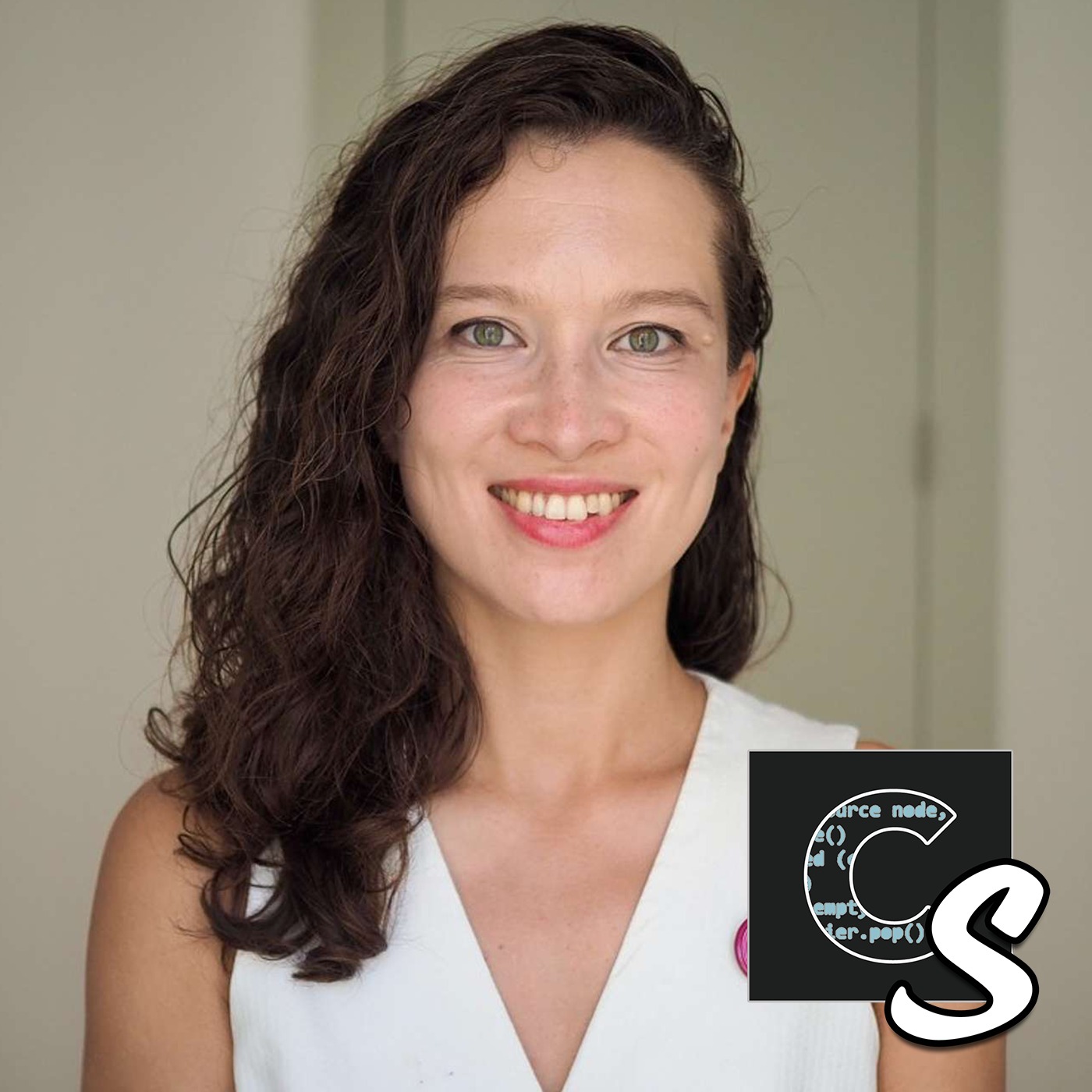
Irina Nazarova grew up in Russia, and has lived in Portugal, Turkey, and now, San Francisco. She got a computer science degree, but felt like an imposter in the dev world. She went on to get an economics degree, and went to work for JP Morgan. Feeling little reward from her work, she read the lean startup and jumped out to build her own, and eventually joined Evil Martians. Outside of tech, she is a person who loves hiking, traveling, and old school film and photography. She enjoys working with old film, where there is high touch, and you have a limited number of takes.
Irina is the CEO of Evil Martians, a well known design and engineering consultancy. During the time of the company, she and the team noticed that websocket solutions don't guarantee delivery. They decided to build a new solution, one that does guarantee delivery, through automatic recovery of messages during connection issues.
This is the creation story of AnyCable by Evil Martians.
Sponsors
Links
Our Sponsors:
* Check out Cash App and use my code CASHAPP10 for a great deal: https://cash.app
* Check out Plaud AI and use my code CODESTORY for a great deal: https://plaud.ai
Advertising Inquiries: https://redcircle.com/brands
Privacy & Opt-Out: https://redcircle.com/privacy
[SPEAKER_01]: I think if you're building tool in four developers, just go in with open source is a very good option that's what I would always default to.
[SPEAKER_01]: Just build something in open source and for us, we're particular built air.
[SPEAKER_01]: Drop in replacement for an existing part of Rails.
[SPEAKER_01]: For our customers, they won't have to change any code.
[SPEAKER_01]: They'll just have to change, like a settings file, a configuration.
[SPEAKER_01]: That was the idea of how it would be easier for them to adopt.
[SPEAKER_01]: Now, years later, we actually have our own protocol because we had to extend the protocol to achieve more.
[SPEAKER_01]: My name is Irina Nazarova, I'm the co-founder of any cable and the CEO at Evil Martians.
[SPEAKER_03]: This is Code Story.
[SPEAKER_03]: A podcast bringing you interviews with tech visionaries.
[SPEAKER_03]: Six months moonlighting goes.
[SPEAKER_00]: Lassin on the backhand.
[SPEAKER_03]: Who share what it takes to change an industry?
[SPEAKER_00]: I don't exactly know what to do.
[SPEAKER_03]: It's the same goes to get right.
[SPEAKER_02]: who built the teams that have their bad company is its team's help each other, which is proud of our team.
[SPEAKER_03]: Keeping scalability top of mind, all that infrastructure was up there.
[SPEAKER_03]: Yes, we've been fighting it as we grew up.
[SPEAKER_03]: Total waste of time.
[SPEAKER_03]: The stories you don't read in the headlines.
[SPEAKER_02]: It's not an easy thing to achieve.
[SPEAKER_03]: To get yourself a deficit of off, try to begin to ride the ups and downs of the start-up line.
[SPEAKER_02]: To really want it.
[SPEAKER_03]: Not just about technology.
[SPEAKER_03]: All this and more on code story.
[SPEAKER_03]: on your host No.
[SPEAKER_03]: Lab Park.
[SPEAKER_03]: And today, Harina Nazarrova has built a real time delivery server with guarantees presence tracking and message ordering.
[SPEAKER_03]: Arena and Ezraova grew up in Russia and has lived in Portugal, Turkey, and now San Francisco.
[SPEAKER_03]: She got a computer science degree but felt like an imposter in the dev world.
[SPEAKER_03]: She went on to get an economics degree and went to work for JP Morgan.
[SPEAKER_03]: Feeling little reward from her work, she read the Lean Startup and jumped out to build her own startup and eventually joined evil Martians.
[SPEAKER_03]: But outside of tech, she is a person who loves hiking, traveling, and old-school film and photography.
[SPEAKER_03]: She enjoys working with old film, where there is high touch, and you have a limited number of takes.
[SPEAKER_03]: Arena is the CEO of Evil Martian, to well-known design and engineering consultancy.
[SPEAKER_03]: During the time of the company, she and the team noticed that web-socket solutions don't guarantee delivery.
[SPEAKER_03]: They decided to build a new solution, one that does guarantee delivery through automatic recovery of messages during connection issues.
[SPEAKER_03]: This is the creation story of Inecable.
[SPEAKER_01]: Any cable is an infrastructure product, so it's very technical, right?
[SPEAKER_01]: It's a tool for engineers.
[SPEAKER_01]: Any cable is a web socket server.
[SPEAKER_01]: It's something you use when you want to build something very interactive in your application.
[SPEAKER_01]: You can think about,
[SPEAKER_01]: Figma, they live cursors, so you see what another person is doing, or you can think about Google Docs until you can see what how other people are editing the same document.
[SPEAKER_01]: So this is usually done over web sockets, which is an alternative protocol.
[SPEAKER_01]: So usually we use HTTP, which is usually processed in HTTP requests takes a bit of time.
[SPEAKER_01]: Websockets are different because they continue being open.
[SPEAKER_01]: Then you get messages, the moments they are the side sense them, essentially.
[SPEAKER_01]: So you don't have to pull or ask, oh, is there any message from me?
[SPEAKER_01]: It's basically, yeah, about socket connections like an always open, channel for listening for what other person is saying on the other side, right?
[SPEAKER_01]: Obviously it means you are.
[SPEAKER_01]: It's a different technology and it's tricky to manage those connections to scale that because
[SPEAKER_01]: In a way, it's a bit of a different realm for traffic, for web, for exchange and messages.
[SPEAKER_01]: I think there is a bunch of misconceptions about websockets where a lot of people think that websockets are.
[SPEAKER_01]: Difficult to scale that not reliable, etc.
[SPEAKER_01]: And...
[SPEAKER_01]: Any cable is one of those products, and I think it's very unique in a way that we are solving this because any cable has been around.
[SPEAKER_01]: The first production deployment was probably in 2018, and since then, we know how big companies like Doc Simity, which serves some like 80% of doctors in the United States, so they chat and they send me that message and they use any cable.
[SPEAKER_01]: As we were growing and looking at the obviously helping customers resolve problems, we really hold the technology because there's a big difference between what you think this technology should have and really seeing a bunch of
[SPEAKER_01]: production, use cases where people use it in all sorts of ways and even if think about what's on the server, what's on the client, there can be a graph kill in between.
[SPEAKER_01]: There's a bunch of different scenarios that you probably aren't thinking about when you're just starting there.
[SPEAKER_01]: I think now we've built a resilient, reliable piece of technology, but Kevin said that it's also unique in a way that any people is open source software.
[SPEAKER_01]: It's MIT licensed.
[SPEAKER_01]: We do commercialize it, meaning we have any cable pro, which is a version of any cable that is tuned for cluster mode, so for larger use cases when you want to have a bunch of any cable servers running, so this is where we think, okay, those use cases they can pay us, so we'll commercialize this one, this side of business, and we sell licenses, which is a bit unique because most people sell
[SPEAKER_01]: Right now, we're not selling it.
[SPEAKER_01]: We just have a free SaaS version for trying it out, essentially.
[SPEAKER_01]: That's where we are and yeah, it's been a fun right.
[SPEAKER_03]: Okay, let's talk about the MVP for any cable then the first version of the product you built.
[SPEAKER_03]: I want to take the build and what sort of tools are you using to bring it to life?
[SPEAKER_01]: So for any keyboard AMVP was the very first open source version and clearly I think if you're built in tool-in for developers, just go in with open source is a very good option that's what I would always default to.
[SPEAKER_01]: Just build something in open source and for us we're particular build air.
[SPEAKER_01]: Drop in replacement for an existing part of Rails.
[SPEAKER_01]: That's what we build
[SPEAKER_01]: It was one of the first frameworks to introduce a real kind of web socket protocol, something.
[SPEAKER_01]: And then, we thought, is it reliable, is it scalable, etc.
[SPEAKER_01]: and Vladimir Dmitry of my co-founder?
[SPEAKER_01]: He thought, let's build a version of the same technology in Go, so it's going to be performant and a special memory efficient first.
[SPEAKER_01]: and then we'll just build a drop-in replacement.
[SPEAKER_01]: So basically the two things, the third idea is where let's build an open source, for MVP, and second was let's build a drop-in replacement with something that exists.
[SPEAKER_01]: But for our customers, they won't have to change any code, they'll just have to change, like a settings file, a configuration.
[SPEAKER_01]: That was the idea of how it would be easier for them to adopt.
[SPEAKER_01]: Now, years later, we actually have our own protocol, because we had to extend, extend the protocol to achieve more.
[SPEAKER_01]: So now it's not a real job in replacement in a way, right?
[SPEAKER_01]: You need to expect people to use our client side, our server side, et cetera, and it's much bigger.
[SPEAKER_01]: It serves for any background in front, et cetera.
[SPEAKER_01]: But at the beginning, it was very simple.
[SPEAKER_01]: It was just a job in replacement for something that already existed.
[SPEAKER_03]: kind of touched on this with the drop-in scenario, but I'm curious of a decision or trade-off that really anchored how you built the first version of the product, and how you cope with that decision.
[SPEAKER_01]: At the very beginning, again, we took the technology we liked, we felt that it's a perfect that it can be done better.
[SPEAKER_01]: We decided we're going to redo it and make it really easy for people to switch to, right, just a config.
[SPEAKER_01]: And we also build in the, for the community we knew really well, so this is Ruben Rals community.
[SPEAKER_01]: where we have lots of friends, lots of people, lots of companies, lots of clients, out of emotions, etc.
[SPEAKER_01]: So they gave us, first of all, they gave us a lot of feedback right away.
[SPEAKER_01]: They noticed us right away, right?
[SPEAKER_01]: So we already had, you could say, a connection to those people.
[SPEAKER_01]: And then we just, we said, guys, if you have, if you want to ask us something about the incapable here, they're all caring, caring, caring, caring, caring, caring, caring, caring, caring, caring, caring, caring, caring, caring, caring, caring, caring, caring, caring, caring, caring, caring, caring, caring, caring, caring, caring, caring, caring, caring, caring, caring, caring, caring, caring, caring, caring, caring, caring, caring, caring, caring, caring, caring, caring, caring, caring, caring, caring, caring, caring, caring, caring, caring, caring, caring, caring, caring, caring, caring
[SPEAKER_01]: Please pick the time, et cetera, so for any person who wanted to talk about it, we spoke to them.
[SPEAKER_01]: And we benefited a lot from already having a connection to that, to that ecosystem of Rubin Raleh's companies.
[SPEAKER_01]: And then we just kept building for them and talking to them.
[SPEAKER_01]: For example, this is how a bunch of people said, but what we really want from websites is to serve service, GraphQL subscriptions, because GraphQL came about around this time.
[SPEAKER_01]: I think a lot of people envision that GraphQL will give them this instance declarative reactivity right away.
[SPEAKER_01]: A lot of people told us that this is the dream they hope.
[SPEAKER_01]: But, they need a performance web-sacket server for this.
[SPEAKER_01]: And that's how we built our GraphQL and InCable, etc.
[SPEAKER_01]: So, we just kept building for what people needed.
[SPEAKER_01]: Especially, I would say cases where we felt there's business here.
[SPEAKER_01]: But we felt that, or, okay, this is a real company.
[SPEAKER_01]: They have real users, traffic, etc.
[SPEAKER_01]: If they ask for something, we'll probably prioritize it this a bit more than just hobby cases.
[SPEAKER_01]: So yeah, that's how we, that's what guide it is.
[SPEAKER_03]: In building any cable, how are you matureing and progressing?
[SPEAKER_03]: And I hear you taking some feedback there and less hobby cases and more, more bigger cases there, I'm curious about how you have matured it.
[SPEAKER_03]: And to wrap in a box a little bit, I'm curious about how you build your roadmap for it, how do you decide that, okay, this is the next most important thing to build or to address
[SPEAKER_01]: Originally our, you could say, playbook was, will get customers, will get some customers, any customers really.
[SPEAKER_01]: And then we'll talk to them and write a key study with them.
[SPEAKER_01]: And then we'll tell everybody else that, oh, this customer, this is how they use an incapable and why they choose it, etc.
[SPEAKER_01]: And this will serve two purposes, one is, we will learn more ourselves.
[SPEAKER_01]: especially when they let us into their decision making, right?
[SPEAKER_01]: So this is how we understand what they value and then also they sometimes show us the details of the problems they resolve and maybe some incidents that they saw using the incumbent technology etc.
[SPEAKER_01]: But we originally, this was our playbook, get any customer, get them to write a case study, publish it, and get more customers like with that.
[SPEAKER_01]: We were also publishing, and we are publishing a lot of blog posts.
[SPEAKER_01]: That's our typical model of if a merchant says to always try and publish something useful, something genuinely useful for our audience.
[SPEAKER_01]: They either come back for any cable pro for our license or they come back for evil Martian's consulting When we were thinking what kind of customers we wanted What kind of features we want to release?
[SPEAKER_01]: We were thinking what kind of customers we want so I would say our road map is guided by Okay, we see this few cohorts of customers which kinds do we want to track more right and this is where a lot of them were bigger companies companies that worked in Rails ecosystem
[SPEAKER_01]: For many years, this is what we like, and we do have our best, our biggest public use cases for any cable are Rails customers.
[SPEAKER_01]: So, yeah, this is what I think we chose, strategically, that we want to work with this audience.
[SPEAKER_01]: And then, I gotta say, a few times we did this, we had a customer who wanted something, they wanted something.
[SPEAKER_01]: And that was a bigger deal, and it was not a part of the roadmap.
[SPEAKER_01]: So a few times we had customers asking for particular features or integrations and we just built them for building this and this is how we have some of our features because some of the customers actually paid us to build it out and then open source it.
[SPEAKER_01]: Other than that, I would say we're just trying for example nowadays how we're looking at this.
[SPEAKER_01]: We are trying to figure out what's the next big market that we want to go after and we just try if we usually have a few bets and we try a few different things.
[SPEAKER_01]: something small, for example, we can publish a demo or an example, an open source project in a new stack, or maybe for a new use case, and then we also publish a blog post about it.
[SPEAKER_01]: This is all relevant to the simple.
[SPEAKER_01]: For example, we published a blog post about integrating twiler and any keyboard for voice AI agents, whatever.
[SPEAKER_01]: And you could think, oh, it's so niche, right?
[SPEAKER_01]: How many people want to integrate twiler and a
[SPEAKER_01]: But for some reason we do have a lot of traction from this very niche things more than in in comparison we had we published an example on Versel's website which is big but I would say there was less traction from that one.
[SPEAKER_01]: Once we have a real use case, maybe some companies, we see a company using it.
[SPEAKER_01]: Our ideas this last publisher, in some way of form, it can be a key study or it can be more abstract, technical, blog post, just about this use case, and then we just see all.
[SPEAKER_01]: Is there any attraction?
[SPEAKER_01]: And if there is, then we keep going, right?
[SPEAKER_01]: We keep building maybe the feature or the SDK or more content, etc.
[SPEAKER_01]: And if it started, it was a relatively simple investment where it took place when I was from a small one.
[SPEAKER_03]: Okay, tell me about team.
[SPEAKER_03]: How did you build your team?
[SPEAKER_03]: And this could be for any cable, and that could be also for evil Martians, and all those things together, I'm curious about how you build that team, and what you look for in those people to indicate they're the winning horses to join you.
[SPEAKER_01]: I'm super proud of our team at Evil Martians.
[SPEAKER_01]: I think people, I gotta say, it's me and Vladimir Dementiv, Vladimir Dementiv is doing most of the development.
[SPEAKER_01]: We do have support from Evil Martians at Evil Martians.
[SPEAKER_01]: There are 50, 2 people now, and...
[SPEAKER_01]: We have SRE and we have, obviously, backends from them, etc., and they do help us, and now editor, they all help us with any cable from time to time, but we're trying to keep it going to more or less separate.
[SPEAKER_01]: I think our strategy with any cable was always, we did not raise venture capital because we did not feel that we are ready for this, that we have this exponential growth, etc.
[SPEAKER_01]: And I would even say, right now I feel that if we raised capital a few years back, maybe we would have heard us now.
[SPEAKER_01]: Because now everything is changing and we would have to be peered in really aggressively,
[SPEAKER_01]: Any kibblas just and any evil Martians as well, it's just profit generating companies and we feel pretty stable.
[SPEAKER_01]: So we mostly hire for evil Martians for consulting company.
[SPEAKER_01]: I think we are iterating and changing our process in hiring this whole time.
[SPEAKER_01]: I'm with April Martians for nine years, the company exists for 20 years.
[SPEAKER_01]: And this whole time, there were like many iterations, and by the way recently, obviously with all the AI technology that is, people are using to apply for jobs, of course, everybody has to adapt.
[SPEAKER_01]: But I would say the main principles of our hiring is, culturally, I'm looking for people that, first, I want to be friends with.
[SPEAKER_01]: For real, second that I know that the rest of the team will want to be friends with.
[SPEAKER_01]: And what I'm trying to say is, personally, I might actually be comfortable with more with a wider range of people.
[SPEAKER_01]: But I know that in the team dynamics,
[SPEAKER_01]: I'm looking for a narrow, kind of culture-filt, so I know that, yeah, in a team for the person to be productive, et cetera, they need to be first of all, incredibly self-organized, incredibly proactive, so that they should be willing to communicate on their own,
[SPEAKER_01]: And so they need to be driven, right?
[SPEAKER_01]: That's what should be happening.
[SPEAKER_01]: But in the same time, they need to be humble because there's a bunch of people, there's a bunch of opinions, all of our opinions, often are very different.
[SPEAKER_01]: So we need to be humble too.
[SPEAKER_01]: What I'm trying to say is, I'm looking for the person who is not only, who's not fully self-centered.
[SPEAKER_01]: I'm looking for the person who is also thinking of others and other people's perspectives as valid.
[SPEAKER_01]: And I know it sounds like they're playing, but it's actually often the opposite in our industry, at least I'm seeing a lot of people that are talented and brilliant and bright, but they don't consider other people's perspectives.
[SPEAKER_01]: And yeah, that's often what I'm looking for, healthy, productive teamwork.
[SPEAKER_01]: Obviously, we are looking for people that are thinking deeper about technology instead of just using whatever is the current default.
[SPEAKER_01]: We're looking for people that are that can think about from the first principles in a way, right, from the roots of technology.
[SPEAKER_01]: This is where we are.
[SPEAKER_01]: This is what we have, but it's not perfect because it's that or so, we want people to show us that they can think deeply about the evolution of technology in a sense.
[SPEAKER_01]: Because it keeps changing, right?
[SPEAKER_01]: We want to be a part of the change.
[SPEAKER_03]: Okay, I'm curious about scalability and this is this would be particular for any cable.
[SPEAKER_03]: If you've run into any issues and how you design any cable, if there's been interesting areas, we've had to fight scalability as you've grown.
[SPEAKER_01]: It's funny, any cable itself is solving scalability problems for other people, right?
[SPEAKER_01]: That's what the college is about.
[SPEAKER_01]: For us at the beginning, we did a lot of hand holding with our customers and what we're selling again, what we're selling is commercial enterprise licenses, right?
[SPEAKER_01]: So some of the companies are large and need a lot of support, etc.
[SPEAKER_01]: I would say.
[SPEAKER_01]: So we could have built it earlier.
[SPEAKER_01]: I still think it's super useful to talk to every customer, but nowadays we talk to them after they are already onboarded, they already have the product, they already have the license, and then maybe they run into problems so they can have give us some feedback.
[SPEAKER_01]: This is one we talk.
[SPEAKER_01]: It's like, our funnel is now fully self-service because, by the way, thanks to Ruben Reels, so this is the stack that we used to build our self-service checkout funnel and the basically application that manages all day.
[SPEAKER_01]: Permissions, teams, billing, etc., this is all.
[SPEAKER_01]: We built it in the matter of a couple of weeks after postponing it for many years.
[SPEAKER_01]: I gotta say.
[SPEAKER_01]: It was much easier
[SPEAKER_01]: We can manage much more as a team so we can have more more customers we're not worried about that too much.
[SPEAKER_01]: I would say obviously, obviously some of the previous decisions we did right.
[SPEAKER_01]: I remember I said, we experimented with a lot of different features for a lot of different customers, for a lot of different stacks, etc.
[SPEAKER_01]: Obviously supporting all of that, this is the biggest problem, right?
[SPEAKER_01]: And you could even say, but ERA, you said that was your strategy, right?
[SPEAKER_01]: You, you said you were building everything.
[SPEAKER_01]: People wanted it, right?
[SPEAKER_01]: And I still think it was the right one.
[SPEAKER_01]: I just think years later, of course, you have to consolidate.
[SPEAKER_01]: And you have to think, okay, for example, to be honest, I used this example because it keeps popping in my head.
[SPEAKER_01]: It's a real concern.
[SPEAKER_01]: And think about GraphQL in a cable, we are supported, we could invest more in it, right?
[SPEAKER_01]: We could refactor it, we could prove it, the problem is it's not what people prioritize this day, I don't I feel that the popularity of GraphQL has gone down, et cetera, and we do have big customers using our GraphQL integration, but should we invest more into this?
[SPEAKER_01]: And yeah, this is, this is, this is the example of a tough decision.
[SPEAKER_01]: So far we are, we keep it at a certain level.
[SPEAKER_01]: We do maintain it.
[SPEAKER_01]: We do obviously upgrade the introduced new features, but we keep it minimal.
[SPEAKER_01]: Because we will only invest more if we see some strong market science that or this is going to be a driver.
[SPEAKER_03]: Okay, as you step out on the balcony, and you look across all that you've built thus far with.
[SPEAKER_03]: Any cable and also loop in evil Martians, they're what do you most proud of?
[SPEAKER_01]: First of all, people growing inside of all Martians and we built this culture where people not only contribute to open source, they feel more and more confident to come out with their opinions.
[SPEAKER_01]: For example, one of our front-end engineers, Bashar recently, built their framework for web components.
[SPEAKER_01]: It's called Nanotax.
[SPEAKER_01]: So essentially, he said, oh, I wanted to use web components.
[SPEAKER_01]: Here it is, I build this demission part, I build it and we used it on a customer project and then we wrote about it and published it and it opens or et cetera.
[SPEAKER_01]: So I'm super happy to see this, I'm super happy to see people feeling confident that, oh yes, there's the whole world using React, but I can have a different opinion, it's fine.
[SPEAKER_01]: And it's useful, there's their applications and...
[SPEAKER_01]: Yeah, I'm definitely proud of that.
[SPEAKER_01]: I'm also super proud of our role in the Rubian Rails community.
[SPEAKER_01]: And yeah, maybe something I, the role I also played and can arrange and energize in it and surfacing all the success cases that we're seeing.
[SPEAKER_01]: And one example is, we're running the San Francisco Ruby startup conference for the second time now this year.
[SPEAKER_01]: And we're going to have the president and CEO of Wycombinator, Gerrit and given a keynote at that conference.
[SPEAKER_01]: The reason why he's doing this, for why he's given a keynote at their ruby conference, is because he's building with ruby and rails and the eye and all that.
[SPEAKER_01]: Lots of people are doing this, and it's kind of like, I feel that there's a lot of different opinions and kind of a negative opinions about ruby and rails in broader ecosystem.
[SPEAKER_01]: What we are doing is we just realize that, or we are productive today in this stack, this stack has improved so so much.
[SPEAKER_01]: It has gone so we're performing, et cetera.
[SPEAKER_01]: And we, I think, again, where I'm proud of is where we took an stance, right?
[SPEAKER_01]: We kind of brought our own opinion, and we acted on it.
[SPEAKER_01]: We made a choice, and we acted on it, and then we're investing in this conference and this ecosystem and I'm running a self-robimita, which is my best activity of the of each month, I think.
[SPEAKER_01]: So yeah, that's what I'm definitely proud of when is when we make decisions, we have our own opinions, and then we act on them, regardless of what people, majority of people, etc.
[SPEAKER_01]: will say.
[SPEAKER_03]: Okay, let's flip the script a little bit.
[SPEAKER_03]: Tell me about a mistake you made and how you and your team responded to it.
[SPEAKER_01]: One big mistake I made at any key role was by and into this idea that there is a technical founder and there is a non-technical founder and there are also splits so that the technical founder is in charge of the product and the non-technical founders in charge of sales.
[SPEAKER_01]: And I think it's Ron, the Ron premise, what I'm trying to say is, at least in a building a developer product for engineers, everybody has to be technical regardless if you are.
[SPEAKER_01]: I see, can I get CEO, CTO, or whatever, it doesn't matter.
[SPEAKER_01]: Everybody has to be technical, everybody has to be using the product, contributing to the product, and bringing the perspective.
[SPEAKER_01]: I would have been say that often the founder or the original author of the
[SPEAKER_01]: Often has a bit of a bias to you of how easy it is to use this product.
[SPEAKER_01]: So obviously, everything is built the way this original author thinks is natural, but nowadays I'm bringing more of more opinions and more vision to any people.
[SPEAKER_01]: And I think it helps the product a lot.
[SPEAKER_01]: Maybe it's not shy, maybe I should be more humble.
[SPEAKER_01]: But I'm trying to say, I think it's a mistake to separate the roles in their startup so much as to say, this is my return of responsibility, this is yours and will never overlap.
[SPEAKER_01]: So I actually think there should be much more overlap and much more.
[SPEAKER_01]: A shared, much more, you could save in conflicts, right?
[SPEAKER_01]: Different perspectives.
[SPEAKER_01]: People bring in different perspectives and people actually work into get to common ground and I think when we started doing this at any table.
[SPEAKER_01]: This is when I realized, or, all right, this is what's missing for any cable, for real.
[SPEAKER_01]: Right, for example, I think we're missing real-time primitives, we're missing something that both feel very natural for people to build with.
[SPEAKER_01]: And it's not even framework's missing it.
[SPEAKER_01]: If you are a co-founder of a startup, obviously, you should bring all of your opinions,
[SPEAKER_01]: Ensure that you're getting hurt and ensure that, yeah, you can come to the mutual understanding of stuff.
[SPEAKER_01]: Instead of just thinking, because I'm the reason I'm saying this, I'm seeing teams that fall into the same trap, where there's a what's called technical co-founder, non-technical co-founder.
[SPEAKER_01]: And they split their roles as if it's a Chinese wall.
[SPEAKER_01]: You cannot cross it.
[SPEAKER_01]: But they would have built a much more appealing product for customers if they allowed each other's perspective to intertwine to communicate.
[SPEAKER_01]: If they shared those perspectives and then maybe debated.
[SPEAKER_01]: Yeah, debated for sure.
[SPEAKER_01]: Yeah, so my mistake was not debating and not kind of not defending my ideas and concerns a lot at the beginning.
[SPEAKER_03]: Let's move forward then.
[SPEAKER_03]: So tell me about the future of for any cable.
[SPEAKER_03]: What does the future look like for?
[SPEAKER_03]: But she's built for the product for the industry, all the things.
[SPEAKER_01]: My hope is that with the new technology agents, harnesses, et cetera, we'd be able to give better guidance to people on how to use all those, maybe a bit more complex tools that we're building, basically building out the what's called agent experience for our libraries, our tools for that we built for developers.
[SPEAKER_01]: Originally, we needed developers to learn, you needed developers to learn your library, to read the documentation, to understand it, to learn the new ones.
[SPEAKER_01]: Nobody has time for that, as we've learned, right?
[SPEAKER_01]: But sometimes it's difficult to design the product so that your user knows nothing about this specific self.
[SPEAKER_01]: Let's say, websites, etc.
[SPEAKER_01]: So what that used to me and is that you either had somebody on the team passionate enough to learn how to use your tool or you know you're just not able to sell it.
[SPEAKER_01]: Nowadays the whole person I'm an optimist, right?
[SPEAKER_01]: Let's say.
[SPEAKER_01]: So I think the positive change that we're seeing where they are is that hopefully agents will be able to learn that.
[SPEAKER_01]: And they are, they are to certain extent, obviously, but it's improving.
[SPEAKER_01]: So agents will be able to use our tools and our job is to build better agent experience, right give them, likely their agents are reading your logs, your output, the CLI output, etc.
[SPEAKER_01]: versus people, not reading it.
[SPEAKER_01]: But yeah, we can build, we can now build tools for agents, and hopefully more and more people and products will be able to use those tools.
[SPEAKER_01]: And one example is, again, when I'm building with Fondrails with CodeCode, I'm able to deploy any keyboard.
[SPEAKER_01]: Even though, yes, I sometimes run into some particular questions that I... Maybe, you know, even as a co-founder, I don't know how to answer, but then we figure this out together with CodeCode.
[SPEAKER_01]: And yeah, I can build lots of stuff and I hope when I'll bring this to more stacks to JavaScript to Node.js We are, yeah, I just ran a bunch of benchmarks for Node.js stack comparing any people to a bunch of other solutions.
[SPEAKER_01]: Anyway, there's also fast API so that obviously is missing tooling for real time and it's really like reliable and scalable tooling for that.
[SPEAKER_01]: So yeah, this is where I'd want to go.
[SPEAKER_01]: I'd want to cater to more to more frameworks, but yeah, my vision for the future is hopefully we'll be able to teach the agents that everybody's using nowadays to use our tooling and this is how
[SPEAKER_01]: used more, right?
[SPEAKER_01]: It will be just more accessible for people to use.
[SPEAKER_01]: And I'm hoping that as engineers, again, I think our job is to build those tools and then people, not only engineers, but normal people, doctors or lawyers, etc.
[SPEAKER_01]: They are the ones building a lot of software for themselves, software that they want.
[SPEAKER_01]: And so they just create more demand for better tools.
[SPEAKER_01]: And we are passionate in building better tools.
[SPEAKER_01]: So I think there is a match.
[SPEAKER_03]: Let's, let's wish to you Arena, who influences the way that you work.
[SPEAKER_03]: Name a person or many persons or something you look up to and why.
[SPEAKER_01]: I think I'm this person who is doing a lot of introspection and, yeah, I guess many CEOs, you have to train yourself always to introspect to your own decisions, right?
[SPEAKER_01]: Because maybe nobody else will.
[SPEAKER_01]: Yeah, so I'm doing that a lot.
[SPEAKER_01]: A lot of what I'm doing is based on maybe the philosophy and literature that has influenced me early on, but nowadays,
[SPEAKER_01]: ground that are able to see the complexity of the world and I like people that are able to turn this into something positive and nice.
[SPEAKER_01]: So I would never say that all this CEO who raised
[SPEAKER_01]: I'm mostly inspired by people who are, like I said, who can be nuanced.
[SPEAKER_01]: For example, Aaron Francis, I would mention him, is one of those voices online, who is positive at the same time, you could see that, or obviously he is also, obviously he has his struggles.
[SPEAKER_01]: etc.
[SPEAKER_01]: So I like people like that who can show you that they are humans that they can see the complexity of the world.
[SPEAKER_01]: and they can still find a path in this complexity.
[SPEAKER_01]: Because, yeah, that's this is what I think the truth is.
[SPEAKER_01]: The truth is never something like, all today the world has changed and we all should just quit our jobs and I don't know.
[SPEAKER_01]: See them wait till we get universal income from AI, working instead of us.
[SPEAKER_01]: I don't like bush like that.
[SPEAKER_01]: I don't like sometimes.
[SPEAKER_01]: I'll tell you.
[SPEAKER_01]: I don't like what I don't know who is it.
[SPEAKER_01]: I think it was a satian Adella recently published something I didn't like at all I thought it's looks like a S-Lop
[SPEAKER_01]: I like some of the economists, there's this website, Marginal Revolution, published this links about research and stuff.
[SPEAKER_01]: I don't know, John C. Crayne from Stanford and Economist.
[SPEAKER_01]: He's a pilients and marker, but yeah, just normal people doing normal stuff, more than stars.
[SPEAKER_03]: Okay, last question, I mean, so you're getting on a plane, you're sitting next to a young entrepreneur who's built the next big thing.
[SPEAKER_03]: They're jazz about it, they can't wait to show it off to the world and can't wait to show it off to you right there on the plane.
[SPEAKER_03]: What advice do you give that person?
[SPEAKER_03]: Have you gone down this road a bit?
[SPEAKER_03]: Several times in different capacities.
[SPEAKER_01]: My advice is to find the people that you are passionate to build for, I call them your audience.
[SPEAKER_01]: This can be a engineering community.
[SPEAKER_01]: This can be a particular type of person, maybe person who's interested in something, et cetera.
[SPEAKER_01]: But there needs to be a genuine love for this people, to what I'm trying to say is very often I see founders being in love with the product they're building.
[SPEAKER_01]: But this kind of wears off quickly.
[SPEAKER_01]: We are here for the long game, I think, and we should design our lives so that what we are doing is something we genuinely love.
[SPEAKER_01]: And then, I call this success, really.
[SPEAKER_01]: I think if you're doing something you love and you are true to yourself and you enjoy your life and you feel comfortable, et cetera, this is success.
[SPEAKER_01]: And this, I think this is often more success than people who have trillions of dollars because often they are not comfortable and maybe not necessarily doing whatever that's what I'm saying.
[SPEAKER_01]: And I think our job as an entrepreneurs and an entrepreneur is the person who's taking charge of their life.
[SPEAKER_01]: Well, not just fall away in a beaten path, right?
[SPEAKER_01]: But inventing the path for design in their life.
[SPEAKER_01]: And if you're designing your life, you should design it so that you are happy, right?
[SPEAKER_01]: And you're happy when you're doing something you love, and you're successful if also, when you are building for the people that you really love building for, and you should be loving this people, honestly, and this is when you can build this connection with them over the years.
[SPEAKER_01]: Actually, don't believe in overnight successors.
[SPEAKER_01]: They happened, this is cool.
[SPEAKER_01]: But they're not building out the foundation of and for the rest of your life.
[SPEAKER_01]: And I think for the long term, you want to find people that you love and keep building for them.
[SPEAKER_01]: Today it can be this product.
[SPEAKER_01]: Tomorrow it can be another product.
[SPEAKER_01]: In five years it can be...
[SPEAKER_01]: I don't know, an education or a course or it doesn't matter, maybe not profit at some point, but it doesn't matter.
[SPEAKER_01]: I think as long as you keep investing sort of your time, your energy, your love, your emotions into people, they will always give back, because your products, your businesses can come and go, but your relationships will stay.
[SPEAKER_01]: And I think your strategy should be, how do I build relationships and kind of a relationship with a big group of people, right?
[SPEAKER_01]: With a big, category of people.
[SPEAKER_01]: And you start small with maybe a smaller group and then maybe you can grow as you go.
[SPEAKER_01]: But I want you to think about your relationships with people, you know in them, and them know in you, right?
[SPEAKER_01]: Both ways, as something that stays, that you keep investing on regardless of.
[SPEAKER_01]: whether this particular product grows enough.
[SPEAKER_01]: You'll have that, you'll have those relationships.
[SPEAKER_03]: Yeah, that's fantastic advice.
[SPEAKER_03]: Marina, thank you for being on the show today.
[SPEAKER_03]: Thank you for telling the creation story of any cable by evil Martians.
[SPEAKER_01]: Thank you.
[SPEAKER_03]: And this concludes another chapter of Code Story.
[SPEAKER_03]: code story is hosted and produced by Noah Labhart.
[SPEAKER_03]: Be sure to subscribe on Apple podcast, Spotify, or the podcasting app at your choice.
[SPEAKER_03]: And when you get a chance, leave us a review.
[SPEAKER_03]: Both things help us out tremendously.
[SPEAKER_03]: And thanks again for listening.
Latest Season of the Podcast is Sponsored By

 Apple Podcasts
 Castbox
 Castro
 Goodpods
 Moon FM
 Overcast
 Pocket Casts
 Podbean
 Podcast Addict
 Podcast Republic
 Spotify