S12 E21: Why Your Health App is Drowning in Wearable Noise (And Missing Real Insights) with Marco Benitez, Co-Founder & CEO of ROOK
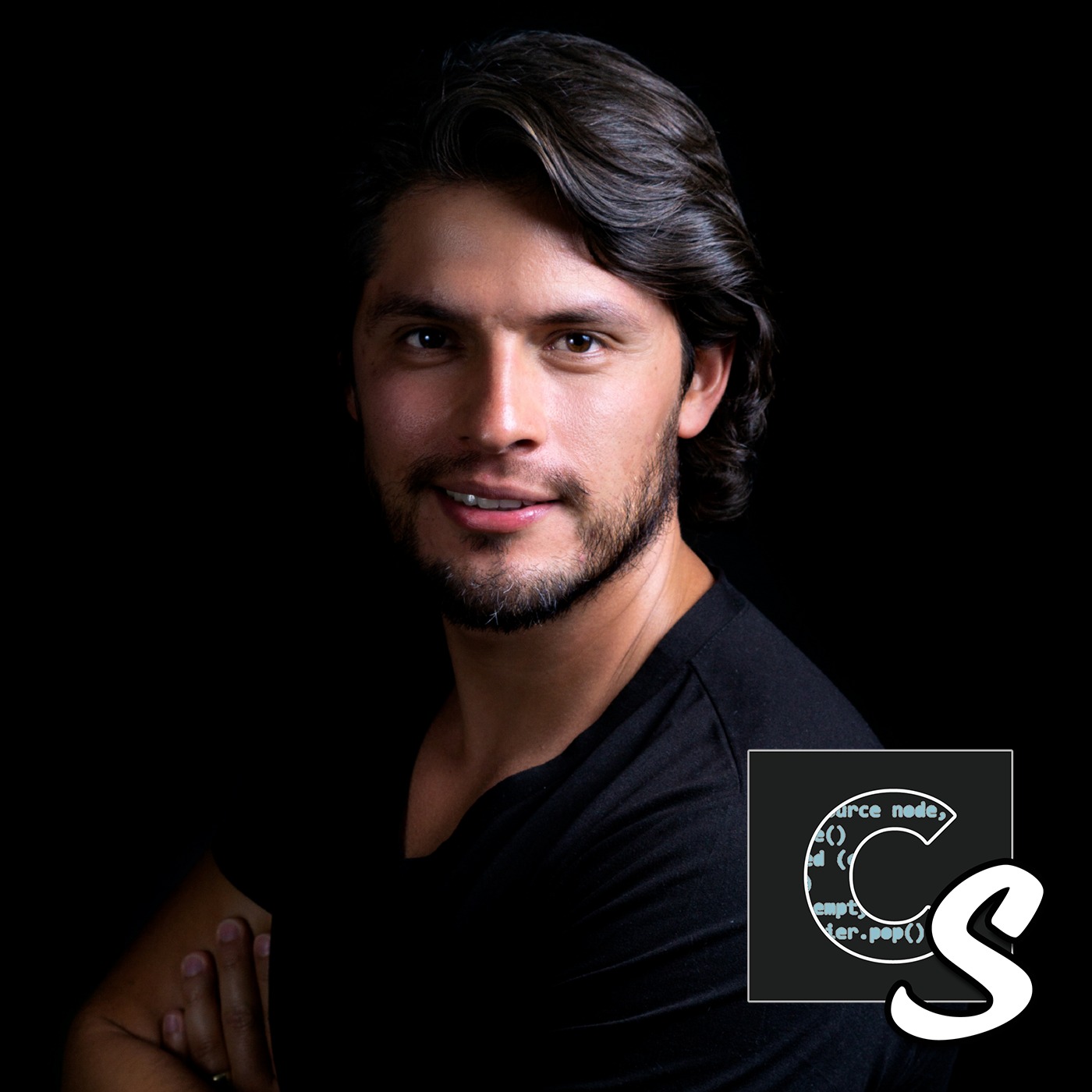
Marco Benitez lives in Naples, Florida. In the past he lived in Miami, but found Naples much more family friendly. He is originally from Mexico, along with many of his family members and businesses. Outside of tech, he is married with 2 kids. As a family, they love to go outside, be outdoors and visit the great beaches around Florida. In addition, Marco is a black belt in Taekwondo, and also does Jiu Jitsu.
Marco and his team was building a wearable in the past, centered around fitness. They figured out that the real value was around feeding data into these types of wearables. When they were approached by a company who was excited about this type of solution, they started to accelerate.
This is the creation story of ROOK.
Sponsors
Links
Our Sponsors:
* Check out Cash App and use my code CASHAPP10 for a great deal: https://cash.app
* Check out Plaud AI and use my code CODESTORY for a great deal: https://plaud.ai
Advertising Inquiries: https://redcircle.com/brands
Privacy & Opt-Out: https://redcircle.com/privacy
[SPEAKER_00]: we were already ingesting that information from different devices.
[SPEAKER_00]: So our MVP was our own app, was our own product that we have for.
[SPEAKER_00]: That when we start to testing with other potential clients that we're looking for this data.
[SPEAKER_00]: So the MVP was something that we previously built, and by the way it took a lot of time because we were not doing the pandemics.
[SPEAKER_00]: And during the pandemics we saw the mess with the data because we started to integrate the app to watch, the polar, garmine, and we saw how difficult was to integrate every single device.
[SPEAKER_00]: I am Marconitas, I am the co-founder and CEO of Rook.
[SPEAKER_01]: This is code story.
[SPEAKER_01]: A podcast bringing you interviews with tech visionaries.
[SPEAKER_01]: 6 months moonlighting goes.
[SPEAKER_00]: I was lossing on the backhand.
[SPEAKER_01]: Who share what it takes to change an industry?
[SPEAKER_02]: I don't exactly know what to do.
[SPEAKER_01]: It's all too many girls to get right.
[SPEAKER_01]: who built the teams that have their bad company is its team's help each other, which is proud of our team.
[SPEAKER_01]: Keeping scalability top of mind, all that infrastructure was up there.
[SPEAKER_01]: Yes, we've been fighting it as we grew up.
[SPEAKER_01]: Total waste of time.
[SPEAKER_02]: The stories you don't read in the headlines.
[SPEAKER_01]: It's not an easy thing to achieve.
[SPEAKER_01]: To get yourself a deficit of off, try to begin to ride the ups and downs of the start-up line.
[SPEAKER_01]: Need to really want it.
[SPEAKER_02]: Not just about technology.
[SPEAKER_02]: All this and more on code story.
[SPEAKER_02]: on your host's Noile Appart.
[SPEAKER_02]: In today, how Marco Bonitas is solving wearable integration problems by making your health data available via API.
[SPEAKER_02]: Marco Benitez lives in Naples, Florida.
[SPEAKER_02]: In the past, he lived in Miami, but found Naples much more family from Lee.
[SPEAKER_02]: He has originally from Mexico, along with many of his family members and businesses.
[SPEAKER_02]: Outside of Tech, he is married with two kids.
[SPEAKER_02]: As a family, they love to go outside, be outdoors and visit the great beaches around Florida.
[SPEAKER_02]: In addition, Marco is a black belt
[SPEAKER_02]: Marco and his team was building a wearable in the past, centered around fitness.
[SPEAKER_02]: They figured out that the real value was around feeding data into these types of wearables.
[SPEAKER_02]: When they were approached by a company who was excited about this type of solution, they started to accelerate.
[SPEAKER_02]: This is the creation story of Rook.
[SPEAKER_00]: Rook eats an API solution, it's a very technical company, and as an API, it's like a code.
[SPEAKER_00]: On our code, we have over 400 data sources, and when I'm saying data sources, it's like wearable devices, like the commercial wearables Apple Watch, Polar Garmin, whoop, or us.
[SPEAKER_00]: We have all these type of devices, also we have also medical devices and laboratory information.
[SPEAKER_00]: So the pain that we are solving is for those companies that want to integrate wearable devices, medical devices, laboratory information.
[SPEAKER_00]: What they need to do is to go one by one, integrate one by one, you will take a lot of time.
[SPEAKER_00]: And then they have to clean data because when they pull data from different data sources and of course hand users, the information doesn't make sense between all this information.
[SPEAKER_00]: So they need to clean everything.
[SPEAKER_00]: So all of these things are exactly the things that we are solving.
[SPEAKER_00]: As an API, we have over 400 devices, and then they only have to integrate my API, and then we clean data for them.
[SPEAKER_00]: So we standardize normalized harmonized stakeholder policy, and now we deliver clean and very structured data.
[SPEAKER_00]: So now they can use further, there is too many ways they are using, they want to identify adverse events or maybe they want to just make graphics, make correlations, make insights, predictions, and now that we are living in this AI world, everyone wants to make something with all this information.
[SPEAKER_00]: How do we create Rook or why do we create Rook?
[SPEAKER_00]: Honestly, it was like life tell you in many ways the path that you need to take.
[SPEAKER_00]: Before this company, we had another one.
[SPEAKER_00]: We were creating a wearable device.
[SPEAKER_00]: So before we have a hardware.
[SPEAKER_00]: And that hardware was really cool.
[SPEAKER_00]: That hardware analyzed the HR and HRV
[SPEAKER_00]: And then we realize that probably the world don't need another wearable device.
[SPEAKER_00]: So we figure out that ingesting or bringing more data to my app on those days bring more value to the end user and also for the companies that we were working.
[SPEAKER_00]: And then one big insurance company told those like, hey, what do you have here?
[SPEAKER_00]: It's really impressive.
[SPEAKER_00]: I'm trying to ingest all these data from a wearable devices, because we want to make insights.
[SPEAKER_00]: We want to make some scores for them.
[SPEAKER_00]: We want to customize.
[SPEAKER_00]: And then this insurance company told us something like, hey, that's exactly what we are looking for.
[SPEAKER_00]: So, what's really interesting?
[SPEAKER_00]: Because that helps us also to move forward to what we are building today.
[SPEAKER_00]: And then, for now, everything, it's the new story.
[SPEAKER_00]: We change the business model.
[SPEAKER_00]: We saw the huge opportunity.
[SPEAKER_00]: We pitch this idea to different accelerator programs.
[SPEAKER_00]: We joined TechSource, which is one of the biggest accelerator programs in the world.
[SPEAKER_00]: And then, also with a couple of investors, they were like, this is a great idea.
[SPEAKER_00]: They invest, and then we start to create the product.
[SPEAKER_02]: I'm curious about what you would consider the MVP for rook.
[SPEAKER_02]: That first version of the product you build, how I want to take to build and what sort of tools you're using to bring it to life.
[SPEAKER_00]: before with our previous model or business model, we were already ingesting that information from different devices.
[SPEAKER_00]: So our MVP was our own app, was our own product that we have for.
[SPEAKER_00]: And that when we start to testing with other potential clients that we're looking for this data.
[SPEAKER_00]: So the MVP was something that we previous build, and by the way, it took a lot of time because we were not doing the pandemics.
[SPEAKER_00]: And during the pandemics we saw the mess with the data because we started to integrate the upwatch.
[SPEAKER_00]: The Polar Garmin, I remember there was another two more wearable devices, and we saw how difficult was to integrate every single device and every single wearable, and then make sense of all the data because we were showing that information to the coach, the fitness coach, so they can analyze the information of their end users.
[SPEAKER_00]: And when we saw that problem, that's when we changed
[SPEAKER_00]: but our MVP was our own product.
[SPEAKER_00]: And then when we went outside and validate, everyone was like, just with this, you are solving a big problem.
[SPEAKER_00]: We created these new business with our previous business model.
[SPEAKER_02]: I could probably cherry-pick and answer here, but tell me about a decision or trade-off yet to make it building that MVP.
[SPEAKER_02]: Maybe it's around.
[SPEAKER_02]: Feature limitation or a pro-ture, what the market was telling you or something like that.
[SPEAKER_02]: Tell me about when you had to make that was central and how you coped with it.
[SPEAKER_00]: The biggest struggle was to change from one business to the other business model.
[SPEAKER_00]: And also to showcase the MVP because on those days we were not an API, we were an app, a physical problem.
[SPEAKER_00]: And for some of our clients, the first clients were like, but I don't want to show your app, I want to use my app.
[SPEAKER_00]: The trade-off was to, at least at the very beginning, show the potential of the data that they will receive and how they are going to receive it, and then at the same time, the other business model create revenue.
[SPEAKER_00]: Was really difficult at that time to try to navigate with two business models.
[SPEAKER_00]: One, with a hardware component and the other one was only support, only data, two complete different business models.
[SPEAKER_00]: and tried to navigate through all this bad was really difficult.
[SPEAKER_00]: Take tough decisions to move only with one business model I think was the most difficult part.
[SPEAKER_00]: Was even more difficult that talk with the clients and tried to identify exactly what they need because we were aware of that problem before.
[SPEAKER_02]: Okay, let's move forward then.
[SPEAKER_02]: So you got the MVP now.
[SPEAKER_02]: It's working.
[SPEAKER_02]: You're getting the traction you want.
[SPEAKER_02]: You have the situation you're looking for.
[SPEAKER_02]: How did you progress and mature it from that point?
[SPEAKER_02]: I think to wrap that question in a box a little bit.
[SPEAKER_02]: What I'm looking for is how you built your roadmap?
[SPEAKER_02]: How you went about deciding that, okay, this is the next most important thing to build or to address with root.
[SPEAKER_00]: clients my friend, I think clients they are the ones who are building the roadmap.
[SPEAKER_00]: Of course I have a vision.
[SPEAKER_00]: Of course I have that because let me tell you something I didn't mention before.
[SPEAKER_00]: We create previous companies, everything was on top of data.
[SPEAKER_00]: So I am bio-medical engineer.
[SPEAKER_00]: I also a second degree in bio-medics and my co-founders, they are bio-medical engineers.
[SPEAKER_00]: So we are very technical.
[SPEAKER_00]: and we love data because we know that you can do so many things with that information and you can build it.
[SPEAKER_00]: But you can improve people's lives just with the information of these awareness of data.
[SPEAKER_00]: So my vision of the product that we are building is more around the combat data science company.
[SPEAKER_00]: So we want to make some so much with the information with the data.
[SPEAKER_00]: To build the roadmap, we learn so much from our own clients.
[SPEAKER_00]: The first step is to receive the data.
[SPEAKER_00]: Then how do you want to receive it?
[SPEAKER_00]: What type of, just with the time zones, for example, or maybe, what type of information makes sense to you do that you are going to show to your clients, so a lot of interviews, a lot at the very beginning I remember, investing a lot of time with my clients.
[SPEAKER_00]: The first one to receive the better testing was super funny because the API was really awful.
[SPEAKER_00]: So many issues, so many, you know, I don't know what horrible those days, because I remember receiving emails at 3am in the morning saying that the API sucks, basically.
[SPEAKER_00]: And, but they know that at the very beginning that you're working with a startup, it's like this, and we leave from the feedback.
[SPEAKER_00]: So, long story shared with what I am trying to say here is that really your clients or potential clients, they are the ones who can help you to build a roadmap.
[SPEAKER_00]: This is not something that you have to do from this scratch.
[SPEAKER_00]: Of course, you have and you need a vision.
[SPEAKER_00]: Vision is one of the most important things that you will have because that will help you to navigate.
[SPEAKER_00]: But during the journey, that Vision will take a better shape.
[SPEAKER_00]: And of course, if you go with your clients, that's even better.
[SPEAKER_00]: Because one new feature that your client needs,
[SPEAKER_00]: Potentially, it's something that the other 100 clients will need to.
[SPEAKER_00]: So, yeah, I think it's building everything in public with your clients.
[SPEAKER_02]: How did you go about building your team?
[SPEAKER_02]: And what did you look for in those people to indicate that they were the winning horses to join you?
[SPEAKER_00]: Let me be very transparent.
[SPEAKER_00]: It's a feeling sometimes.
[SPEAKER_00]: At least with the core team.
[SPEAKER_00]: At the very beginning, you have to build trust with them.
[SPEAKER_00]: You have to be very open, honest, and of course, with every single employee that we have, we are 100% transparent.
[SPEAKER_00]: Everyone knows how much we have in the bank account, everyone knows how many clients, everyone knows, all they should that we have, everyone knows, everyone knows everything.
[SPEAKER_00]: So we are trying to build a culture where everyone can be fully aware of what's going on with the company.
[SPEAKER_00]: And my leadership team, they are this artists, guys in the world.
[SPEAKER_00]: They know how to solve the problems.
[SPEAKER_00]: And then you have to trust them.
[SPEAKER_00]: it's like a feeling, I don't know, you have to feel that they are right and for you and they complement you.
[SPEAKER_00]: That's very important and also in the very beginning you need generalist.
[SPEAKER_00]: People that can do everything and then eventually you will start hiring people that are more like specific fruit tasks that you need and then you have to show your leadership team to do the
[SPEAKER_00]: and then that they can manage a specific type of things that they are looking for.
[SPEAKER_00]: So it's like step-by-step.
[SPEAKER_00]: It's not something that you learn from one day to another, and also always work with people.
[SPEAKER_00]: It's really difficult.
[SPEAKER_00]: Because it's everything is around communication.
[SPEAKER_00]: And then I remember the first days when we were building this company.
[SPEAKER_00]: We were in the details, we were developing, we were making the bones of Rook.
[SPEAKER_00]: But nowadays it's so complicated because in terms of technology it's really complicated.
[SPEAKER_00]: It's really complicated, we have data scientists, we have data engineers, we have developers from front and back and apps, we have so many things.
[SPEAKER_00]: and it's built teams, it's really interesting, but we normally hire people with good attitude.
[SPEAKER_00]: The attitude is everything.
[SPEAKER_00]: It's the most important thing, at least for me, and now for my team.
[SPEAKER_00]: Let's look to scalability.
[SPEAKER_02]: And I'm curious about how you approached scale in the beginning, and also, has there been interesting areas where you've had to fight scale as you've grown?
[SPEAKER_00]: That's a very good question because we are an API.
[SPEAKER_00]: As an API since the beginning, we start to build everything that can scale.
[SPEAKER_00]: My vision is that we will have some companies that have a million of end users.
[SPEAKER_00]: And that happened, by the way.
[SPEAKER_00]: From one day to another, we, there's a big company from Europe that they have a one million of end users.
[SPEAKER_00]: Was really crazy.
[SPEAKER_00]: And we say that's a very good start-ups.
[SPEAKER_00]: And that's a very good founder.
[SPEAKER_00]: We say, of course, we can do that.
[SPEAKER_00]: But since the beginning we were very aware that eventually we will have someone like this.
[SPEAKER_00]: But it's really difficult because you have to balance everything.
[SPEAKER_00]: It's like you are building this scale business that can support 1 million.
[SPEAKER_00]: But at the very beginning you have maybe a thousand or even less end users connected.
[SPEAKER_00]: So, you have to work everything that can eventually you can scale and then, in the meantime, you will be developing as better as you can, of course, we have some advisors in the Indian day.
[SPEAKER_00]: We developers that can help us also to improve what we are building and we are always finding ways to improve the technology that we have.
[SPEAKER_00]: So scale is one of the most important things because also investors are looking for that.
[SPEAKER_00]: It's the amount of money that you are going to invest in the technology at the very beginning in this high, but eventually will be at the point where it doesn't matter because it doesn't matter if you have one million or ten millions, the price is going to get low and low.
[SPEAKER_00]: It's a collaborative piece, one of the most important things, and that part you have to
[SPEAKER_00]: put it in your vision and then start working on that since they won, or eventually you will have to invest in that part to scale the product.
[SPEAKER_00]: But because we are an API and we are we have clouds and we have all these type of things for us, it's super important.
[SPEAKER_00]: It's really important.
[SPEAKER_02]: Okay, Marco, as you step out on the balcony and you look across all that you've built thus far with Rook.
[SPEAKER_02]: What are you most proud of?
[SPEAKER_02]: My team.
[SPEAKER_00]: It's very simple.
[SPEAKER_00]: That team, the culture, and super happy without.
[SPEAKER_00]: I'm very proud.
[SPEAKER_00]: I think this is about the journey.
[SPEAKER_00]: This is not about the end.
[SPEAKER_00]: It's about the journey because eventually we are going to build more companies.
[SPEAKER_00]: And then I want to work with the same guys.
[SPEAKER_00]: I went to work with the same team, a hundred percent I'm sure about it, because I know that I can trust them.
[SPEAKER_00]: It's the most at the end of the day when we gone from this world, you have to be very happy what you did.
[SPEAKER_00]: So for me everything is about people, and then an older person that I know from now with my investor, I love my investors, by the way, they are the best investors in the world.
[SPEAKER_00]: So for me, the relations that I'm building, that we are building as a team, that's the most important thing.
[SPEAKER_00]: Rook, it's impressive, the technology, it's amazing.
[SPEAKER_00]: But I believe that at some point we will sell the company and we will have an exit.
[SPEAKER_00]: Today, I'm super happy in all the things that we are building and the features, the feature look super excited.
[SPEAKER_00]: I'm very bright, but then for me, again, it's the team that we are building.
[SPEAKER_02]: Okay, let's flip the script a little bit, Mark, or tell me about a mistake you made and how you and your team responded to it.
[SPEAKER_00]: All the time, my friend.
[SPEAKER_00]: Hopefully time we are making mistakes, it's part of being alive.
[SPEAKER_00]: Not mistakes, it's every single time.
[SPEAKER_00]: And we are taking bad decisions about maybe funding, maybe about one feature that we...
[SPEAKER_00]: thought that we'll be the best or the future in the world, and then we realize that no one uses it, but mistakes, it's part of growth.
[SPEAKER_00]: If you don't have mistakes, it's maybe because you are not doing nothing.
[SPEAKER_00]: I cannot remember one that really shakes my head, but generally speaking, we do a lot of mistakes all the time.
[SPEAKER_00]: And sometimes it's about communication.
[SPEAKER_00]: We realize that at the end of the day, it's everything about expectations, communication.
[SPEAKER_00]: And that's where the problems are.
[SPEAKER_00]: Expectations.
[SPEAKER_00]: I think is one of the most important things.
[SPEAKER_00]: I define happiness as the difference between your expectations and reality, so I try to apply that to everything that I'm doing.
[SPEAKER_00]: And if I set up the expectation of one feature or the expectation about my team or an expectation about my client, if you set up the right expectation, then no one
[SPEAKER_00]: But again, we are doing so many mistakes in the path that it's part of the learning and growth.
[SPEAKER_02]: Let's move forward then, so I'm curious about the future of Rook, and this will be exciting to hear the passion and your voice and for your team, what does the future look like for, the product for, what you're building the industry, your team, all the things.
[SPEAKER_00]: We are super excited about the future because it's becoming data science company for me, it's everything for Rook.
[SPEAKER_00]: Be the one who can bring those insights, and predictions, and all these type of things could be, it's gonna be amazing.
[SPEAKER_00]: We are doing the first steps on that front with some clients.
[SPEAKER_00]: We are doing so many better testings about that information and how we are bringing that predictions.
[SPEAKER_00]: That's the most interesting part for me, and nowadays that we have these AI tools that it's impressive.
[SPEAKER_00]: Now, you can build some of the things with Cloud and With Codex from OpenAI.
[SPEAKER_00]: All these things that you can really be more faster in building something.
[SPEAKER_00]: So, I'm very exciting about the future, about AI, and how we are incorporating the AI in our technology.
[SPEAKER_00]: It sounds very futuristic where everyone will start having so many insights about your behavior in terms of health that allows me to blow my mind and think about my life or my kids life.
[SPEAKER_00]: They will know exactly if they are doing, if they have bad habits, they will know what's going to happen.
[SPEAKER_00]: And I can see that feature where someone will tell you that if you continue that path, the X-Day and the X-Year X-Y-Gear, you will have X-A-Think, X-Y-Think.
[SPEAKER_00]: Do you know what I mean?
[SPEAKER_00]: Is that type of feature?
[SPEAKER_00]: That's exactly what we want to build.
[SPEAKER_00]: We want to empower those companies that are building those products and we can help them with the data that we have and that we can deliver for them.
[SPEAKER_00]: And of course helping them to do those insights.
[SPEAKER_00]: So it's going to be very interesting.
[SPEAKER_02]: Marco, let's switch to you.
[SPEAKER_02]: Who influences the way that you work?
[SPEAKER_02]: Name a person or many persons are something you look up to and why.
[SPEAKER_00]: First of all, my grandpa, my grandpa, he's an entrepreneur, he has 96 years old, on April, he's the best entrepreneur I never know, it's he's the best, my father to my coaches from Taekwondo
[SPEAKER_00]: Everything show me that if you have discipline and persistence, you will achieve your goal.
[SPEAKER_00]: Of course with the hell of God is everything.
[SPEAKER_00]: So God is going to put you in their right situations.
[SPEAKER_00]: But that's my base.
[SPEAKER_00]: God is my base, by the way.
[SPEAKER_00]: But I think that if you learn from all these people that if you be discipline and
[SPEAKER_00]: So everyone helped me to understand that and that's part of the sports that's part of the fitness industry that's part of the health industry But yeah, those guys for me are the best.
[SPEAKER_02]: Yeah, that's good stuff and amen amen to God as the foundation couldn't remember with that
[SPEAKER_02]: Okay Marco, last question, so you're getting on a plane in your sitting next to a young entrepreneur who's built the next big thing.
[SPEAKER_02]: They're jazzed about it that can't wait to show it off to the world and can we show it off to you right down the plane?
[SPEAKER_02]: What advice do you give that person having gone down this road a bit?
[SPEAKER_02]: The first of all is go and do it.
[SPEAKER_00]: Top as many people as you can to achieve your goal.
[SPEAKER_00]: And do it.
[SPEAKER_00]: For me, always is to go and do whatever you have to and do it.
[SPEAKER_00]: And if it's possible, I will love to invest.
[SPEAKER_02]: I think that's fantastic.
[SPEAKER_02]: And it's the right product invest for sure.
[SPEAKER_02]: Marco, thank you for being on the show today, and thank you for telling the creation story of Rook.
[SPEAKER_00]: Thank you so much for that opportunity, Noah.
[SPEAKER_00]: Was a pleasure.
[SPEAKER_02]: and this concludes another chapter of Coat Story.
[SPEAKER_02]: Coat Story is hosted and produced by No.
[SPEAKER_02]: 1 Lab Part.
[SPEAKER_02]: Be sure to subscribe on Apple Podcasts, Spotify, or the podcasting app at your choice.
[SPEAKER_02]: And when you get a chance, leave us a review.
[SPEAKER_02]: Both things help us out tremendously.
Latest Season of the Podcast is Sponsored By
 Apple Podcasts
 Castbox
 Castro
 Goodpods
 Moon FM
 Overcast
 Pocket Casts
 Podbean
 Podcast Addict
 Podcast Republic
 Spotify